Weight regain after stopping GLP's

lessthanhalf

GLP-1 Specialist
Member Since
Jun 27, 2025
Posts
1,069
Likes Received
3,345
Location
melbourne
Australia
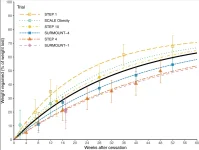
I thought this study was interesting
Trajectory of weight regain after cessation of GLP-1 receptor agonists: a systematic review and nonlinear meta-regression
It shows that people who lost weight on GLP's might only regain 75% of the weight they lost long term which is interesting, really only adds up to about a 5% weight loss in the end, which is better than nothing, but I think it is now realistic to think that 20-30% is actually feasible, using tirzepatide or retatrutide and staying on it. And even possibly more if you get into higher doses or more experimental combinations.
The graph of weight regain does seem to be leveling out after a while, it would be interesting if they could work out why and what might be being changed long term. I do not really believe the articles explanation of better food choices.

 

Attachments

  • weight regain.webp
    weight regain.webp
    438 bytes · Views: 25
I think for most people, staying on a maintenance dose is going to be the only realistic way to keep off the weight.

Some people who mostly stayed at a normal weight throughout their lives but gained weight from a specific short-term issue like a medication or pregnancy might be able to use the GLP1 to lose that weight and then stop and maintain on their own.

I think most people who struggle with obesity have done so for a good portion of their adult lives so their brain is wired to want to eat way more than they need.
 
I tried a couple of times to post the jpg of the graph but it just comes up blank. It is in the journal article if you want to look at it. I have been able to upload pdfs before without problems , don't know what it does not like about the image?
 
I mean, he curve from diet and exercise is even steeper. Imagine the curve here if insurance didn't cut everyone off...
 
I think all the other benefits far outweigh the costs of taking it for the rest of ones life. It's far cheaper than supplements, and high blood pressure, cholesterol and insulin medication. It only gets more expensive when you get hooked on chasing the other peptides. But again, your increasing your healthspan. One quad bypass, or a few stents cost more than a lifetime of GLPs.
 
Here you go:

1773022825551.png

on the other hand, there are some dedicated people who continue to choose a healthier lifestyle after they quit GLP-1 RAs and maintain or even lose a few more pounds. You can't just sit around, eat, and think you're gonna get smaller.

Edit: and there are people who cycle it, go 4 weeks without, let your system refeed, gain ~10% back, then use the reta again and again. Cheaper that way maybe.
 
Last edited:
I think all the other benefits far outweigh the costs of taking it for the rest of ones life. It's far cheaper than supplements, and high blood pressure, cholesterol and insulin medication. It only gets more expensive when you get hooked on chasing the other peptides. But again, your increasing your healthspan. One quad bypass, or a few stents cost more than a lifetime of GLPs.
I completely agree with the above statement, for grey GLP's it is a no brainer, whether it is true at full retail prices is a bit harder to determine.
Sadly all the cost effectiveness analysis studies I have seen so far all say they are too expensive per QALY gained ( quality of life year ) , and will be until they get a lot cheaper. Once they say otherwise countries like Aus will start subsidising them a bit more widely, although it won't help much in countries where the government is not subsidising medication costs. I am not sure the studies are doing a complete job of including all the very long term medical cost savings in their analysis, but not all the science there is conclusive yet.
 
What's fascinating to me about these sort of studies is that the weight regain rate isn't closer to 100%, which is where I'd expect most people to land within 5 years of discontinuing treatment (assuming no other significant lifestyle changes).
 
i always think its funny when people mention to me ill gain the weight back when i stop taking it. i always respond
"yea as apposed to diet and exercise which we all know famously you only have to do one time and you'll be lean and muscular the rest of your life... oh wait..."

that always gets a rise out of people

but on a more serious note about the topic. i have seen several times allready in my short time here people discussing how they are planning on/just upped/wanting to up their dose when they are already at high doses of at least one glp if not multiple. and will often times even say they aren't hungry and have no food noise to deal with but arent losing weight. and ive wondered what they are doing to work with the meds rather than just let them do all the work. like it is doing exactly what it is supposed to do, keep hunger at bay and food noise non existent. what is the goal? to be physically unable to eat? because it seems like that is what they want rather than learn how to eat better or use exercise to get the caloric deficit that is needed. (obviously dietary restrictions/ allergies and physical limitations have their own needs to consider)
the ones that don't learn anything from the meds im sure are going to put all the weight back on where as the ones that use them to learn why they eat the way that they do and learn to overcome those hurdles wont. i know they helped me identify the triggers to my binge eating so i could avoid them more easily and realize when i am going into a binge and can get out of it (normally about 1/3 of the way through) because ill have that moment of "man its getting kinda late why am i still up? oh im eating, normally im in bed by now" like shit im doing it again and drop what im shoving in my mouth, leave the kitchen and come back when im not in that episode.
 
i always think its funny when people mention to me ill gain the weight back when i stop taking it. i always respond
"yea as apposed to diet and exercise which we all know famously you only have to do one time and you'll be lean and muscular the rest of your life... oh wait..."

that always gets a rise out of people

but on a more serious note about the topic. i have seen several times allready in my short time here people discussing how they are planning on/just upped/wanting to up their dose when they are already at high doses of at least one glp if not multiple. and will often times even say they aren't hungry and have no food noise to deal with but arent losing weight. and ive wondered what they are doing to work with the meds rather than just let them do all the work. like it is doing exactly what it is supposed to do, keep hunger at bay and food noise non existent. what is the goal? to be physically unable to eat? because it seems like that is what they want rather than learn how to eat better or use exercise to get the caloric deficit that is needed. (obviously dietary restrictions/ allergies and physical limitations have their own needs to consider)
the ones that don't learn anything from the meds im sure are going to put all the weight back on where as the ones that use them to learn why they eat the way that they do and learn to overcome those hurdles wont. i know they helped me identify the triggers to my binge eating so i could avoid them more easily and realize when i am going into a binge and can get out of it (normally about 1/3 of the way through) because ill have that moment of "man its getting kinda late why am i still up? oh im eating, normally im in bed by now" like shit im doing it again and drop what im shoving in my mouth, leave the kitchen and come back when im not in that episode.

I agree and after I get somewhere I am satisfied with I plan on staying on a maintenance dose for a very long time. At the very least until something better comes out or maybe even forever.
 
When I switched from Ozempic to Reta, it took a few weeks, maybe a month to get up to a dose that worked for me. I gained weight the whole time. I can probably live with a once a week injection a lot longer than I'll keep up with working out 5 days a week. For now, I have both 😁
 
If it takes constant mental effort to not eat as much as your body tells you too , all the evidence says that nearly everyone puts the weight back on eventually.
GLP medications solve this problem to a large degree. If you keep taking them.
I managed to get to a normal bmi 65kg and stayed there nearly 3 years a decade ago but eventually got depressed and started not caring and put it all back on and more 145kg. Did it again in 2022 23, using a diet specially designed to minimise hunger and avoid triggering binge eating, and kept it off for a year, but it was constant work every day to eat less than my hunger said I should be eating, and it is tiring. Thankfully I worked out it was just possible to afford low dose ozempic, and a year later discovered cheap pirate chinese peptides. Since being on 15 mg of tirz and 5mg of reta I have slowly lost another 13kg to get to 66kg, without constant forcing myself to eat less, still sticking to an extremely strict no high calorific density/ highly rewarding foods diet but at least it seems to be something I could live with long term.
One of the issues with using GLP medications to train yourself into better dietary patterns is that you cannot possibly know how much of those better patterns are due to the drugs, they get people to eat healthier foods with no conscious effort anyway. So that when you stop them, it is possible that those better patterns, that you thought were under conscious control, suddenly vanish, and you are left feeling bad and out of control of your eating and gaining weight, and stopping that whole yoyo pattern is what GLP drugs can offer. I had already trained myself into a very healthy eating pattern and lost 65 to 70 kg but it did not solve the problem of being nearly permanently hungry, but GLP medications did, or at least helped a lot.
 
One of the issues with using GLP medications to train yourself into better dietary patterns is that you cannot possibly know how much of those better patterns are due to the drugs, they get people to eat healthier foods with no conscious effort anyway. So that when you stop them, it is possible that those better patterns, that you thought were under conscious control, suddenly vanish, and you are left feeling bad and out of control of your eating and gaining weight, and stopping that whole yoyo pattern is what GLP drugs can offer. I had already trained myself into a very healthy eating pattern and lost 65 to 70 kg but it did not solve the problem of being nearly permanently hungry, but GLP medications did, or at least helped a lot.

Your point about permanent hunger without GLP-1s is key. If obesity is a disease, which the medical community has come to recognize, then GLP-1s treat that disease. The underlying pathology is a dysregulation of the mind-gut hormonal signaling system, and no amount of behavioral modification can correct that. Willpower and habit formation operate at the conscious level; the hormonal imbalance driving hunger operates well below it.

This is precisely why using GLP medications to "train yourself into better dietary patterns" is a flawed framework and why we see patient weight regain after stopping treatment. You cannot know how much of any behavioral improvement is attributable to the drug itself, since GLP-1s drive healthier food choices without conscious effort. When patients stop, those seemingly acquired habits can vanish, not because of weakness, but because the underlying signaling system reasserts itself. The result is the familiar cycle of relapse, guilt, and weight regain.

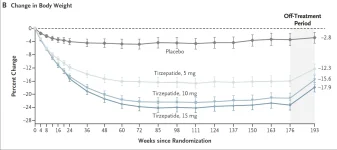
The true "miracle", at least to me, of these glp-1 medications is an off ramp from the yo-yo. As long as treatment is continued, weight stabilizes and plateaus at the new weight and appears to be sustainable in the long-term.

1773656061748.png
 
It's clear that the only long term solution is to make lifestyle changes, and what you eat is the most important metric for weight loss. Physical activity is essential for health, but it won't help weight loss if the diet is not satiating. Eating satiating food is the solution. If you are not getting the signal to stop, you will overeat. GLP-1 could help in starting the journey to better health, but it can't be the only change.
 
It's clear that the only long term solution is to make lifestyle changes, and what you eat is the most important metric for weight loss. Physical activity is essential for health, but it won't help weight loss if the diet is not satiating. Eating satiating food is the solution. If you are not getting the signal to stop, you will overeat. GLP-1 could help in starting the journey to better health, but it can't be the only change.
There is no doubt that diet and exercise can cause weight loss. What the evidence says , is that it does not work long term for nearly everyone, only about 5% or so of people who have massive weight loss from diet and exercise , or GLP's that then stop the GLP's, keep that weight off or most of it off long term. There are thousands of studies. So as far as I am concerned it is not an effective treatment. When there were no better options, it was definitely better than nothing and even medium term improvements of 5 to 10% can improve metabolic health. GLP medications can realistically cause 20 to 29% long term weight loss on average for tirz or reta.

I think there is pretty good scientific evidence that the appetite control system in people with severe obesity is pretty broken, and that losing weight does not fix it. Eating satiating food in the right amounts for health is not going to provide the correct signals to stop eating if the system controlling eating is not working properly. And after large weight loss metabolic adaptation to low calorie input requires eating quite a lot less calories to maintain weight than an equivalent weight person who had not lost weight. And hunger signalling is increased by weight loss. These 2 effects independently of broken appetite regulation make maintaining weight loss extremely hard.

I lost about 70kg with diet and exercise without glp's in 2022-2023, I had to maintain a calorie intake of about 1600 kcal/day to maintain weight, and despite a very carefully designed diet , I was hungry most of the time, and going on past experience , sooner or later putting the weight back on was the most likely outcome. Thankfully after about a year of this, GLP medications became an option instead.

GLP drugs help to lose weight and are equally effective at keeping it off long term so long as you keep taking them. Obviously eating a healthy diet and exercising is a good thing, but weight loss and the health benefits of these medications do not require this to work. The health benefits are no doubt larger if diet is good and exercise is happening, but GLP medications do improve food choices without any effort. And make exercise easier and safer after weight loss.

So comparing lifestyle changes to GLP therapy , one works OK in the short term with extremely low long term success rates and the other is more effective in the short, medium and long term in causing and maintaining weight loss. It really is that simple, one works, the other does not.
 
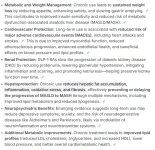
Beyond that, GLP1s are showing some other benefits that are linked to longevity:

1773710412121.png

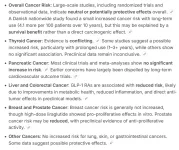
and even more than that but the panel is still open regarding cancer:

1773710515943.png

but there are still worries. The gallbladder issues is a major one, but add some TUDCA; it maybe a requisite!

And yes AI helped me, but you know, I've read and watched a bunch and already knew this 😀

Anyways, why would I want to right out quit for again?
 
One of the most interesting cancer studies is the one where it halved the death rate over several years in people who already had bowel cancer. This is an astonishing result , making it a more effective treatment for it than just about anything else except maybe the surgery to remove the tumour. Of course it may just be a fluke and cannot be replicated. Given the large number of cancers made more common by obesity and the early results strongly suggests they are less likely to occur on glp's, it could be a very important factor in cancers. There is a stack of ongoing research.
 
it kinda feels like we are all having the same mindset, but on opposite ends of the spectrum. we all agree GLPs are helpful, needed and effective. i feel like we are all kind of discussing different levels of dependance on them rather than the use of them as a tool. i myself find even taking 1.25mg/week of my tirz puts me in a much better state of mind to be able to make the right decisions when its needed and to pull myself back from the cliff of a binge. i dont want to waste the meds or set myself back from my progress i want and that thought is what helps me break the cycle, and even when i was off of it for 6 months i knew that just because i was hungry didnt mean i had to eat, so i just ate the same things everyday regardless of hunger levels.

some people seem to rely solely on the meds to achieve their goals. i mean just look at the number of threads in the fitness/nutrition category vs any other non specialized section here. if you stop the meds of course you will gain the weight back. same thing with if you stopped food tracking and/or exercise, i don't think anyone is arguing otherwise. i just personally feel like an over dependance on them will lead to these statistics to stay true, and anecdotally i would guess the ones that you see saying "im not hungry at all but im not losing weight" would be the reason they stay at 95% weight regain after quitting.

so people like me are viewing it from the angle of diet and exercise first then meds, compared to (admittedly most likely people that would be outliers in the studies mindset based only on the limited comments from forums like these without knowing all the work they put into weight management) meds as the heavy lifter and only thing that works.

again im unaware of any studies on this subject aswell, but ive seen a regular thought process from naturally thin people to be "ya im hungry but i dont have time to eat right now so ill just eat later." its not as much of a matter of hunger ques but more so mental awareness on what hunger ques mean, and would be interested to see what would happen if they had a super effective GLP that did nothing but remove the food noise completely., while leaving the appetite suppression and gastric emptying alone. what those studies would look like.
 
it kinda feels like we are all having the same mindset, but on opposite ends of the spectrum. we all agree GLPs are helpful, needed and effective. i feel like we are all kind of discussing different levels of dependance on them rather than the use of them as a tool. i myself find even taking 1.25mg/week of my tirz puts me in a much better state of mind to be able to make the right decisions when its needed and to pull myself back from the cliff of a binge. i dont want to waste the meds or set myself back from my progress i want and that thought is what helps me break the cycle, and even when i was off of it for 6 months i knew that just because i was hungry didnt mean i had to eat, so i just ate the same things everyday regardless of hunger levels.

some people seem to rely solely on the meds to achieve their goals. i mean just look at the number of threads in the fitness/nutrition category vs any other non specialized section here. if you stop the meds of course you will gain the weight back. same thing with if you stopped food tracking and/or exercise, i don't think anyone is arguing otherwise. i just personally feel like an over dependance on them will lead to these statistics to stay true, and anecdotally i would guess the ones that you see saying "im not hungry at all but im not losing weight" would be the reason they stay at 95% weight regain after quitting.

so people like me are viewing it from the angle of diet and exercise first then meds, compared to (admittedly most likely people that would be outliers in the studies mindset based only on the limited comments from forums like these without knowing all the work they put into weight management) meds as the heavy lifter and only thing that works.

again im unaware of any studies on this subject aswell, but ive seen a regular thought process from naturally thin people to be "ya im hungry but i dont have time to eat right now so ill just eat later." its not as much of a matter of hunger ques but more so mental awareness on what hunger ques mean, and would be interested to see what would happen if they had a super effective GLP that did nothing but remove the food noise completely., while leaving the appetite suppression and gastric emptying alone. what those studies would look like.
What is missing from lessthanhalf's point of view is that he's conflating all diets with calorie-restriction diets. Calorie-restricted diets are extremely challenging to maintain long-term. In fact, I might say that a pure calorie-restriction diet (in which you don't change what you're eating, but just how much of it you're eating) are likely the most challenging to maintain.

Meanwhile, I think you may be underappreciating the full hormonal significance of GLPs. From your perspective, GLPs are helping you make better decisions. Let's say hypothetically that for you GLPs + better decisions lead to a 50 pound weight loss before you plateau. If from that point you stopped GLPs entirely, but kept making the better decisions (perhaps you formed new habits that allowed you to avoid binging), you would likely regain some amount (perhaps 10 to 20 pounds) of that 50 pounds before plateauing. I like your approach and your attitude towards it, but I think it's good to acknowledge that your loss is going to be a mix of better habits (enabled by GLPs) and hormonal influence on weight.
 
Meanwhile, I think you may be underappreciating the full hormonal significance of GLPs. From your perspective, GLPs are helping you make better decisions. Let's say hypothetically that for you GLPs + better decisions lead to a 50 pound weight loss before you plateau. If from that point you stopped GLPs entirely, but kept making the better decisions (perhaps you formed new habits that allowed you to avoid binging), you would likely regain some amount (perhaps 10 to 20 pounds) of that 50 pounds before plateauing. I like your approach and your attitude towards it, but I think it's good to acknowledge that your loss is going to be a mix of better habits (enabled by GLPs) and hormonal influence on weight.
my main point im trying to say is simply that it appears that glps are so retally available that most people seem to only be interested in eliminating the idea of worrying about food by completely eliminating hunger and food noise without giving much if any attention to healthy eating habits. especially in this grey market category where you can get a lifetime supply for the cost of what would be only a few months of the name brand stuff.

and there is nothing inherently wrong with that. i myself am going to be putting in an order relatively soon for something like 10 kits, which at my low doses should last anywhere from 20-30 years depending if i want to increase or decrease for cuts/bulks in those years for the price of what would be 6 months worth of my zepbound.

but my point is that these studies where they regain the weight after are somewhat misleading because so many people have that mindset of "let the glp do all the work and ill eat whatever i want, i just cant eat that much of it" so of course they will regain the weight. just like when people go on a diet just to lose the weight to be summer ready. they don't really care about maintaining that body composition, they just want to be in shape for the summer then go back to their normal way of eating rather than changing their lifestyle.

but it would be interesting to see why those 5% do manage to keep the weight off after. did they completely remodel their lives? was there some sort of metabolic adaptation that happened? to me that seems like the more promising part of all this, not the fact that 95% regained the weight...as i would expect most to.
 
What is missing from lessthanhalf's point of view is that he's conflating all diets with calorie-restriction diets. Calorie-restricted diets are extremely challenging to maintain long-term. In fact, I might say that a pure calorie-restriction diet (in which you don't change what you're eating, but just how much of it you're eating) are likely the most challenging to maintain.

I'm probably one who would be considered a jedi master of calorie restriction. It's my go to weight loss method and I've had success using the method. But I agree with you 100% that calorie restrition is tough. It's not easy to track calories and it's a pain in the ass, but 110 pounds later, the method has served me well. Restricting calories comes with both a reduction in the amount of food eaten, but also what is eaten because you can't keep eating less of the same stuff and stay within the calorie goal, it's just impossible.

I fully believe that a person has to eat less calories than they expend to lose weight. The type of diet to me matters less than just consuming fewer calories. So, if someone feels better on Keto, Paleo, Carnivore, Atkins, or whatever, and it results in fewer calories consumed, then go for it. But bottom line is that to lose weight, more calories have to be expended than taken in.

Meanwhile, I think you may be underappreciating the full hormonal significance of GLPs. From your perspective, GLPs are helping you make better decisions. Let's say hypothetically that for you GLPs + better decisions lead to a 50 pound weight loss before you plateau. If from that point you stopped GLPs entirely, but kept making the better decisions (perhaps you formed new habits that allowed you to avoid binging), you would likely regain some amount (perhaps 10 to 20 pounds) of that 50 pounds before plateauing. I like your approach and your attitude towards it, but I think it's good to acknowledge that your loss is going to be a mix of better habits (enabled by GLPs) and hormonal influence on weight.

Studies have shown that the average weight regain is more like 75% of the excess weight lost when stopping glp-1 tereatment, so even with the new habits formed, under the scenario of someone losing 50 pounds, developing new habits, and then stopping glp-1 treatment, the weight regained will be more like 38 pounds not 10 to 20 pounds.
 
Last edited:
There is no doubt that diet and exercise can cause weight loss. What the evidence says , is that it does not work long term for nearly everyone, only about 5% or so of people who have massive weight loss from diet and exercise , or GLP's that then stop the GLP's, keep that weight off or most of it off long term. There are thousands of studies. So as far as I am concerned it is not an effective treatment. When there were no better options, it was definitely better than nothing and even medium term improvements of 5 to 10% can improve metabolic health. GLP medications can realistically cause 20 to 29% long term weight loss on average for tirz or reta.

I think there is pretty good scientific evidence that the appetite control system in people with severe obesity is pretty broken, and that losing weight does not fix it. Eating satiating food in the right amounts for health is not going to provide the correct signals to stop eating if the system controlling eating is not working properly. And after large weight loss metabolic adaptation to low calorie input requires eating quite a lot less calories to maintain weight than an equivalent weight person who had not lost weight. And hunger signalling is increased by weight loss. These 2 effects independently of broken appetite regulation make maintaining weight loss extremely hard.

I lost about 70kg with diet and exercise without glp's in 2022-2023, I had to maintain a calorie intake of about 1600 kcal/day to maintain weight, and despite a very carefully designed diet , I was hungry most of the time, and going on past experience , sooner or later putting the weight back on was the most likely outcome. Thankfully after about a year of this, GLP medications became an option instead.

GLP drugs help to lose weight and are equally effective at keeping it off long term so long as you keep taking them. Obviously eating a healthy diet and exercising is a good thing, but weight loss and the health benefits of these medications do not require this to work. The health benefits are no doubt larger if diet is good and exercise is happening, but GLP medications do improve food choices without any effort. And make exercise easier and safer after weight loss.

So comparing lifestyle changes to GLP therapy , one works OK in the short term with extremely low long term success rates and the other is more effective in the short, medium and long term in causing and maintaining weight loss. It really is that simple, one works, the other does not.
You did a great feat of will by loosing 70kg, especially considering you did it by limiting calorie intake. What kind of food did you eat during that period? Did you try different diets? There's a possibility some other diet could be more satiating while leading to similar result. There is no one 'ideal' diet, I learned it by experience, what works in one context/timeframe might not in other one.

Experimenting and tweaking is necessary. What is necessary too is changing patterns of behavior, but built on solid information, unfortunately prevailing nutritional paradigm isn't necessarily the right answer, so leaps of fait might be necessary, by testing what prevailing narratives consider 'dangerous'. Like some peptides, BPC 157 for example is 'research only', 'not tested on humans', 'unknown territory', etc. Yet some people had success using it for different problems. My n1 research showed it's not at all effective in relieving a problem I tried to 'cure' with it (probably because my problem was something else), but very effective in relieving another debilitating condition I wasn't aware it could be helpful with.
 
I had unfortunately had a lot of practice at losing weight, and I had read as much research as I could find. For me the biggest problem was the chronic hunger while trying to maintain weight loss but worse was the extreme and essentially uncontrollable hunger in that state that happened a few hours after eating high calorie, highly rewarding foods even in small quantities, and once that started I found it very hard to stop, and could put back on a lot of weight quickly.
Something was very definitely going seriously wrong in the chemicals controlling appetite in that state.
So I tried to design a diet that would not trigger this response, and tried to minimise hunger, so very high protein up to 50% of calories, almost no fat , zero high glycemic index carbs, basically very lean meat , low fat high protein dairy , fruit and vegetables, and ideally nothing over about 1.5 kcal/gram. And it worked to lose the weight and keep it off, and as I understood what triggered uncontrollable hunger I had to totally and completely avoid those foods that could trigger it, and have continued to do that for 3 1/2 years now, but without adding in GLP medication after a year or so it was still fairly difficult. Apart from being a bit low in some types of fat it is essentially a fairly healthy diet. The diet was designed to avoid rapid shifts in blood glucose and any weird hormonal or brain chemistry responses to those shifts, and it works fairly well at controlling hunger, much better than the same number of calories from smaller amounts of higher calorie foods. Many aspects of this diet would be regarded as good by nutritionists except for the extra high protein and extra low fat aspects.
I think there is no doubt that calories in have to be lower to lose weight but it can be a bit tricky, from the start of weight loss to the end my energy expenditure dropped by almost exactly half, losing 6kg/month at the start to zero at the end on the same calorie intake of about 1600kcal/day, which is where it stayed since then. Different diets do not change the fundamental thermodynamics of weight, at best they help to control hunger or be more tolerable, and keto has some mild appetite suppressing effects, but less than GLP's. There is definitely no free lunch from any diet, although reta comes close boosting metabolic rate by 1-200 kcal/day, and slgt2is can make you pee out a couple of hundred calories of sugar a day.
Magical thinking is super common when people think and talk about diets and weight loss. If i follow this new diet, this time it will work, or if I fix my eating patterns this time it will work, despite all the evidence from all of the rest of your life trying these things that did not work in the end. I think being honest with yourself and accepting that you have a problem with weight is not a bad thing , and using an effective drug to manage that problem is absolutely not some sort of weakness or admission of defeat, it is just a sensible rational way to manage a problem. And I think most of the time trying to stop it after weight loss is more magical thinking, you got overweight in the first place for a reason or reasons, and those generally do not go away, they are built into you. Accepting this and continuing to use an effective treatment is the escape from the diet and relapse pattern that nearly everyone with weight issues has experienced.
 
There are a ton of people who post in some Facebook trizepatide groups I'm in where they developed good eating habits, exercise, etc, lost good weight on the shot. And then for whatever reason when they stopped the shot it was horrible, food noise, and rapid weight gain. That also included a lot of inflammation.
 
It’s possible after the body suffers a prolonged injury from obesity / unhealthy food / bug or fungal infections etc., satiety signal paths are affected, for example. Fortunately, body has almost miraculous abilities for healing, but the challenge is placing it in an appropriate context, with drugs or otherwise.

Many people can function with high protein, others have success with high fat (70% of calories or more), saturated preferably. This kinda works for me, but with caveats. My problem was with maintaining weight after removing everything but beef, salt and water, it helped with almost everything else, but my gut after having problems with other foods eventually had problem with this too. I had to experiment with reintroducing some of the “offender” foods back again. It took me a few years to tweak a diet to be sustainable, with minimal side effects, but adding occasional sauna sessions, to sweat out the toxins.
 
Last edited:
The type of diet to me matters less than just consuming fewer calories. So, if someone feels better on Keto, Paleo, Carnivore, Atkins, or whatever, and it results in fewer calories consumed, then go for it. But bottom line is that to lose weight, more calories have to be expended than taken in.
This is the part most people get wrong. Basic internet "keto" ("eat less than X grams of carbs per day") isn't guaranteed to be a weight loss diet, but there are more finely tuned formulations of keto that are extremely effective and are performed without conscious calorie restriction. People stuck in a CICO mindset assume that's because a particular diet is appetite-reducing, leading to less total calories to be consumed, but that's not generally true. There are high-calorie versions of keto that (despite being high-calorie) still will lead to weight loss.

But I think in pointing this out, it's important to clarify that I don't think "keto" (alone) is the solution. I think keto is the proof of concept that the hormonal impact of food choices tweak our bodies hormones in mysterious (and poorly understood) ways. Keto proponents will advance the carbohydrate insulin model (CIM) as a rationalization for why a high-calorie keto diet sometimes works, which seems to work and hold under certain conditions (but not generally across all conditions).
 
I'm probably one who would be considered a jedi master of calorie restriction. It's my go to weight loss method and I've had success using the method.

But here (in my view) is the fundamental tension that exists in standard calorie restriction diets:

Not all obese people have a binging problem, but it is common. In those that have a binging problem, an analogy to alcoholism (or drug addiction in general) is useful. You don't help an alcoholic get their life under control by telling them "cut back to 1-2 drinks a night and you'll be okay." Some nights they might be able to win that battle, but many nights they won't and then the entire bottle is gone and their life goes back to being a mess again.

For the alcoholic the fundamental insight is typically to realize that the only way they'll truly control that demon isn't moderation, but cutting alcohol 100% from their lives. The challenge in applying this approach to obesity is that you obviously can't cut out food in general from your life. But what you can do is setup systems in your life that remove easy access to the categories of food that you tend to engage in binging behavior with and make a conscious decision that you simply won't eat those foods.

That really sucks if those foods represent more to you than just sustenance and for some that's simply a non-starter. Others will implement other control measures, like "cheat days," eating other (less binge-inducing) foods at meals before the binging foods, etc.

You could probably boil this down to saying that to the extent that binging (and similar) behavior contribute to your obesity, simple calorie restriction is either going to fail or is going to require constant mental effort to the point where it takes over your life. A person can succeed with it (and you and lessthanhalf deserve gold medals in my view for accomplishing what you did), but (without GLPs) such an approach comes with accepting that struggle for the rest of your life.

Every diet is going to be restrictive in some manner, but for me personally, diets that eliminate categories of food (e.g. I simply won't eat X, Y, and Z) are easier to process mentally and maintain than diets that keep all the same foods but where you eat less. Obviously, that's not true for all people. I just mention that because most people won't really know how they deal with different approaches without actually trying them for several months and seeing what shakes out from each.
 
Every diet is going to be restrictive in some manner, but for me personally, diets that eliminate categories of food (e.g. I simply won't eat X, Y, and Z) are easier to process mentally and maintain than diets that keep all the same foods but where you eat less. Obviously, that's not true for all people. I just mention that because most people won't really know how they deal with different approaches without actually trying them for several months and seeing what shakes out from each.

I think you’ve hit on something important here—people need to find what works for them both mentally and physically. Food is inherently more complicated than alcohol because we all have to engage with it every day. Unlike alcohol use disorder, where abstinence is an option, that’s simply not possible with food.

A better analogy might be something like credit cards rather than alcohol. Some people can use them responsibly, while others are better off not using them at all. The strategy depends more on the individual. But regardless of the approach, the underlying principle still holds—if you want to get out of credit card debt, you have to stop spending more than you can afford to pay.
 

Trending Topics

Forum Statistics

Threads
17,634
Posts
182,997
Members
59,314
Newest
wunderwaffe
Back
Top Bottom