Gr33dyOctopus
GLP-1 Enthusiast
At low doses its a healing peptide.I've never understood the HGH fad - especially after bodybuilders in the 90's sported the bubble guts look
I mean, that's an overexaggerated example of drug abuse. HGH used at correct dosing does wonders for a physique.I've never understood the HGH fad - especially after bodybuilders in the 90's sported the bubble guts look
Not even close to that issue at low doseI've never understood the HGH fad - especially after bodybuilders in the 90's sported the bubble guts look
All these people discussing doses as some random IU, rather than by IGF-1 target, along with the life altering changes of supraphysiologic levels that happen so slowly and insidiously they’re rarely detected for many years, is why the existing laws against rHGH will be strictly enforced again within a few years.For the folks thinking about simply picking a dose and running gh, that isn’t how it works. This is a compound that can have significant side effects. You need to think about what you are hoping to achieve with it, decide on what igf1 level you’re targeting (varies by age, there are charts showing typical ranges by age), get blood testing to watch igf as you escalate dose until you find what you are after. You also need to watch for insulin resistance.
Too low a dose and you’ll shut down endogenous production with less than you were making yourself, effectively lowering how much of the hormone you have, so just easing into it isn’t a good idea. You need bloodwork and an actual clear objective. This isn’t a pin and pray thing like bpc157
That's caused by using high dose HGH alongside insulin to counteract the side effects.I've never understood the HGH fad - especially after bodybuilders in the 90's sported the bubble guts look
Pretty sure the first rule of injecting research chemicals is to have fun. You should never check your IGF-1 and you should never buy a blood glucose monitor if you use HGH.Check your IGF-1, keep your Z Score below 3 if you’re going longer than a few months, or don’t do rHGH.
Begs the question: Why do you feel the need to chime in on a thread about the best prices on HGH GBs? Know any good ones to share?Listen, y'all can pin whatever you'd like, no judgement here - it's just not for me.
It's really simple... because I can.Begs the question: Why do you feel the need to chime in on a thread about the best prices on HGH GBs? Know any good ones to share?
These late nights do get boring, and there are only so many peptide posts on Reddit you can scroll through before you become ill...It's really simple... because I can.
awe, you're sweet - I'm married though.These late nights do get boring, and there are only so many peptide posts on Reddit you can scroll through before you become ill...
Worth a shot. One in 24.It's not late on my side of the country, but I understand, time zones can be difficult.
It's the reta rage.Are the anabolics making you this agro or is this just your general sunny disposition?
I’m enjoying this thread. But to be fair, the general notion that HGH is always bad is incorrect IMO. HGH deficiency is associated with bone density issues. And the studies that say low levels of IGF always increase life span are based on dwarf mice. I don’t want to be a dwarf mouse. So perhaps some try to find a balance to IGF levels similar to T levels.awe, you're sweet - I'm married though.
It's not late on my side of the country, but I understand, time zones can be difficult. Are the anabolics making you this agro or is this just your general sunny disposition?
That's a really interesting point - has there been much research on efficacy of GH stimulating peptides vs. actual HGH? A topic I haven't looked much into, but want to learn more on, mostly because I'm obsessed with learning all things even if it's not something I'm relatively interested in using. Bone density opens consideration to women and osteoporosis.I’m enjoying this thread. But to be fair, the general notion that HGH is always bad is incorrect IMO. HGH deficiency is associated with bone density issues. And the studies that say low levels of IGF always increase life span are based on dwarf mice. I don’t want to be a dwarf mouse. So perhaps some try to find a balance to IGF levels similar to T levels.
I don’t think research on that point is well developed. Bone density has been on my mind for a few years because my mom (mid 70s) has shrunk 2 inches and the typical medications, IMO, aren’t all that well developed. The best options are stuff you can only take for a limited amount of time. Still trying to figure out with my mom. My theory is that in a few decades, there might be recommended IGF levels for people over 50. But who knows.That's a really interesting point - has there been much research on efficacy of GH stimulating peptides vs. actual HGH? A topic I haven't looked much into, but want to learn more on, mostly because I'm obsessed with learning all things even if it's not something I'm relatively interested in using. Bone density opens consideration to women and osteoporosis.
Has she tried teriparatide? I know its for two years but it might help mom at this point.I don’t think research on that point is well developed. Bone density has been on my mind for a few years because my mom (mid 70s) has shrunk 2 inches and the typical medications, IMO, aren’t all that well developed. The best options are stuff you can only take for a limited amount of time. Still trying to figure out with my mom. My theory is that in a few decades, there might be recommended IGF levels for people over 50. But who knows.
In case it wasn't posted... not the freeze test but relevant?that would be an interesting read, I wonder if you can find that again?
Yeah, that looks likely. Getting mom to take shots is another chore.Has she tried teriparatide? I know its for two years but it might help mom at this point.
You not gonna grow that crazy muscular bubble gut if you run low HGH, especially without any androgens and use of InsulinI've never understood the HGH fad - especially after bodybuilders in the 90's sported the bubble guts look
I saw this in the past, it still puzzles me on the hgh 18 to 36iu degradation difference being vastly different?In case it wasn't posted... not the freeze test but relevant?
I don't know, all these "harm reduction" testing sites keep this information locked up where no one can get to it unless they are a part of the club.I saw this in the past, it still puzzles me on the hgh 18 to 36iu degradation difference being vastly different?
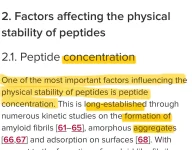
It's pretty logical that higher concentrations degrade faster. Also gh is one of the most difficult peptides to finish properly and different suppliers perform very differently.I saw this in the past, it still puzzles me on the hgh 18 to 36iu degradation difference being vastly different?
It's pretty logical that higher concentrations degrade faster. Also gh is one of the most difficult peptides to finish properly and different suppliers perform very differently.
So explain this to an illogical person why a larger iu degrades quicker? Also peptides are not over something like 50 amino acids unless that changed? My understanding is peptides are just signaling molecules?It's pretty logical that higher concentrations degrade faster. Also gh is one of the most difficult peptides to finish properly and different suppliers perform very differently.
"polypeptide" if you want to get semantic about it. I'm not sure what your second point is?Also peptides are not over something like 50 amino acids unless that changed? My understanding is peptides are just signaling molecules?
Larger IU means higher concentration. Higher concentration causes physical degradation of more complicated "polypeptides". This is where the advice of not shaking a vial comes from (although it's not applicable to the peptides we typically use because they are too simple to be affected by it.) The majority of the difference of those two tests is more likely differences in raw/finisher quality. But in general higher concentration is going to test worse than lower. Especially in hgh.So explain this to an illogical person why a larger iu degrades quicker?
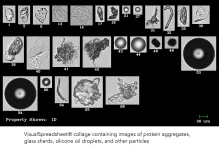
Because “degradation” of rHGH primarily takes the form of aggregation. I’m sure you’ve heard of “dimer”, and the less the better. That’s the smallest aggregate, two rHGH “monomers” stuck together. Trimer is three. Oligomer is up to twenty. The smallest “floater”, the visible speck that forms after reconstitution is at least 100um in size and made up of millions of rHGH molecules stuck together.So explain this to an illogical person why a larger iu degrades quicker? Also peptides are not over something like 50 amino acids unless that changed? My understanding is peptides are just signaling molecules?


Thanks, lots to digestBecause “degradation” of rHGH primarily takes the form of aggregation. I’m sure you’ve heard of “dimer”, and the less the better. That’s the smallest aggregate, two rHGH “monomers” stuck together. Trimer is three. Oligomer is up to twenty. The smallest “floater”, the visible speck that forms after reconstitution is at least 100um in size and made up of millions of rHGH molecules stuck together.
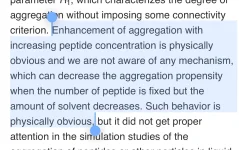
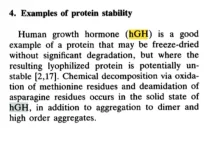
The higher the concentration the greater the chance of monomers bumping into each other and adhering. This process requires “seeds” of damaged rHGH monomers exposing “sticky” parts of the amino chain that are normally hidden within folds. When rHGH is damaged, usually by high temps in transport, or exposure to oxygen, they “unfold” and start the chain reaction of aggregation. The greater the concentration, the worse the aggregation is, the more monomers are lost to these balls of rHGH.
Pharma goes to great lengths to avoid this, with 8+ ingredient complex excipient formulas, extreme quality control, and 100% temp controlled shipping and storage.
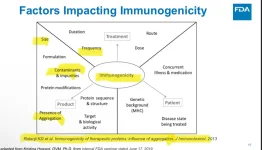
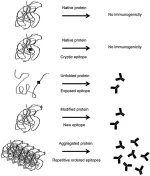
Not only are the aggregates inactive, so you lose x percent of active product, they’re immunogenic, and can cause your immune system to develop antibodies against rHGH. This was a serious problem in the past, as people who developed immunity to rHGH saw treatment lose from 20% to 100% of its effectiveness, and children who needed it to grow normally didn’t. Eventually pharma and the FDA got extremely serious about aggregates and immunogenicity, and formulating peptides / proteins in a way that minimized aggregate formation to almost nothing became, and still is, a top priority.
View attachment 25225
View attachment 25226
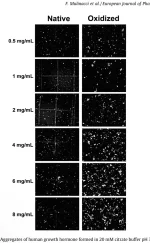
Here’s some oxygen exposed lyophilized rHGH reconstituted to different concentrations, and the aggregates are highlighted:
View attachment 25221
The typical trash being injected, and why you should filter:
View attachment 25227
View attachment 25233
View attachment 25234
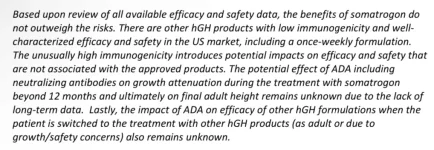
The FDA doesn’t tolerate even the potential risk of aggregates, as they told Novo Nordisk when reviewing an application for a new rHGH product, requiring it be transported and stored in much tighter temp controlled conditions than originally proposed:
View attachment 25237
And in this rejection of a new rHGH drug that cost $150 million to develop, because the level of immunogenicity it caused could make any future rHGH treatment less or completely ineffective for the patient who developed antibodies:
View attachment 25236
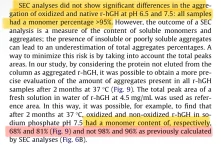
Finally, in the study below, the researchers realized that despite intentionally exposing lyophilized rHGH to high temps it was coming back as “98%+ pure”. Then they realized the damaged rHGH was forming large aggregates that got filtered out (all HPLC / SEC peptide analysis, like Jano, is filtered first) or got stuck in the machine. When they accounted for the “missing” rHGH, actual purity was more like 68%.
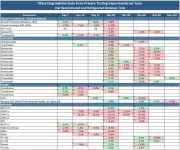
This aligns well with the “mass loss” in the chart posted above. BTW, “Mass loss” is effectively the same as “less pure”. Just subtract the loss from the original “purity” to get the actual purity of the product you’re using, ie, ~80% not 97%+, because you are, after all, injecting the “lost mass”, aka aggregates / impurities (unless you’re filtering it out), it’s not evaporating into thin air.
View attachment 25239
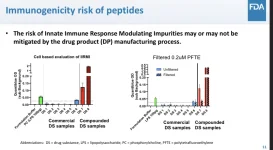
The “filtered” GLP samples chart on the right, in particular the two compounded specimens on the right, show how severe immune reactions can get in a sloppy (vs pharma) formulation, and how much that risk can be reduced by filtering out aggregates as illustrated by sample DS7 (the “pharma” samples on the left of that chart are already very low in contaminants and immunogenicity, sample DS8 is a disaster and must have some other immunogenicity trigger, my guess is the peptide itself is defective). ALL peptides are at risk of aggregation / immunogenicity, though rHGH is one of the most vulnerable. Filtering can minimize the risk. While everything may seem fine, I doubt anyone could feel a slowly developing immunity and loss of 20% or 30% effectiveness to a peptide over a couple of years:
View attachment 25240
I was thinking buzz kill. I will just pin away.Thanks, lots to digest
I call it the holy trinity...Of all the things I've tried that actually work, HGH is effective for various purposes: muscle recovery, lipolysis, body recomposition, skin improvement, and much more.
The downside is that you only see results after months of daily injections at doses of 2-4 IU, which makes it a bit expensive, although it's much cheaper now thanks to the gray market.
Furthermore, HGH has a unique characteristic: when combined with retatrutide and testosterone, it creates a unique synergy. I'm experiencing this firsthand, and it's absolutely incredible.