Peptide filtering

This is how I do it.

I use a needle and a 3ml syringe, draw 3ml BAC water, inject that into the lyophyllized powder.

Once reconstituted (roll it around gently on the counter for a few minutes), I draw that into the syringe. Leave that needle, disconnect the luer lock syringe.

Attach a filter to the syringe. Affix a fresh needle. stab that into your cartridge (if you use pens), or a sterile vial. Push the contents of the syringe thru the filter, into the cartridge/vial. Go slowly, there is usually some resistance. (note if you're using a pen cartridge, stab a cheap diabetic needle in the top as a vent, as well, or you'll push the plunger out the bottom when filling it).

Once all the contents are in the cartridge/vial, back the needle out so it's in the air gap in the vial, and release the needle. Even using 13mm filters, there will be some resistance and the plunger will spring back a few units. This way what gets drawn back from the cartridge/vial is air and not valuable product.

Disconnect the syringe from the needle. Draw in a few units of air. Reconnect, and push this thru the filter as well. This is the "air flush" to recover some of the liquid remaining in the filter.

If you'd like, you can use a 3rd needle, and push a few ml of BAC water thru the filter instead. I don't bother. You could also pre-wet the filter before use (use a cheap diabetic syringe to grab a few ml BAC water and just rinse it into the filter before use. I also don't bother).

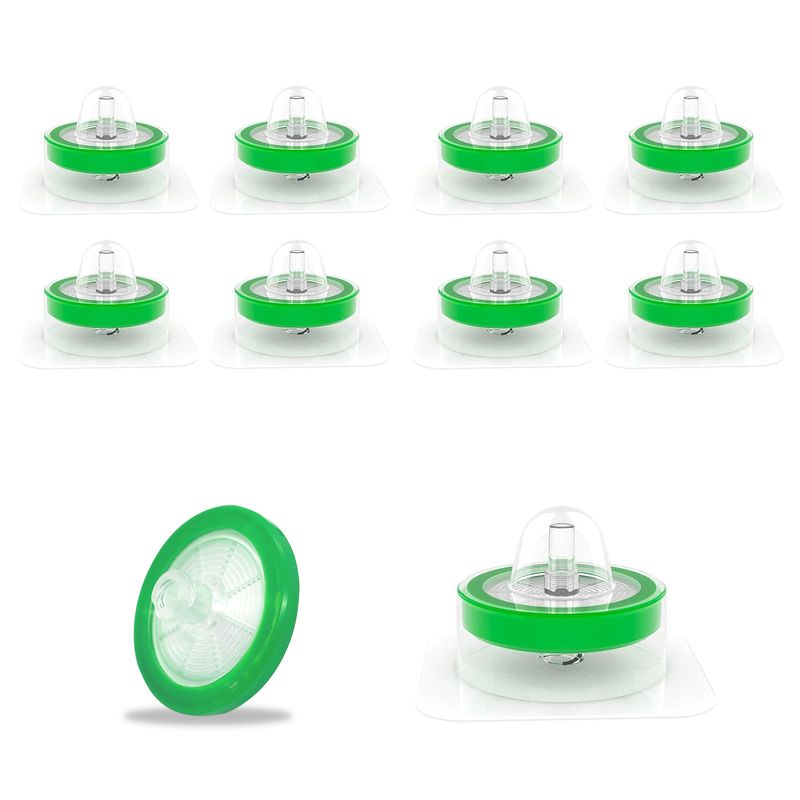
As V6R3W said, buying Biologix filters in bulk they are $.51/ea. Needles are $.10-.15 each. Even with the cartridge or vial, it only costs about $1 to filter.

I like your screen name!
Thanks, better than a late apex.

Thanks for the details. One question about the process. After you reconstitute, do you just leave the needle and syringe in the vial while you roll it around?
 
Thanks, better than a late apex.

Thanks for the details. One question about the process. After you reconstitute, do you just leave the needle and syringe in the vial while you roll it around?
I've done it both ways, but disconnecting the syringe and just rolling the vial and needle seems less awkward. I was worried some product might leak out but that never happened.
 
And the penny drops...

Now that you've done that, how do you know that cartridge or vial is sterile?

Sure, the seller put the word "sterile" in the ad. Do you believe them?

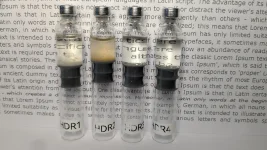
Go over to Pep's.org and read the thread "Sterilizing 3ml cartridges. How do you all do it?" and see Johnnys post where 6 of 15 "sterile" cartridges failed sterility, from HDRSTMED.

So depressing.

I suppose you do what you can, or are comfortable with, and don't worry about the rest.

But I do keep looking at used Autoclaves on FB Marketplace, and wondering if the UV Sterilizers that are on Amazborg for tattoo shops would be good enough...

JohnnysPicFromChat.Peppys.Org.webp
 
I am not sure if this is intentional, but you seem to be confusing the pore size for the common filters.

It's possible you bought 22 micron filters, but the most common size I have seen used, and the filters I buy from biologix, are 0.22um.
No, just left the "." off accidently. My comments are about .22um, .22 micron filters.
 
Having been on the bad end of a Reta batch that ended up failing sterility tests, I started down the rabbit hole of filters. I have been filtering using "sterile" 22 micron filters since I started researching peptides to help my wombat, but on researching what to do about this most recent test failure I realized that all filters are not made equally.

I found that the pass/fail that janoshik gives for sterilization tests is not enough information to just move on, filter, and use failed peptides (not that I would, I'm just researching facts) and that the amount of "stuff" that a filter can clean up is limited - the filter can be overwhelmed, so you need need to know the level of failure for any sterility test if you were to theoretically want to remediate the contamination.

Also I now understand that "normal" 22u filters are not up to the standard of "sterilization grade" filters and are perhaps not enough to give me the safety I'm looking for. The ones I found most commonly listed are the PureFlo D65 Disc Filter 0.65um / 0.2um - Sterile Compounding (Aqueous), but I'm having trouble finding these high grade filters.
Sorry guys, I left off the decimal in the filters i was describing. Meant to say ".22 micron" or ".22um".
 
I've done both, and subject to change, but air is the current preference.

If the 13mm holdback is .15ml, and I'm at 30mg/ml, that's 4.5mg in the filter, or $1.02 of Reta.


Another idea:
60mg Reta, my total BAC will be 2ml to hit 30mg/ml. Use 1 ml for the initial recon, put it through the filter, then rinse the initial vial with the balance of the BAC, plus the ~.15ml. The peptide content in the rinse will be very minimal anyways, no purging required.

This matters more with higher mg vials or more expensive peptides, like 120mg Tirz, 140mg Reta, or Cag/Tesa (4-6x the cost of Reta per mg).

Needles are only $.09, a barrel is only $.15, and a filter is ~$.51. Going the rinse method uses one filter, two barrels, and four needles (vent, filter, recon, rinse). That's all of $1.17 in supplies.
I'm a noobie and want to learn about filtering benefits. It's a new concept to me. Would anyone mind enlightening me why is done and nudge me somewhere to learn more.
 
And the penny drops...

Now that you've done that, how do you know that cartridge or vial is sterile?

Sure, the seller put the word "sterile" in the ad. Do you believe them?

Go over to Pep's.org and read the thread "Sterilizing 3ml cartridges. How do you all do it?" and see Johnnys post where 6 of 15 "sterile" cartridges failed sterility, from HDRSTMED.

So depressing.

I suppose you do what you can, or are comfortable with, and don't worry about the rest.

But I do keep looking at used Autoclaves on FB Marketplace, and wondering if the UV Sterilizers that are on Amazborg for tattoo shops would be good enough...

View attachment 20925

I can tell you from my experience growing mushrooms that no UV sterilizer is enough. Just buy a ~$120 pressure cooker. Supposedly 30 minutes at 15 psi is enough but I like 90 min.
 
I'm a noobie and want to learn about filtering benefits. It's a new concept to me. Would anyone mind enlightening me why is done and nudge me somewhere to learn more.
The syringe filters have a membrane pore diameter of 0.22 micrometres. Most bacteria are between 0.5 - 1.0 micrometres in size, so if your solution has bacterial contamination, they will be caught in the membrane. Viruses and endotoxins are smaller than that though, so they will just pass through.

The diameter of the whole syringe also differs. The most common ones are 4mm, 13mm and 25mm. The larger the diameter, the more volume you can filter without clogging the membrane, but the downside to that is you will have more 'dead volume' (solution that gets stuck in the membrane). For peptides, if you're reconstituting in 3 mL of BAC water, your best bet is the 13mm filter. You lose like 0.1 mL (10 units), which is negligible but if you want to recover it, you can do an air purge or run more BAC water through.

You can find tutorials on Youtube. Peptide Critic has a good one.
 
The syringe filters have a membrane pore diameter of 0.22 micrometres. Most bacteria are between 0.5 - 1.0 micrometres in size, so if your solution has bacterial contamination, they will be caught in the membrane. Viruses and endotoxins are smaller than that though, so they will just pass through.

The diameter of the whole syringe also differs. The most common ones are 4mm, 13mm and 25mm. The larger the diameter, the more volume you can filter without clogging the membrane, but the downside to that is you will have more 'dead volume' (solution that gets stuck in the membrane). For peptides, if you're reconstituting in 3 mL of BAC water, your best bet is the 13mm filter. You lose like 0.1 mL (10 units), which is negligible but if you want to recover it, you can do an air purge or run more BAC water through.

You can find tutorials on Youtube. Peptide Critic has a good one.
Thank you for taking the time to detail that for me, I really appreciate it. Thank you for the link too. I'll be off down another rabbit hole now. I am familiar on working in sterile conditions from another hobby of mine, but now I'm wondering if most people do this procedure in a sterile environment. Guess my laminar floor hood will be getting more use.
 
Thank you for taking the time to detail that for me, I really appreciate it. Thank you for the link too. I'll be off down another rabbit hole now. I am familiar on working in sterile conditions from another hobby of mine, but now I'm wondering if most people do this procedure in a sterile environment. Guess my laminar floor hood will be getting more use.
Lucky. I wish I had a laminar flow hood! I work in a research lab but I don't think they will be too pleased about me using theirs for my research purposes haha. At home I use a Still Air Box, which is not as sterile but it's cleaner than open bench work.
 
I've done both, and subject to change, but air is the current preference.

If the 13mm holdback is .15ml, and I'm at 30mg/ml, that's 4.5mg in the filter, or $1.02 of Reta.


Another idea:
60mg Reta, my total BAC will be 2ml to hit 30mg/ml. Use 1 ml for the initial recon, put it through the filter, then rinse the initial vial with the balance of the BAC, plus the ~.15ml. The peptide content in the rinse will be very minimal anyways, no purging required.

This matters more with higher mg vials or more expensive peptides, like 120mg Tirz, 140mg Reta, or Cag/Tesa (4-6x the cost of Reta per mg).

Needles are only $.09, a barrel is only $.15, and a filter is ~$.51. Going the rinse method uses one filter, two barrels, and four needles (vent, filter, recon, rinse). That's all of $1.17 in supplies.
Is there a cheaper, reputable place other than the recommended injectionshop for all of this? Im seeing 10 packs of filters for 26 bucks.
 
I always filter for sterility, however consider your safety from another perspective. I noticed rubber stopper debris in both my BAC vial AND my reconstituted peptides, and it was very difficult to spot. Besides the nastiness we usually think of when using filters, remember that there may be very small physical particles that you may be injecting into yourself/test subjects which a filter could catch. So there are many reasons to use filters outside of sterility concerns.
This is a concern of mine. Seeing as for filtering, InjectionShop is selling 18g blunt fill needles, it seems that this is a genuine possibilty.
 
This is a concern of mine. Seeing as for filtering, InjectionShop is selling 18g blunt fill needles, it seems that this is a genuine possibilty.
I filter with 25g. Would go thinner gauge on recon and filtering but the noodles get too wobbly to work with.
 
I am familiar on working in sterile conditions from another hobby of mine, but now I'm wondering if most people do this procedure in a sterile environment. Guess my laminar floor hood will be getting more use.

I wonder how many of us have a second hobby requiring sterile conditions? Be interesting in seeing a Venn diagram of that.
 
I was thinking about the filtering process. Could you reconstitute the pep, pull into a larger syringe, keep needle in original vial, add filter and then put back into the original vial?

Trying to see why this may not be a good idea. Bad stuff left in vial?
 
I was thinking about the filtering process. Could you reconstitute the pep, pull into a larger syringe, keep needle in original vial, add filter and then put back into the original vial?

Trying to see why this may not be a good idea. Bad stuff left in vial?
Exactly. Contaminants are still in the vial and needle.
 

Trending Topics

Forum Statistics

Threads
17,605
Posts
182,769
Members
59,234
Newest
milksteak
Back
Top Bottom