Anyone have remission of Obstructive Sleep Apnea with weight loss???

Ragnar

GLP-1 Apprentice
Member Since
Sep 30, 2025
Posts
77
Likes Received
203
Location
Ohio
United-States
I started this thread because my dream and ultimate goal is to no longer sound like Darth Vader while I sleep. I also want the freedom to not carry the damn machine with me on airplanes and argue with flight attendants that it doesn’t count towards my carry on. The ability to go camping in a tent or sleep under the stars would also be nice but still seems like a distant goal that is still so far away. These goals are the original reasons that I began my Tirz weight loss journey.

The last time I had a sleep study I weighed the most I’ve ever weighed (290lbs) with a BMI of 39.3. This sleep study revealed my AHI was 55.5/hr and my 90% pressure to keep airway open was 17.2 cmH20. When I started my glp1 journey in September I weighed 260 lbs and CPAP pressure to open airways was around 12 cmH2O.

Research suggests that weight loss of 10-15% can lead to remission in about 40% of individuals. In the Surmount OSA trial nearly 42-50% of people on Tirz met criteria for remission or mild OSA. The average weight lost in these studies was 18-20% over 52 weeks.

Currently my weight is 222 lbs and CPAP pressure is around 6.5 cmH2O. I have no idea what my AHI score is but treatment keeps it around 1.3. All I know is that if I don’t sleep with my machine that I still feel like shit the next day. I know I should be happy that my OSA is likely “mild” but I wanted it in remission by now. This experience is making me think I will need to loose another 30 lbs of fat for a peaceful machine free night of sleep.

What are other people’s experience with OSA remission and weight loss? Has anyone else been able to sleep without the giant elephant trunk attached to their face??
 
I started this thread because my dream and ultimate goal is to no longer sound like Darth Vader while I sleep. I also want the freedom to not carry the damn machine with me on airplanes and argue with flight attendants that it doesn’t count towards my carry on. The ability to go camping in a tent or sleep under the stars would also be nice but still seems like a distant goal that is still so far away. These goals are the original reasons that I began my Tirz weight loss journey.

The last time I had a sleep study I weighed the most I’ve ever weighed (290lbs) with a BMI of 39.3. This sleep study revealed my AHI was 55.5/hr and my 90% pressure to keep airway open was 17.2 cmH20. When I started my glp1 journey in September I weighed 260 lbs and CPAP pressure to open airways was around 12 cmH2O.

Research suggests that weight loss of 10-15% can lead to remission in about 40% of individuals. In the Surmount OSA trial nearly 42-50% of people on Tirz met criteria for remission or mild OSA. The average weight lost in these studies was 18-20% over 52 weeks.

Currently my weight is 222 lbs and CPAP pressure is around 6.5 cmH2O. I have no idea what my AHI score is but treatment keeps it around 1.3. All I know is that if I don’t sleep with my machine that I still feel like shit the next day. I know I should be happy that my OSA is likely “mild” but I wanted it in remission by now. This experience is making me think I will need to loose another 30 lbs of fat for a peaceful machine free night of sleep.

What are other people’s experience with OSA remission and weight loss? Has anyone else been able to sleep without the giant elephant trunk attached to their face??
I also have sleep apnea and use a cpap.

Your progress is impressive. Your treated AHI of 1.3 doesn’t tell you what your untreated AHI looks like now. OSA isn’t purely weight-driven. Airway anatomy, tongue positioning, and jaw structure matter too. Some people hit a floor where further weight loss doesn’t move the needle much. Some people are able to quit cpap therapy though after weight loss. If you still have apnea there’s options though MADs (dental device) if it becomes mild. Also loosing weight will qualify you for the inspire implant.

Curious if anyone here has gotten a follow-up sleep study done after weight loss and what their AHI looked like?

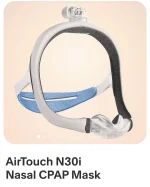
Side note: this is my favorite mask by far.
IMG_8209.webp
 
OSA isn’t purely weight-driven. Airway anatomy, tongue positioning, and jaw structure matter too. Some people hit a floor where further weight loss doesn’t move the needle much.
I completely agree with this that it isn't purely weight driven. When I first was diagnosed with OSA I was overweight and 26 years old. I self diagnosed myself and convinced the doctors to give me a sleep study. They didn't believe me at first and told me I wasn't fat enough or old enough to have OSA. I don't remember the numbers but I remember that my OSA was bad enough that I eventually saw an ENT. It turns out that I had a very deviated septum and an abnormally large Uvula. I underwent a modified uvulopalatopharyngoplasty (uppp) and septum correction which brought my OSA AHI values down a lot. Unfortunately, I didn't manage my weight well and eventually I gained a lot of weight which made my OSA bad again.

Currently my estimated body fat percentage is around 26% based on BIA. I have never been really skinny but I am hopeful that my OSA will go into remission if I loose another 30 lbs which would bring me to around 15% body fat. I have previously given the dental device some thought and I might reconsider that as option. The idea of another surgery to help with my sleep apnea doesn't thrill me and would be an absolute last resort.

My current mask is the Resmed AirFit N20 Nasal.
 
I completely agree with this that it isn't purely weight driven. When I first was diagnosed with OSA I was overweight and 26 years old. I self diagnosed myself and convinced the doctors to give me a sleep study. They didn't believe me at first and told me I wasn't fat enough or old enough to have OSA. I don't remember the numbers but I remember that my OSA was bad enough that I eventually saw an ENT. It turns out that I had a very deviated septum and an abnormally large Uvula. I underwent a modified uvulopalatopharyngoplasty (uppp) and septum correction which brought my OSA AHI values down a lot. Unfortunately, I didn't manage my weight well and eventually I gained a lot of weight which made my OSA bad again.

Currently my estimated body fat percentage is around 26% based on BIA. I have never been really skinny but I am hopeful that my OSA will go into remission if I loose another 30 lbs which would bring me to around 15% body fat. I have previously given the dental device some thought and I might reconsider that as option. The idea of another surgery to help with my sleep apnea doesn't thrill me and would be an absolute last resort.

My current mask is the Resmed AirFit N20 Nasal.
The UPPP + septoplasty history makes sense of why your pressure dropped so much with weight loss.

My nose is jacked up but no deviated septum I’ve been to ent and had X-rays or CT I forget which it was. They said inflammation only, I have bad allergies. So nasal rinses, Flonase, and a breathe right strip allow me to use nasal masks. They started me on a full face mask and I hated it.

26% to 15% body fat is a real shift for airway patency. Worth getting a repeat sleep study once you hit a new plateau. I’ve been thinking about doing a new one myself because for the past year myAir report shows I only average 0.41 AHI per night and past 90 days 0.32. My weight has stayed consistent past year. 220-230 @ 15-18% bf.

I have never tried the mask you use or one like it. I was not a fan of the airfit p10 with the pillows that go in your nose it’s a popular mask but wasn’t for me. The one I use is crazy how it makes such a perfect comfortable seal.
 
I also have sleep apnea and use a cpap.

Your progress is impressive. Your treated AHI of 1.3 doesn’t tell you what your untreated AHI looks like now. OSA isn’t purely weight-driven. Airway anatomy, tongue positioning, and jaw structure matter too. Some people hit a floor where further weight loss doesn’t move the needle much. Some people are able to quit cpap therapy though after weight loss. If you still have apnea there’s options though MADs (dental device) if it becomes mild. Also loosing weight will qualify you for the inspire implant.

Curious if anyone here has gotten a follow-up sleep study done after weight loss and what their AHI looked like?

Side note: this is my favorite mask by far.
View attachment 20998
I have tried over a dozen masks, and YES, this one is a winner! But, I do replace the back strap with the back strap from the Philips Dreamwear line because it goes lower on the head.
 
I have tried over a dozen masks, and YES, this one is a winner! But, I do replace the back strap with the back strap from the Philips Dreamwear line because it goes lower on the head.
I’ve seen people mention they prefer that head strap over the one it comes with. The one that it comes with works for me. I was influenced to give this one a try by a guy on TikTok “Uncle Nicko” his whole page is about sleep apnea and he tries a bunch of different masks. This one is his favorite. He was right, it is far better than any of the other ones I’ve ever tried.
 
I started this thread because my dream and ultimate goal is to no longer sound like Darth Vader while I sleep. I also want the freedom to not carry the damn machine with me on airplanes and argue with flight attendants that it doesn’t count towards my carry on. The ability to go camping in a tent or sleep under the stars would also be nice but still seems like a distant goal that is still so far away. These goals are the original reasons that I began my Tirz weight loss journey.

The last time I had a sleep study I weighed the most I’ve ever weighed (290lbs) with a BMI of 39.3. This sleep study revealed my AHI was 55.5/hr and my 90% pressure to keep airway open was 17.2 cmH20. When I started my glp1 journey in September I weighed 260 lbs and CPAP pressure to open airways was around 12 cmH2O.

Research suggests that weight loss of 10-15% can lead to remission in about 40% of individuals. In the Surmount OSA trial nearly 42-50% of people on Tirz met criteria for remission or mild OSA. The average weight lost in these studies was 18-20% over 52 weeks.

Currently my weight is 222 lbs and CPAP pressure is around 6.5 cmH2O. I have no idea what my AHI score is but treatment keeps it around 1.3. All I know is that if I don’t sleep with my machine that I still feel like shit the next day. I know I should be happy that my OSA is likely “mild” but I wanted it in remission by now. This experience is making me think I will need to loose another 30 lbs of fat for a peaceful machine free night of sleep.

What are other people’s experience with OSA remission and weight loss? Has anyone else been able to sleep without the giant elephant trunk attached to their face??
I had sleep apnea and was on a Cpap when I started at 225lbs. I am down to 190 and sleep apnea is gone. I still snore, but sleep apnea is gone. Haven't done a formal sleep study since, but my Oura ring or Apple Watch don't show any significant breathing disturbances. Ditching the cpap has been great! Still need to lose about 15-20 lbs, and hoping with that my snoring will go away completely.
 
The UPPP + septoplasty history makes sense of why your pressure dropped so much with weight loss.

My nose is jacked up but no deviated septum I’ve been to ent and had X-rays or CT I forget which it was. They said inflammation only, I have bad allergies. So nasal rinses, Flonase, and a breathe right strip allow me to use nasal masks. They started me on a full face mask and I hated it.

26% to 15% body fat is a real shift for airway patency. Worth getting a repeat sleep study once you hit a new plateau. I’ve been thinking about doing a new one myself because for the past year myAir report shows I only average 0.41 AHI per night and past 90 days 0.32. My weight has stayed consistent past year. 220-230 @ 15-18% bf.

I have never tried the mask you use or one like it. I was not a fan of the airfit p10 with the pillows that go in your nose it’s a popular mask but wasn’t for me. The one I use is crazy how it makes such a perfect comfortable seal.
An average of 0.41 or 0.32 AHI with treatment is insane compared to my average of 1.3 with treatment. I am curious how low your AHI is without treatment. I use auto CPAP settings which is why my current pressure is so low.
I am really curious about that mask now because the hose comes out the top and the seal looks like it’s more around the nose. My hose can get in the way when I roll in my sleep and my beard gets irritated with the seal below the nose.
 
I had sleep apnea and was on a Cpap when I started at 225lbs. I am down to 190 and sleep apnea is gone. I still snore, but sleep apnea is gone. Haven't done a formal sleep study since, but my Oura ring or Apple Watch don't show any significant breathing disturbances. Ditching the cpap has been great! Still need to lose about 15-20 lbs, and hoping with that my snoring will go away completely.
That is awesome! Congrats on sleep apnea remission.
 
I have OSA on CPAP and have lost about 12% of my body weight since starting tirz. I still have it for sure and my pressure is still averaging in the low teens but it’s down several cmH2O and my overnight events have dropped to 0.6/hour.

However, I snored when I was a teenager so I suspect anatomy plays a role for me. the ENT looked at me and said “you have a large tongue and a long uvula”, when he was checking my tonsils
 
An average of 0.41 or 0.32 AHI with treatment is insane compared to my average of 1.3 with treatment. I am curious how low your AHI is without treatment. I use auto CPAP settings which is why my current pressure is so low.
I am really curious about that mask now because the hose comes out the top and the seal looks like it’s more around the nose. My hose can get in the way when I roll in my sleep and my beard gets irritated with the seal below the nose.
My sleep study that diagnosed me with sleep apnea I got 14 AHI. So right at top of mild where moderate starts at 15. With auto settings and prior to weight loss using full face mask my treated ahi was around 1.25.

I quit going to my sleep doc and went rogue. I custom set my cpap settings after a lot of research. Running 8–15 pressure with EPR at 3 and it works way better for me than auto did. My average pressure is 9. This is not medical advice but works for me.

The mask is great. I run the hose through an adjustable arm above my head so it's out of the way. I can toss and turn freely. The nose cradle sits at the base of the nose, zero beard irritation and doesn’t bother mustache.
 
Diagnosed with OSA in 2017, lost 60 pounds in 2018, had another sleep study and my doctor said that my sleep apnea was marginal and that I could stop CPAP if I wanted. I stopped.

Gained the 60lbs back plus another 30lbs by fall 2024 and re-diagnosed with OSA in Oct 2024. Started CPAP again and learned this time how to access sleep data and how to adjust the clinical settings.

My new pulmonologist wants me to lose ALL of the weight that I plan to lose prior to ordering a new sleep study. I’ve lost about 118 pounds, but probably need to lose another 20 lbs. I’ve adjust the machine to the lowest pressure possible and probably don’t need CPAP anymore. My apple watch and Oura ring say no breathing issues. 🤷🏻‍♂️

ETA: I would love to use a nasal mask, but since I'm a mouth breather, that's a no go. Had a panic attack when I taped my mouth trying to use one. After 10 or more masks, I've been using the F40 and love it.
 
Last edited:
Has anyone also stopped snoring? After being on for a while or reaching goal?
 
I started this thread because my dream and ultimate goal is to no longer sound like Darth Vader while I sleep. I also want the freedom to not carry the damn machine with me on airplanes and argue with flight attendants that it doesn’t count towards my carry on. The ability to go camping in a tent or sleep under the stars would also be nice but still seems like a distant goal that is still so far away. These goals are the original reasons that I began my Tirz weight loss journey.

The last time I had a sleep study I weighed the most I’ve ever weighed (290lbs) with a BMI of 39.3. This sleep study revealed my AHI was 55.5/hr and my 90% pressure to keep airway open was 17.2 cmH20. When I started my glp1 journey in September I weighed 260 lbs and CPAP pressure to open airways was around 12 cmH2O.

Research suggests that weight loss of 10-15% can lead to remission in about 40% of individuals. In the Surmount OSA trial nearly 42-50% of people on Tirz met criteria for remission or mild OSA. The average weight lost in these studies was 18-20% over 52 weeks.

Currently my weight is 222 lbs and CPAP pressure is around 6.5 cmH2O. I have no idea what my AHI score is but treatment keeps it around 1.3. All I know is that if I don’t sleep with my machine that I still feel like shit the next day. I know I should be happy that my OSA is likely “mild” but I wanted it in remission by now. This experience is making me think I will need to loose another 30 lbs of fat for a peaceful machine free night of sleep.

What are other people’s experience with OSA remission and weight loss? Has anyone else been able to sleep without the giant elephant trunk attached to their face??
Weight loss got me 100% off of it. Starting weight 330 I lost 15-20lbs and never needed it again. Good luck! You will be free soon!
 
Weight loss got me 100% off of it. Starting weight 330 I lost 15-20lbs and never needed it again. Good luck! You will be free soon!
Same here. My wife was always complaining about my snoring as well. Have not been snoring for about 3 months. I have lost a lot of weight with Reta and a blend of CJC-1295/Ipamorelin.

Also found out last year that a slight deviated septum can cause sleep apnea. So I went to an ENT who checked and confirmed I had a slight deviated septum and nasal polyps. Also turns out that my body tried to auto-correct the problem by adding extra nasal bone on the one side.

I still need to get it fixed but the weight loss have me off the CPAP and no more snoring.
 
I never got tested for sleep apnoea, but I probably should have been, given chronic tiredness and extremely loud snoring. Somewhere between 145kg and 75 kg, now 65kg, the snoring is completely gone, despite a severely deviated septum , presumably from getting my nose broken once or twice as a kid.
 
That is another great improvement for so many of you also!! 🙂
 
Big Update Here.
I have been on CPAP since Dec 2023 with a diagnosed Severe Obstructive Sleep Apnea (OSA) - AHI 49. CPAP therapy has been great, never missed a single night and my CPAP-treated AHI is 0.0 to 0.2. Great.

Last week, I had two wisdom teeth removed. They were deep in the sinus, with bulbous roots, so the Oral Surgeon told me to NOT use my CPAP (BiLevel) for Two Weeks. I thought doing so would trigger nightly AFib episodes, but I am following his advice because I heard that developing a Dry Socket is just the worst.

So, for the past two nights I ran an experiment with my Wellue O2 ring-wearing it continuously for the entire night-morning.

Color me surprised. My UNTREATED, non-CPAP night had NO Oxygen drops below 92%! Holy shit! I have lost 65 pounds since starting GLP-1s last June, but considering that I have 120 more pounds to go, that is really NOT a significant amount of loss.

I have been reading that the GLP1s resolve OSA by more than just a weight loss - it reduces the throat's tissue inflammation and adipose tissue, and some even suspect the brain-stimulated mechanisms for the whole breathing system.

I have scheduled an in-home Sleep Test to officially confirm the results. Shit is crazy!


So, for me, starting on this class of drugs has:
  1. Moved me from Stage 3 Chronic Kidney Disease (CKD) with an eGFR of 49 to Stage 2 eGFR of 78.
  2. Eliminated the excruciating chronic pain from bone-on-bone bilateral knee osteoarthritis (no surgeon would give me a knee replacement because of my starting weight. [thank God now]). Pain was especially debilitating and necessitated full-time cane use because of CKD I was unable to take any pain med except Tylenol.
  3. Totally cured my Overactive Bladder, eliminating the need for fucking adult protection. Like totally.
  4. Totally eliminated my IBS.
  5. Stopped Gout flares that Allopurinol was not completely solving.
  6. So far appears to have put my Severe Obstructive Sleep Apnea into remission
  7. Improving lipedema down to unimaginable levels
  8. Dramatically improving PCOS markers
  9. Gave me a new feeling where I enjoy going out again, now that I can do so without breathlessness and a cane.
The weight loss is just an added benefit from the many other improvements that these drugs are doing for me. While I have discovered that Reta triggers gall bladder issues, Tirzepatide is probably my go-to for the rest of my life, as long as my overseas friends manufacture it.

AND, don't even get me started on what GLOW has done for me--THAT is an entirely different post. 🤣

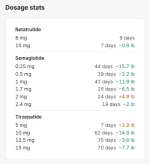
My GLP1 doses since June 25

1777321847131.webp
 
Has anyone also stopped snoring? After being on for a while or reaching goal?
I had mild sleep apnea when I was 150lbs overweight. I lost 125 and it's gone. No snoring, no apnea, no CPAP, I sleep like a baby now. The wife used to snore like a motorbike. I had ear plugs handy it was so bad. She's lost a similar percentage of weight as me and she almost never snores now... Thank you Jesus!
 
Lost 100 pounds on tirz and had a new sleep study. Zero apneas, zero snoring. OSA diagnosis officially resolved. Faithful CPAP (10 year old Resmed Airsense 10) into the dust bin of history. Hallelujah!

Edit: to clarify, my latest sleep study was a 4 day at home affair with sensors on the chest, stomach, oximeter on finger, and nasal cannula.
 
Last edited:
I ran an experiment with my Wellue O2 ring-wearing it continuously for the entire night-morning.
This is the answer you're looking for OP. A sleep study only captures one night under one set of conditions. It's useful for catching and setting up treatment for moderate to severe apnea (where your result is unambiguous). It's not great for evaluating borderline cases where a dozen random variables could affect your airways and may deviate between where the study is conducted VS your own bed VS a hotel bed.

Plus with your own ring you can evaluate if side sleeping might be necessary or if you can even get away with back sleeping without your machine and how the two positions might compare.

If you still suffer from mild OSA, you could also consider trying a dental appliance (either custom from your dentist or self-fit from a cheap Amazon kit) to see if that might be sufficient to resolve your OSA. There are some minor jaw issues that can come with that, but it's possible you could use the CPAP at home and take the dental appliance with you on trips (since it's much more portable), if it's sufficient to resolve your current degree of sleep apnea.

Lastly, there are some people who have perfected stomach sleeping positions and found their own custom stomach positions are sufficient to resolve their current degree of OSA. That's a little more complex than I care to explain here, but if you search a bit on OSA forums you'll likely find what I'm talking about described more thoroughly.

And, obviously, regardless of what the pulse oximeter says, how you feel the next morning is a critical variable too, but I wouldn't base my decision on how you feel alone, since one can often cope with mild sleep apnea and still be experiencing negative health effects from it without "feeling" it the next day.
 
Lost 100 pounds on tirz and had a new sleep study. Zero apneas, zero snoring. OSA diagnosis officially resolved. Faithful CPAP (10 year old Resmed Airsense 10) into the dust bin of history. Hallelujah!

Edit: to clarify, my latest sleep study was a 4 day at home affair with sensors on the chest, stomach, oximeter on finger, and nasal cannula.
Dude! That is crazy - after 10 years you probably thought it would be for life. Nice.
 
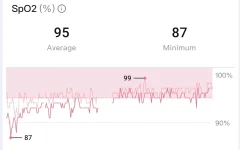
Technically Tirz cured my moderate OSA, but:

1777365371080.webp
First half is me falling asleep without putting the CPAP mask on, 2nd half is after waking up and putting it on.
The data is from a Ringconn Gen2, which is kind of a sleep apnea-focused ring.
 
Last edited:
This is the answer you're looking for OP. A sleep study only captures one night under one set of conditions. It's useful for catching and setting up treatment for moderate to severe apnea (where your result is unambiguous). It's not great for evaluating borderline cases where a dozen random variables could affect your airways and may deviate between where the study is conducted VS your own bed VS a hotel bed.

Plus with your own ring you can evaluate if side sleeping might be necessary or if you can even get away with back sleeping without your machine and how the two positions might compare.

If you still suffer from mild OSA, you could also consider trying a dental appliance (either custom from your dentist or self-fit from a cheap Amazon kit) to see if that might be sufficient to resolve your OSA. There are some minor jaw issues that can come with that, but it's possible you could use the CPAP at home and take the dental appliance with you on trips (since it's much more portable), if it's sufficient to resolve your current degree of sleep apnea.

Lastly, there are some people who have perfected stomach sleeping positions and found their own custom stomach positions are sufficient to resolve their current degree of OSA. That's a little more complex than I care to explain here, but if you search a bit on OSA forums you'll likely find what I'm talking about described more thoroughly.

And, obviously, regardless of what the pulse oximeter says, how you feel the next morning is a critical variable too, but I wouldn't base my decision on how you feel alone, since one can often cope with mild sleep apnea and still be experiencing negative health effects from it without "feeling" it the next day.
That is interesting, the bit about sleeping positions.
I have developed a odd sleeping position over years lying face down/left sided and slightly propped up with about 5 pillows, mainly so I would not wake up with a horribly sore dry throat from snoring. The logic was that that position would make my jaw fall forwards rather than back while sleeping and help with the snoring and the resultant sore throat. It sounds very like what you are describing, never occurred to me to look it up and see if it was something other people did. Probably makes it all the more likely I really did have sleep apnea, but now I have no snoring at all and my samsung watch says I do not have sleep apnea, probably not necessary to check it out now, unless I am stupid enough to put a lot of weight back on. Still sleep in that position out of habit mostly.
 
That is interesting, the bit about sleeping positions.
I have developed a odd sleeping position over years lying face down/left sided and slightly propped up with about 5 pillows, mainly so I would not wake up with a horribly sore dry throat from snoring. The logic was that that position would make my jaw fall forwards rather than back while sleeping and help with the snoring and the resultant sore throat. It sounds very like what you are describing, never occurred to me to look it up and see if it was something other people did. Probably makes it all the more likely I really did have sleep apnea, but now I have no snoring at all and my samsung watch says I do not have sleep apnea, probably not necessary to check it out now, unless I am stupid enough to put a lot of weight back on. Still sleep in that position out of habit mostly.
That's exactly the idea. I couldn't find the post I was talking about so I asked my chatbot buddy to hunt it down for me and it was successful:

I didn't put in the effort to test the position myself, but your thinking is pretty much what they were thinking too. And sleep apnea itself is very relative. Just as a snorer will get trained over time (by a pissed off partner) to sleep in a certain position, a mild OSA sufferer will figure out that they seem to sleep better in a certain position, causing it to become habit.

I know that I personally had to sleep on my side before getting a CPAP and really enjoyed being able to go back to being a back sleeper, which for me feels more comfortable, but doesn't lend itself to clear airways.

I'll also add that OSA is often an underappreciate concern in our space (fat people who aren't successful at getting and staying skinny). We all like to fixate on "calories," but good luck getting that to work if you're someone with severe untreated OSA who is getting a jolt of cortisol every minute of pseudo-sleep to enable you to start breathing again, getting up "to pee" every 20 minutes, and seeking whatever action you think might be able to help you sleep a little longer for that next stretch. Not impossible, but definitely adds a much greater difficulty level to maintaining such a behavior, not to mention the metabolic implications of the cortisol spikes. LOL
 

Trending Topics

Forum Statistics

Threads
17,699
Posts
183,674
Members
59,467
Newest
ouryas
Back
Top Bottom