Anyone else place an order during “shutdown”?

Been piecing this together and figured it was worth a post. Two things a lot of people get wrong: what’s actually behind the recent export-side seizure wave out of China, and what “US warehouse” really means when sellers advertise it.

Why China is cracking down on exports right now

Three things stacked together:

-Patent politics. The core GLP-1 compound patent in China expired March 20, 2026. Domestic biosimilar makers are just now ramping up legitimate production. Authorities have every reason to crack down on gray-market exporters undercutting the newly-legal domestic industry and still infringing on patents in destination countries like the US, where the patent runs until 2033.

-Diplomatic pressure. Major Western pharma companies have secured ITC exclusion orders targeting counterfeit imports. An INTERPOL operation from Dec 2024 to May 2025 ran across 90 countries including China, netting hundreds of arrests. Big pharma is pushing through diplomatic channels and China has reasons to look cooperative.

-Domestic scandal prevention. Probably the biggest driver. Chinese authorities are scared of counterfeit product killing people domestically, which would be a political disaster right as the legit domestic industry is launching. Cracking down on export labs disrupts the same operations serving the Chinese gray market.

Retail sales of this stuff are still technically illegal inside China outside licensed channels, which is why most of the overseas-facing activity specifically targets foreign buyers.

What a “US warehouse” actually is

Nothing like a mainstream fulfillment service.

Almost always a small third-party reshipping operation. Sometimes a legit bonded warehouse storing pallets for multiple overseas clients in an industrial unit. Sometimes a garage, residential address, or rented storage space run by a paid US-based contractor. Range is huge, down to a guy’s spare bedroom.

Workflow: seller bulk-ships via air or ocean freight with a US importer of record on paper. Once cleared, it sits at the domestic node. You order, operator prints a domestic label and drops it in the mail. Looks domestic, 2 to 5 days.

This space skews informal because mainstream fulfillment companies drop the account once they realize what’s in the boxes. A lot of actual warehousing is legit cross-border e-commerce operators quietly taking one gray client on the side.

Do multiple sellers share the same warehouse?

All the time. A single operator might fulfill for 5 to 20+ clients at once. Two competing “brands” can easily ship from the same building, sometimes the same shelf. Segregation is only as clean as the operator. A pro setup with warehouse management software keeps it straight; a guy in a storage unit with a spreadsheet is grabbing from whichever bin is closer.

If two sellers source from the same Chinese lab and fulfill from the same US operator, you’re literally getting identical product with different labels at different prices. Also explains why “our US warehouse is down” outages often hit multiple brands at once. One raid takes down many.

Seller and US agent trust

Shakiest part of the setup. Agent doesn’t hold leverage, they don’t own the inventory and can be swapped. But their exposure is real: name on the lease, address that could get raided. Motivated not to skim (ongoing payout beats one-time grab) but motivated to bail fast if law enforcement sniffs around. If an agent steals, seller has zero recourse.

What holds it together: reputation in the logistics network (word travels fast), hometown/clan ties for some, staggered payments so the agent’s always owed something, and running multiple agents in parallel to absorb losses.

Makers vs. middlemen

Most misunderstood piece. A minority (usually bigger, longer-running operations) are actual makers or tight with one specific lab. Real synthesis, own quality control, own vialing, consistent quality, can do custom orders. Most are resellers, sourcing from one or more Chinese labs, rebranding, switching suppliers on price. Quality drifts batch to batch. Middle category: started as middlemen, got close enough to one lab to be effectively vertically integrated.

Signals closer to a real maker: batch-specific lab reports, consistent purity and identity data across orders, non-catalog items on request, answers technical questions directly. Signals middleman: catalog mirrors other sellers, inconsistent presentation, “let me check with the lab,” labels and fill quality change between orders.

US legal side, briefly

Nothing here is a scheduled controlled substance, so possession isn’t a drug crime. But under federal law anything intended for human use that isn’t approved is technically an unapproved new drug, and selling for human consumption is illegal. “Research use only” is essentially fiction. Regulators look at how the product is actually marketed. Buyers at personal-use quantities basically never get prosecuted. Sellers are where enforcement ramped hard in 2025 to 2026.

The question: how much should “has US domestic stock” factor into trust?

Some value to it. A stocked node proves they’ve cleared customs at least once, rules out pure fly-by-night. And domestic shipping kills customs risk on your package regardless of quality. But the signal’s weaker than it looks: warehouse photos are easily faked, shared warehouses obscure whose inventory is whose, international freight and the last-mile domestic label are totally different skills, and the “US contact” is a paid contractor who burns out or disappears.

Domestic stock is mostly (a) customs insurance for you and (b) weak signaling of real infrastructure. The actual reliability predictors (years operating, recent consistent reviews, responsive comms, clean reship history) come from reputation, not stock status.

This is pretty accurate.
 
Been piecing this together and figured it was worth a post. Two things a lot of people get wrong: what’s actually behind the recent export-side seizure wave out of China, and what “US warehouse” really means when sellers advertise it.

Why China is cracking down on exports right now

Three things stacked together:

-Patent politics. The core GLP-1 compound patent in China expired March 20, 2026. Domestic biosimilar makers are just now ramping up legitimate production. Authorities have every reason to crack down on gray-market exporters undercutting the newly-legal domestic industry and still infringing on patents in destination countries like the US, where the patent runs until 2033.

-Diplomatic pressure. Major Western pharma companies have secured ITC exclusion orders targeting counterfeit imports. An INTERPOL operation from Dec 2024 to May 2025 ran across 90 countries including China, netting hundreds of arrests. Big pharma is pushing through diplomatic channels and China has reasons to look cooperative.

-Domestic scandal prevention. Probably the biggest driver. Chinese authorities are scared of counterfeit product killing people domestically, which would be a political disaster right as the legit domestic industry is launching. Cracking down on export labs disrupts the same operations serving the Chinese gray market.

Retail sales of this stuff are still technically illegal inside China outside licensed channels, which is why most of the overseas-facing activity specifically targets foreign buyers.

What a “US warehouse” actually is

Nothing like a mainstream fulfillment service.

Almost always a small third-party reshipping operation. Sometimes a legit bonded warehouse storing pallets for multiple overseas clients in an industrial unit. Sometimes a garage, residential address, or rented storage space run by a paid US-based contractor. Range is huge, down to a guy’s spare bedroom.

Workflow: seller bulk-ships via air or ocean freight with a US importer of record on paper. Once cleared, it sits at the domestic node. You order, operator prints a domestic label and drops it in the mail. Looks domestic, 2 to 5 days.

This space skews informal because mainstream fulfillment companies drop the account once they realize what’s in the boxes. A lot of actual warehousing is legit cross-border e-commerce operators quietly taking one gray client on the side.

Do multiple sellers share the same warehouse?

All the time. A single operator might fulfill for 5 to 20+ clients at once. Two competing “brands” can easily ship from the same building, sometimes the same shelf. Segregation is only as clean as the operator. A pro setup with warehouse management software keeps it straight; a guy in a storage unit with a spreadsheet is grabbing from whichever bin is closer.

If two sellers source from the same Chinese lab and fulfill from the same US operator, you’re literally getting identical product with different labels at different prices. Also explains why “our US warehouse is down” outages often hit multiple brands at once. One raid takes down many.

Seller and US agent trust

Shakiest part of the setup. Agent doesn’t hold leverage, they don’t own the inventory and can be swapped. But their exposure is real: name on the lease, address that could get raided. Motivated not to skim (ongoing payout beats one-time grab) but motivated to bail fast if law enforcement sniffs around. If an agent steals, seller has zero recourse.

What holds it together: reputation in the logistics network (word travels fast), hometown/clan ties for some, staggered payments so the agent’s always owed something, and running multiple agents in parallel to absorb losses.

Makers vs. middlemen

Most misunderstood piece. A minority (usually bigger, longer-running operations) are actual makers or tight with one specific lab. Real synthesis, own quality control, own vialing, consistent quality, can do custom orders. Most are resellers, sourcing from one or more Chinese labs, rebranding, switching suppliers on price. Quality drifts batch to batch. Middle category: started as middlemen, got close enough to one lab to be effectively vertically integrated.

Signals closer to a real maker: batch-specific lab reports, consistent purity and identity data across orders, non-catalog items on request, answers technical questions directly. Signals middleman: catalog mirrors other sellers, inconsistent presentation, “let me check with the lab,” labels and fill quality change between orders.

US legal side, briefly

Nothing here is a scheduled controlled substance, so possession isn’t a drug crime. But under federal law anything intended for human use that isn’t approved is technically an unapproved new drug, and selling for human consumption is illegal. “Research use only” is essentially fiction. Regulators look at how the product is actually marketed. Buyers at personal-use quantities basically never get prosecuted. Sellers are where enforcement ramped hard in 2025 to 2026.

The question: how much should “has US domestic stock” factor into trust?

Some value to it. A stocked node proves they’ve cleared customs at least once, rules out pure fly-by-night. And domestic shipping kills customs risk on your package regardless of quality. But the signal’s weaker than it looks: warehouse photos are easily faked, shared warehouses obscure whose inventory is whose, international freight and the last-mile domestic label are totally different skills, and the “US contact” is a paid contractor who burns out or disappears.

Domestic stock is mostly (a) customs insurance for you and (b) weak signaling of real infrastructure. The actual reliability predictors (years operating, recent consistent reviews, responsive comms, clean reship history) come from reputation, not stock status.
Thanks for the slow down on my thread hopping..
and seems accurate. Didn’t know about the CN patent change that just occurred, very curious to see how that changes the marketplace moving forward.
 
I placed an order with Semagl, and 95% of it came without issues. But then in one package there was something missing, which they wanted to investigate. And now it seems that the WA and other means of contact are down.

And I need my reta, I don't want to be fat again.
 
Reta-Peptide just out this out on their telegram:

"hi friend, as last two weeks our local check strictly, most express shipping line stopped, now to USA, can only ship by special line which need at least 15 -20 days, at least recently 1month, all express line stopped for ship peptides,now to USA , can only use special line, before arrive to USA, no tracking information, if you think it is ok, then you can order, if not good for you, suggest you wait at least 1 month , many thanks for all your cooperate and trust"

Last time I ordered from them it took like 3-4 days from HK.
Do they have a WA?
 
I placed an order with Semagl, and 95% of it came without issues. But then in one package there was something missing, which they wanted to investigate. And now it seems that the WA and other means of contact are down.

And I need my reta, I don't want to be fat again.
Sounds shady. What vendor is Semagl?
 
Will that put my name/address on a list from now on where they target me now in CN post to double check any future shipments?
This is my biggest concern, and that's a well contested title.. money, time, effort, possible health risk, possible scam and now Big Pharma vermin politics
 
It’s a possibility… I can’t honestly speak to how much of a guarantee it is. I feel like plenty of people get re-ships though?
True. One of the people in the erp tg said it's better that it was stopped on the china side but I'm pretty sure they're a shill sooooo....idk.
 
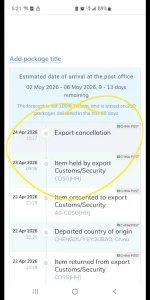
Got an update on shipping. 'Export canceled' which I'm assuming means it was found out and seized. Hooray.
Mine says it has been siting in Jamaica, New York for the past week. Does that mean it made it past customs??

I’m glad I bought some research supplies from another place with a US warehouse that showed up in a week!
 
Mine says it has been siting in Jamaica, New York for the past week. Does that mean it made it past customs??
No. But there is still hope:

My last order showed it was in at the Jamaica, NY post office for NINE DAYS, except it really wasn't, it was waiting on Customs to waive it through. Then tracking updated when it really was at the post office and it continued on it's way. After you go through this a few times, you learn to read the tea leaves (no pun intended).
 
Last edited:
It appears that it's all Americans whining about shipments being stopped. Is this Just US shipments, or is it worldwide? I have two packages from two suppliers, one claimed to have been sent Wednesday, the other told me Thursday that it had already been shipped neither show up on tracking. It's Saturday here.

I also have a non peptide shipment that tracking shows being on a plane for the last 14 days. I've taken that flight several times, I believe that it was 5 hours between China and Thailand. I hope the plane didn't crash 🤢
 
Last edited:
😂 I now know this is Nyan Cat, because my daughter just told me… cat everything, that one.

Also ya, trying to stay cautiously optimistic.
I did get my order yesterday from this seller after 20 days. Uniuni tracking never updated until it was delivered. I will admit that's not the seller's fault. But still sucks the seller took a US warehouse order and changed it to a CN warehouse order without telling me.
US warehouse order from a other well known seller just arrived 4 days after ordering. They were OOS until 5 days ago, but at least they were up front about it when I tried to order and wouldn't take orders until they had stock to sell.
 
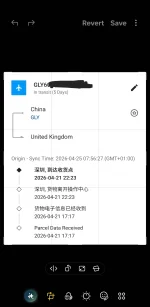
Mine has been like this for a few days. I had no idea there were export issues TBH, this is my first peptide order!
 

Attachments

  • Screenshot_20260425_122437_Photo Editor.webp
    Screenshot_20260425_122437_Photo Editor.webp
    71.8 KB · Views: 5
Mine has been like this for a few days. I had no idea there were export issues TBH, this is my first peptide order!
This is very typical. As many others on this thread have experienced, tracking means almost nothing most of the time. Give it time. Generally speaking, 2 weeks is fairly normal, 3 is too long and likely a problem.
 
It appears that it's all Americans whining about shipments being stopped. Is this Just US shipments, or is it worldwide? I have two packages from two suppliers, one claimed to have been sent Wednesday, the other told me Thursday that it had already been shipped neither show up on tracking. It's Saturday here.

I also have a non peptide shipment that tracking shows being on a plane for the last 14 days. I've taken that flight several times, I believe that it was 5 hours between China and Thailand. I hope the plane didn't crash 🤢

Certainly global.

I did get my order yesterday from this seller after 20 days. Uniuni tracking never updated until it was delivered. I will admit that's not the seller's fault. But still sucks the seller took a US warehouse order and changed it to a CN warehouse order without telling me.
US warehouse order from a other well known seller just arrived 4 days after ordering. They were OOS until 5 days ago, but at least they were up front about it when I tried to order and wouldn't take orders until they had stock to sell.

Not cool about the bait and switch, but glad you got your product!
 
This is very typical. As many others on this thread have experienced, tracking means almost nothing most of the time. Give it time. Generally speaking, 2 weeks is fairly normal, 3 is too long and likely a problem.
Thank you for taking the time to reply. You have to wonder if sitting on a pallet in some baking hot Chinese warehouse for 2 weeks has an effect on anything!
 
I am a newbie I had no clue about the shutdown lol.

I placed an order on 4/10, and received it yesterday 4/24, 2 weeks. My venny told me nothing major was going on from their end, and things were as normal.
 
Last edited:

Trending Topics

Forum Statistics

Threads
17,759
Posts
184,513
Members
59,664
Newest
msingh3804
Back
Top Bottom