Experience with 20mg/wk reta?

I'm sure for some people. Not looking good though in general, based on the SURMOUNT results, where people gained a good amount of weight after stopping tirz (and kept gaining weight):
I'm all for micro-dosing after you achieve your goals and get your bloodwork and health in check FYI. I know a lot of extremely fit people, specifically women, that are micro-dosing tirz and it works wonders for them. And I imagine I will continue to use Reta off and on in the future as it is making this cut extremely easy to do.
 
i would just like to ask @Calm Logic, you always seem to come in and try to defend the OP from something i guess you see as an attack on them and always site the same couple of threads to prove a point while also backhandedly demeaning anyone that is into the fitness scene by telling us we would be better off going to some other forum or calling us some sort of "bro" in a demeaning way but i never see you stop to ask the OP of these types of threads why they want to up the dose even though they are losing 1.26lbs/week and are "approaching normal bmi"

we all have an opinion on the subject, thats why we give our two cents, but whenever someone seems to even suggest maybe stepping back and reevaluating what they are doing you always swoop in and completely derail the entire thread with your double sided comments about us "AAS bros".. i don't even know what AAS is. but why always attack us instead of suggesting that op maybe evaluate their mindset on losing 1.26lbs/week not being enough for them before that line of thinking leads to anything worse. all we know is what they put in the opening line. if they are completely sedentary and just pinning more and more reta why not suggest to maybe start getting some steps in? that would be an easy thing to do to add to their lifestyle to help keep them back where they want to be heading but god forbid we mention it or you will share a thread from this very forum on how moving more doesn't lead to increased weightless or something.
lets just let the OP get a bunch of personal opinions and info and let them decide what they want to do instead of you spearheading every thread to "its cheap, just up the dose" they asked about upping their dose past the clinical trial dose right? where are all the threads of other people talking about that? or the new studies of them upping the max dose? you didnt even help with the original discussion...
 
This is in response to bbbilly and soapysnake mostly. Your approach is not necessarily wrong in the right context, people trying to optimise body composition, or with mild obesity or overweight, where low doses and extra exercise are good options.
Where it is wrong is trying to apply that experience to people with severe obesity , like the OP here with a starting BMI of 49, or me starting at 52. In that context those people have almost always tried for many years unsuccessfully to manage their weight with diet and exercise and may succeed temporarily but in the long term have not.
The success rate of diet and exercise to manage severe obesity is extremely poor long term, and it is not just a cosmetic or lifestyle problem, it is a very serious health problem with very high risks of diabetes, heart disease, stroke and cancer.
Using GLP drugs at full therapeutic doses is the correct strategy in this context, assuming side effects do not limit doses, as it maximises chances of large weight losses and as a pure drug effect independently of effects on weight reduces chances of heart disease stroke diabetes and probably cancers, as well as reducing risks of those diseases via weight loss.
In that context only , BMI's above 40 or so, if weight is still high at full doses, higher than standard doses or combinations are probably safer than not using them. The risks are unknown, but the risks of severe obesity are so high that it is unlikely the risks of GLP therapy at high doses is worse. It gets much more complicated as to whether those unknown risks outweigh the benefits in trying to optimise body weight below BMI's of 25-30 in those who have already lost quite a bit of weight, or those with less severe obesity at the start.
Using GLP therapy without obesity to optimise body composition has completely unknown risk to benefit conditions, it is not studied and might never be. It may reduce long term health risks but it will be very hard to ever answer that question, as the low chances of serious problems would require enormous populations over many years to see any trends, which makes it just too expensive. In this situation using the lowest possible dose is absolutely a good idea, to reduce risks of rare but serious adverse effects from GLP therapy. Gallstones, pancreatitis or blindness are high prices to pay for getting body fat to 12%, but not in the context of 40 x increased risks of common serious diseases from severe obesity.
 
whether those unknown risks outweigh the benefits in trying to optimise body weight below BMI's of 25-30 in those who have already lost quite a bit of weight, or those with less severe obesity at the start.
i dont disagree with anything that you've said, here or in other threads. you seem alot more objective and understanding of the context given in the threads. im simply wondering why we always get blasted by calm anytime we have any perspective that doesn't perfectly align with theirs, and get told to go back to some other forum because they have some deep seeded issues from some trauma in their personal life and take it out on us here, when we are just trying to help, just like everyone els. ive only been on the forum for like a month but i already know when they will come in and copy paste that "is it cheating or as tool" thread they spam all the time.
i am just trying to help give other perspectives on things to maybe help someone with their problem with my own anecdotal experience but it seems more and more like i am not allowed to just because one person wants to discredit, belittle and backhandedly insult me everytime i post something that isnt to just up the dose.
also the op did say that they were at 49bmi and is down to 26. and is still considering upping the dose past those upper doses. thats where we agree, they have done a great job so far but are still in the mindset of seeing a certain number loss every week rather than a bodyfat percent change. but i cant point that out either without being accosted for it either. i mean hell they are only like 0.9 bmi higher than me so we are atleast at the same ballpark.
and i find it even more difficult to respond to them when they edit their posts like 5 times and keep changing things
EDIT: they have updated their last post 6 times now
 
Last edited:
I edited more than usual, because it's not easy making sense of what you are saying, especially given what the OP has said himself:
you allready edited this twice. it might be better if you thought about what you have to say first. then maybe re read it a couple of times and revise it before you post so everyone is on the same page when you post. i think every post on this thread from you is edited, not just your response to me. or is that how try to win these discussions? by waiting untill someone responds then edit your post with additional info and comments?

ope. literally updated as i was re reading this response to you.

let me just ask what your input to the op was about his situation? what was your advice? as of right now with your current edits i dont see where you gave any bit of info to op rather you came here to target another person...

ope updated again dang i cant even keep up without you changing what im responding to.

and btw i like how you went and showed were i said i lost weight with the help from zepbound. what you dont know is i lost over 100lbs before naturally. got lazy and got fat again. lost 60lbs of it before i decided to take (to me, for my mindset and situation) the easy way out and hop on the glp train. got back off it to bulk, then lost 25lbs naturally again before getting back on them for anti inflammatory benefits. ill try to find you some pictures soon.
 
allready edited the post...
i was warning someone to be carful so they wouldnt be attacked for their mindsetlol. i didnt mention you, and you are not the only one that does it so you must be self conscious about it
edited it again...
and again...


edit.. the comments i have been responding to have removed for some reason...
 
Last edited:
Using GLP drugs at full therapeutic doses is the correct strategy in this context
I’ve never argued against using the full dose though. The only point I was trying to make here is someone should look to make sure they have dialed in their sleep, exercise and diet before making any extreme titration jumps. Especially in this case where OP has gotten close to normal BMI and is still losing weight.

OP mentioned they were running a lot the first time they lost weight. Running is one of the WORST forms of exercise for losing fat. It sends your appetite through the roof and most runners aren’t properly targeting different HR zones in their training. Weight lifting + LISS cardio is one of the most effective forms of exercise for fat loss. Hence the reason for me questioning OP’s diet and exercise plans. I just know too many people that are on a GLP that don’t diet or exercise and then complain when it doesn’t work.
 
Behavior modification as a strategy for weight loss can work, creating durable long term sustainable patterns of eating and exercise is possible, but I would argue that the odds of success with this approach are inversely proportional to weight. So while it may have OK chances starting at a BMI of 30 or so, the chances of it working at a BMI of 40+ are really pretty bad. Part of it is that people in general are not very good at making long term changes in well established patterns of behavior, and I do not think it is unreasonable to assume that those with severe obesity are a selected group that is less good at this long term than average, and this is part of why their obesity got so bad. I absolutely do not see this as a moral failure or willpower issue. Any diet and exercise plan or program that requires constant mental effort to sustain is likely to fail, for the simple reason that mental effort is a finite resource that runs out eventually. A lot of people may not agree with this, but it has been shown over and over again in lots of different contexts including maintaining weight loss.

The advantage of GLP therapy for weight loss is that it takes mental effort and all of the emotional baggage about weight and eating control out of the equation, and if you stay on them long term weight loss is sustained, even if you get depressed or stressed or it is holiday time or any of the usual normal life issues that cause people to go back to old patterns of behavior, and start putting weight back on. Removing the guilt and shame part of being overweight , losing and regaining weight is one of its biggest advantages, and I think with time, now that there are more effective treatments for obesity medical attitudes to it will continue to improve and maybe eventually everyone else. Seeing evidence that a medication can fix it is good evidence it is not just lazyness and gluttony. ( which is what most people think )

I do not think diet or exercise need to be optimised while on GLP drugs, while it is obviously better for health if they are, it is not required, and weight loss will happen anyway. Being realistic a larger percentage of obese people have worse diet and exercise habits than average, and mostly people are not great at changing this long term. I have no objection to people wanting to focus on this part of the problem, so long as it is not to criticise those who for many reasons are not able to change their lifestyle behaviors successfully. A lot of the benefits of these drugs on long term health risks will still happen if weight loss occurs without improvements in food choices or increased exercise.

There are significant reasons why GLP therapy needs to be continued to maintain weight loss, one is that due to metabolic adaptation energy expenditure is likely to be substantially below average for someone of their age, weight and activity level after large weight losses. So that maintenance requires a lower than usual calorie input long term , at least years. And large weight losses make you more hungry. So to keep the weight off you need to eat less than normal amounts of food while being more hungry than normal. This is nearly impossible to maintain without some restraint on the hunger side of things, which is mostly where GLP drugs work.
 
Even if obesity is dramatically improved, damage could have already been done, and considering cardiovascular risk or assessing if existing damage is present is worth considering. I found out I had very early heart failure and significant coronary artery disease, despite not having symptoms after I lost the weight, even if these cannot be reversed progression can be dramatically slowed by the correct treatment. Anyone with that degree of obesity should be assessed to see if statins and low dose aspirin are needed, and at least an ECG and urine protein checked.
Great points.
 
As I approach normal BMI, my loss rate has slowed from .24lb/day to .18lb/day over the past 4 months.
Lots and lots of words in this thread, but here's the main point for the OP: whether you are using a GLP-1RA or not, your weight loss will slow down as you approach ideal body weight. That is normal, not a failure of you or the drug. You should be thrilled losing > 1lb/week this close to goal.
 
@hypnosisguy seems well aware of the research, far more than most, as evidenced by his previous threads so far. Not to mention 20 years of N=1 experience with weight loss:


Even at a BMI of only 26, it is still arguably safe to lose 2 pounds a week, if using strategies to maintain muscle, which is why I liked @tubby mentioning tesa and I playfully mentioned testosterone. But the more common/safer strategies are obviously protein, resistance training, and creatine supplementation. And I don't mind being in a stall for skin or muscle to catch up, or that's what I tell myself anyway.

But @hypnosisguy is already aware of muscle loss as a potential issue with any weight loss:


What I have learned the most is that focusing on bloodwork and body composition can be a relief if you still don't like what is on the scale. If your doc won't run some labs again anytime soon, people like GoodLabs and Fitomics for lipids, A1C, etc, in addition to IGF-1 and testosterone for shits and giggles, though it seems most docs will order testosterone if you ask.
 
Last edited:
I assume there's a ignore feature here?
Yes! Click the person's name in any thread and it's right there. It doesn't even stop you from being able to read drama threads, because you'll see other people responding to them, though it'll cut their text unless you click "show ignored content."
 
Yes! Click the person's name in any thread and it's right there. It doesn't even stop you from being able to read drama threads, because you'll see other people responding to them, though it'll cut their text unless you click "show ignored content."
Thanks. Yeah, we have it in another forum I'm an admin on. I just never looked here. It wasn't for me, someone else.
 
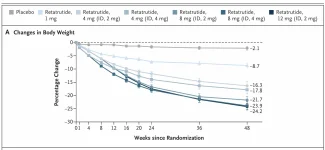
I was interested in the 20mg/wk number because I saw that number mentioned in another thread, and I'd like the data on any symptoms/results. The 12mg limit comes out of phase 2 studies showed diminishing returns for the general population at 12mg, but there are likely individual exceptions. Since it sounds like there are people with personal data, I'd like to hear from them.

I do expect that I will go (somewhat) higher than 12mg if my weight loss slows and I find myself responsive to the higher dose.

they have done a great job so far but are still in the mindset of seeing a certain number loss every week rather than a bodyfat percent change

In fact, I measure my bodyfat percentage (by proxy) daily with a waist measurement. My waist shows linear decrease of 0.03 in/day, which is about equivalent to 0.04 %/day, using the Navy equation. I have had dexa scans periodically that confirm the gross accuracy of the method.

However, I have been very muscular at high body weights (I could do pull-ups at a 270lb body weight), and I am skeptical of the simplistic theory that "muscle=good, fat=bad." For a lot of later life health issues, I suspect that your body systems (heart, kidneys, liver, circulatory system, etc.) only have so much carrying capacity for total tissue mass. This is why short people live longer. Lean or fat, it's bad to be big.
 
The 12mg limit comes out of phase 2 studies showed diminishing returns for the general population at 12mg, but there are likely individual exceptions. Since it sounds like there are people with personal data, I'd like to hear from them.

That's an insightful point that you bring up there, but there are a couple wrinkles to the phase 2 trial that I think are worth exploring.

First, the trial wasn't long enough to establish plateau levels for 8 or 12 mg doses. Had the trial went on longer, it's entirely possible the averages for the 8 and 12 groups would have diverged further before plateauing. When you compare the 8mg (ID 2mg) group to the 12mg (ID 2mg group), which is a proper apples to apples comparison, those lines do diverge. It's only when we overlay the 8mg (ID 4mg) group with the 12mg (ID 2mg) group that the lines blur and I wouldn't be surprised if that has more do to more rapid dosing escalation early on than final dosing.

1775313551542.webp

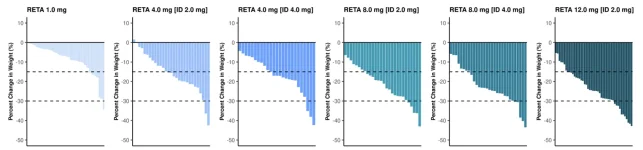
Second, that chart is average results, but individual participant results are all over the board. One thing that hasn't been studied (that I think would be really neat to know) would be how results vary within an individual person at different dosing levels. Just as some people are hyper-responders at 1mg/week (which for them ends up being a highly therapeutic dose), it's entirely possible that some of the non-responders would suddenly become normal responders (just as higher dosage levels). The average results certainly imply that could be the case.

1775313814906.webp

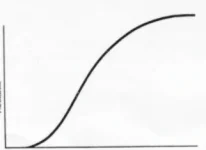
It's very possible that for an individual person if you were to plot total weight lost (at plateau) on the Y-axis against reta dosing on the X-axis it might look something like this, with the scale of the X-axis varying from person to person.
1775313969247.webp
 

Trending Topics

Forum Statistics

Threads
17,674
Posts
183,315
Members
59,380
Newest
Peptideuser103292
Back
Top Bottom