
Jrammi
Recently Joined
🚫No Source Discussion🚫

==> No Sources Are Posted <==
Hello Everyone -
I kept reading that freezing lyophilized HGH was OK and then not OK. Automatic defrost cycling would damage HGH. Or I would read that since HGH is a long amino acid folded peptide protein, it cannot be frozen without damage. I believe some of this guidance was published because when HGH is distributed as a two-chamber pen, with the diluent in one chamber, and HGH in the other, you should not freeze the diluent, and that's the reason for the belief behind not freezing HGH.
And then there is the whole issue of crossing the glass transition temperature, but that is actually above 266F and is often quoted as 32F.
Of course, I began reading about this after placing my HGH in my automatic defrosting freezer for a month. Out of curiosity, I decided to test a vial from the kit again.
So here is how I tested:
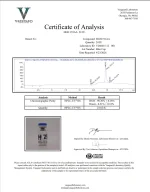
1) Before freezing the sample sent to Vanguard Labs
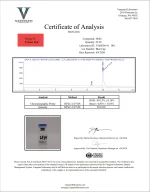
2) After a 30-day freeze, sample to Vanguard Labs
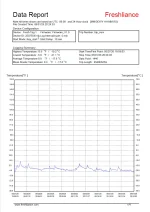
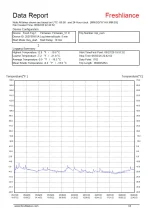
3) I placed two temperature loggers inside my peptide case inside the freezer
Test Samples: Same kit / same vendor
H24 Before Freezing
The freezer was full of frozen meat, which added thermal mass and helped reduce temperature fluctuations. Two Freshliance temperature loggers were placed inside the peptide case where the frozen HGH was stored, and temperatures were recorded every 5 minutes. I live alone, so freezer access was limited to normal routine opening and closing.
I have read many comments stating that HGH should not be frozen because it is a "folded" protein. However, lyophilized HGH has already undergone a freezing step as part of the lyophilization process. My understanding is that moisture exposure is one of the primary drivers of degradation in lyophilized products.
Vanguard did not filter.
Overall, the results are difficult to interpret. The increase in measured purity after freezing does not make sense to me, especially since the dimer percentage increased while the purity did as well.
Possible vial variation... no idea, and welcome all constructive comments.
Hello Everyone -
I kept reading that freezing lyophilized HGH was OK and then not OK. Automatic defrost cycling would damage HGH. Or I would read that since HGH is a long amino acid folded peptide protein, it cannot be frozen without damage. I believe some of this guidance was published because when HGH is distributed as a two-chamber pen, with the diluent in one chamber, and HGH in the other, you should not freeze the diluent, and that's the reason for the belief behind not freezing HGH.
And then there is the whole issue of crossing the glass transition temperature, but that is actually above 266F and is often quoted as 32F.
Of course, I began reading about this after placing my HGH in my automatic defrosting freezer for a month. Out of curiosity, I decided to test a vial from the kit again.
So here is how I tested:
1) Before freezing the sample sent to Vanguard Labs
2) After a 30-day freeze, sample to Vanguard Labs
3) I placed two temperature loggers inside my peptide case inside the freezer
Test Samples: Same kit / same vendor
H24 Before Freezing
- Purity: 98.30% ± 0.18%
- Dimer: 0.31% ± 0.18%
- Potency: 23.82 IU
- Purity: 99.13% ± 0.18%
- Dimer: 0.87% ± 0.18%
- Potency: 20.10 IU
The freezer was full of frozen meat, which added thermal mass and helped reduce temperature fluctuations. Two Freshliance temperature loggers were placed inside the peptide case where the frozen HGH was stored, and temperatures were recorded every 5 minutes. I live alone, so freezer access was limited to normal routine opening and closing.
I have read many comments stating that HGH should not be frozen because it is a "folded" protein. However, lyophilized HGH has already undergone a freezing step as part of the lyophilization process. My understanding is that moisture exposure is one of the primary drivers of degradation in lyophilized products.
Vanguard did not filter.
Overall, the results are difficult to interpret. The increase in measured purity after freezing does not make sense to me, especially since the dimer percentage increased while the purity did as well.
Possible vial variation... no idea, and welcome all constructive comments.
Attachments
Last edited:


