Hpt homepeptide T120mg

Gr33dyOctopus

GLP-1 Enthusiast
Member Since
Nov 9, 2025
Posts
206
Likes Received
261
From
Federal way wa
United-States
I did see the other T120mg thread but this is a different vendor, and I have questions.

They are literally offering a kit of T120 for 310 bucks AND.... They take paypal.

Im going to hit stairway to gray and see what others there think of them, wondering if you guys have any experience with them. And the other thread mentioned they'd co.e on a 5mg vial...

What size vials would I need to reconstitute in? My math fucking sucks but what I imagine is mixing it into a larger ml vial with maybe 10ml of bac water and then splitting it back out into three 3ml bottles?

Jesus. I effed that all up. Don't let me reconstitute your peptides kids, at least without a real guide. Could so.eone point me to that guide if they know of one??

😃
 
I can't help you with the vendor, but I've bought 124mg tirzepatide (tested mass) kits before from a different vendor. Unlike the usual peptides which come in 3mL vials, they came in 5mL vials.

Here's what I did: reconstituted the whole vial (in the vial it comes in) without breaking it up or transferring to potentially dodgy "sterile" vials, then kept it in the fridge for up to 3 months of use (which assumes alcohol-swabbing the top before each use, including when reconstituting).

While the official usage time (with Hospira bac water) is 28 days, many on these fora are comfortable with 3 months refrigerated. Some even longer than that.

Tirz shows no significant degradation over much longer periods of time, but of course microbial growth becomes more of a possibility over very long periods of time.
 
I can't help you with the vendor, but I've bought 124mg tirzepatide (tested mass) kits before from a different vendor. Unlike the usual peptides which come in 3mL vials, they came in 5mL vials.

Here's what I did: reconstituted the whole vial (in the vial it comes in) without breaking it up or transferring to potentially dodgy "sterile" vials, then kept it in the fridge for up to 3 months of use (which assumes alcohol-swabbing the top before each use, including when reconstituting).

While the official usage time (with Hospira bac water) is 28 days, many on these fora are comfortable with 3 months refrigerated. Some even longer than that.

Tirz shows no significant degradation over much longer periods of time, but of course microbial growth becomes more of a possibility over very long periods of time.
Insolent. Really appreciate you coming into this thread. Two more questions,

1st being: I noticed youre not using a syringe filter on that and transferring to a "potentially dodgy" sterile vial. Whats your opinion on syringe filters? From the looks of it you weren't terribly interested in using one?

2nd question, potentially dodgy sterile vials. Should I assume that the individually wrapped sterile 3ml bottles are not sterile?? Is it actually safer to reconstitute in the vials that the freeze dried tirz came in, not worrying about filtering and doing a lot less potentially dodgy liquid transfers?

Sorry for all the questions
 
Lyophilized vials from Chinese vendors have a near 100% negative test record (per Janoshik) for sterility issues. And I trust that Hospira bac water is sterile and not counterfeit (until that starts happening!). And same for syringes purchased from real pharmacies in states where Rx isn't needed. So all in, at least for the GLP-1 peptides and for researchers who aren't immunocompromised, filtering seems about as useful as a magic incantation. A "why not, it's so cheap?" that makes little actual sense. To me.

The vast majority of "sterile" empty vials purchased online failed laboratory testing conducted by the grey community. Do a search on this or similar forums and you'll find threads about it. Many researchers who use them will buy relatively expensive sterilizing machines (some of which are near-fraudulent in themselves, and don't properly sterilize the vials). In some cases, the technology doesn't work with stoppers and caps. I step away from all that.
 
Lyophilized vials from Chinese vendors have a near 100% negative test record (per Janoshik) for sterility issues. And I trust that Hospira bac water is sterile and not counterfeit (until that starts happening!). And same for syringes purchased from real pharmacies in states where Rx isn't needed. So all in, at least for the GLP-1 peptides and for researchers who aren't immunocompromised, filtering seems about as useful as a magic incantation. A "why not, it's so cheap?" that makes little actual sense. To me.

The vast majority of "sterile" empty vials purchased online failed laboratory testing conducted by the grey community. Do a search on this or similar forums and you'll find threads about it. Many researchers who use them will buy relatively expensive sterilizing machines (some of which are near-fraudulent in themselves, and don't properly sterilize the vials). In some cases, the technology doesn't work with stoppers and caps. I step away from all that.
Thank you!!! It would be much easier to just shoot the original bottles. I
 
Yea went back in and studied up on the sterility of vials, and u less you get them from different places, a lot of then are sus, with folks on both sides disputing sterile or not.

Shoot. Im going to chance not bothering with my filters when I finish my compounded and move to gray. I have coas from Jano, and would rather just shoot the original vials than play mad scientist and go injecting into multiples.

Going to keep reading up on this today but ty again Indolent, I've turned another corner with this thread.
 
Lyophilized vials from Chinese vendors have a near 100% negative test record (per Janoshik) for sterility issues. And I trust that Hospira bac water is sterile and not counterfeit (until that starts happening!). And same for syringes purchased from real pharmacies in states where Rx isn't needed. So all in, at least for the GLP-1 peptides and for researchers who aren't immunocompromised, filtering seems about as useful as a magic incantation. A "why not, it's so cheap?" that makes little actual sense. To me.

The vast majority of "sterile" empty vials purchased online failed laboratory testing conducted by the grey community. Do a search on this or similar forums and you'll find threads about it. Many researchers who use them will buy relatively expensive sterilizing machines (some of which are near-fraudulent in themselves, and don't properly sterilize the vials). In some cases, the technology doesn't work with stoppers and caps. I step away from all that.
I wish I had seen this post last month before I went on a shopping spree for filtering supplies. I will probably still filter some of what I use just cause I have enough for 10 vials. However, when I tried asking on STG, I got one of two answers, one that said about half of the people in grey filter. The other set of answers I got was all doom and gloom about filtering. It would of been nice for someone there to give this perspective.
 
I wish I had seen this post last month before I went on a shopping spree for filtering supplies. I will probably still filter some of what I use just cause I have enough for 10 vials. However, when I tried asking on STG, I got one of two answers, one that said about half of the people in grey filter. The other set of answers I got was all doom and gloom about filtering. It would of been nice for someone there to give this perspective.
I also have like 20 filters and filtering supplies lol that I likely won't use
 
I wish I had seen this post last month before I went on a shopping spree for filtering supplies. I will probably still filter some of what I use just cause I have enough for 10 vials. However, when I tried asking on STG, I got one of two answers, one that said about half of the people in grey filter. The other set of answers I got was all doom and gloom about filtering. It would of been nice for someone there to give this perspective.

I was looking on STG last night about what is actually filtered in the filtering process and from what I see online, it appears that endotoxins and some viruses are not filtered, but that bacteria, some viruses, mold, particulate, etc. is filtered with a .22 µm filter.

Since most of the testing suggests little (or no) sterility issues with chinese vials in general, in my mind I'm wondering if the whole filtering process actually adds the opportunity for bacteria or other contaminents into the process. I've watched a few videos on the filtering process and it involves a lot of connections, venting, switching parts, reliance on sterility of the products being used, etc. I just don't know if it's worth it, or if the process is providing a false sense of security.

Now, if the filtering would remove endotoxins, I might be more interested. The thought of injecting toxins doesn't sound like a great idea and I've seen some recent vendor tests with high amounts of these although most tests come back within acceptable limits.

I'm still on the fence on whether I'm going to filter. If I'm going to filter, I think I need to really think about the conditions that I'm going to do that filtering and really create a more sterile space than I was originally envisioning, which TBH up until now was my going to be my home office desk.
1765632426476.png
 
I was looking on STG last night about what is actually filtered in the filtering process and from what I see online, it appears that endotoxins and some viruses are not filtered, but that bacteria, some viruses, mold, particulate, etc. is filtered with a .22 µm filter.

Since most of the testing suggests little (or no) sterility issues with chinese vials in general, in my mind I'm wondering if the whole filtering process actually adds the opportunity for bacteria or other contaminents into the process. I've watched a few videos on the filtering process and it involves a lot of connections, venting, switching parts, reliance on sterility of the products being used, etc. I just don't know if it's worth it, or if the process is providing a false sense of security.

Now, if the filtering would remove endotoxins, I might be more interested. The thought of injecting toxins doesn't sound like a great idea and I've seen some recent vendor tests with high amounts of these although most tests come back within acceptable limits.

I'm still on the fence on whether I'm going to filter. If I'm going to filter, I think I need to really think about the conditions that I'm going to do that filtering and really create a more sterile space than I was originally envisioning, which TBH up until now was my going to be my home office desk.
View attachment 11469
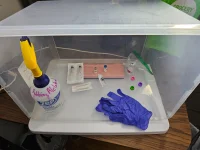
I did reconsititutions in a tub, in a closed room with little air movement. Quick and hopefully clean.
 

Attachments

  • 20251206_160450.jpg
    20251206_160450.jpg
    1.7 MB · Views: 13
A long time ago I lurked here. At the time, as I recall, some stuff was coming in glass ampules. Consequently, the filtration was for fine chunks of glass.
Hindsight being what it is. That may have been a scam to sell filters, but maybe not.
Just one more thing to gamble on.
 
Top Bottom