In Regards to the 4mg Reta Glucagon Myth

tubby

GLP-1 Enthusiast
Member Since
Nov 28, 2025
Posts
496
Likes Received
1,629
Location
Minnesota
United-States
Saw this pop up again today and figured it might be handy to have a post addressing the topic properly. It's commonly claimed that reta doesn't work differently from tirzepatide at doses lower than 4mg or that the glucagon agonist doesn't "kick in" until that level.

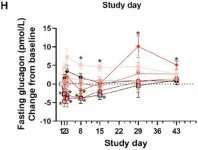
The 4mg thing is a myth that persists based on someone misinterpreting data from a phase 1 trial. In that trial participants were given single doses of reta and then had various things tracked following that single dose. The 3mg group was the lowest dosed group where serum glucagon levels fell significantly from their previous baseline and at some point that got rounded to 4mg, as a 3mg dosing wasn't maintained in phase 2 trials.

1779285265285.webp
1779285482269.webp

Here's why that's dubious logic:

1: A single 4mg dose is roughly equivalent to a weekly 2mg dose (due to how drugs build up in your system over time) in terms of peak level. A weekly 4mg dose would lead to blood levels that roughly fluctuated from 8mg total back down to 4mg right before shot day. Single dose vs weekly dose is not apples to apples.

2: There's no reason to think every person is going to see glucagon levels fall at the same dosing level, since insulin and glucagon levels vary quite a bit from person to person (and baseline levels can be quite high in an obese or diabetic person). Someone who is less insulin resistant would likely see that same result occur at lower reta dosing, while someone who is more insulin resistant would likely need a higher dosing before observing such a result. Also, as one progresses through treatment, this is all a moving target, as degree of insulin resistance is going to change too.

3: Serum glucagon level itself isn't an isolated metric. Your body regulates metabolism by balancing your insulin to glucagon ratio. A GLP is already slightly bumping up your baseline insulin level. That means before factoring in glucagon agonism your body is already going to naturally raise your glucagon level in response to any GLP. This is observed in that same phase 1 trial where glucagon level goes up at a very low reta dosing level. That means when we see glucagon "unchanged" at a low dosing level, that's not the full story. That result would be better explained as "balanced," since it represents the point where the action of the glucagon agonist is balancing the GLP-1 RA's effect in raising glucagon. The 4mg dosing is simply the level at which the glucagon agonist began to dominate.

Note:
It's also worth pointing out that 99% of influencers don't even understand what that change in glucagon level actually means. The goal with reta isn't to lower glucagon level. Just as a GLP-1 agonist can be thought of as counterfeit GLP-1, the glucagon agonist in reta could be thought of as "counterfeit glucagon." The reason we're interested in seeing a lower level of real glucagon in the blood is because that indicates that your body believes the glucagon level is too high (due to sensing all of the counterfeit glucagon) and is taking steps to scale back production of it. It's a sign that your body is both being "fooled" by the counterfeit glucagon and believes that current glucagon levels are excessive.

Conceptually, your body would normally increase your glucagon levels when you haven't eaten in several hours and scale it back after a meal containing carbs. A glucagon agonist is overriding that and fooling your body into thinking that those levels are perpetually raised. Empirically, this seems to maintain an elevated metabolism, as well as driving certain other processes that on the whole seem to benefit those with obesity and/or diabetes and help drive weight loss, although I'm not sure the specific biochemical rationale for that result is completely nailed down.

Of course, none of this is to say that 4mg isn't a "good level" or anything like that, just that there's nothing magical or unique about that particular level VS any other level.
1779285731876.webp
 
Last edited:
It can def be different for different people. I'm on 1mg, going on 11 weeks now. Started at 328, down 25lbs (7.6%, well ahead of the trial stats for 1mg) and have lost 4 inches in waist, so I would say for me 1mg is doing pretty well with visceral fat as well. Granted I am also eating differently and working out 3 times a week. It all adds up.
 
It can def be different for different people. I'm on 1mg, going on 11 weeks now. Started at 328, down 25lbs (7.6%, well ahead of the trial stats for 1mg) and have lost 4 inches in waist, so I would say for me 1mg is doing pretty well with visceral fat as well. Granted I am also eating differently and working out 3 times a week. It all adds up.
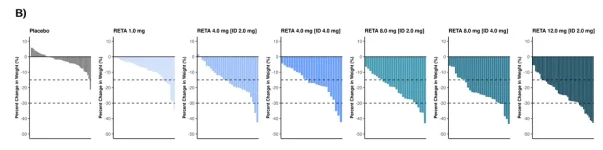
Yes, it varies quite a bit from person to person. This is what's called a waterfall plot where each line represents the results of a single person from each group during a phase 2 trial, with them plotted from lowest to highest result so you can see the spread and where most people landed.

1779286855982.webp
 
Yes, it varies quite a bit from person to person. This is what's called a waterfall plot where each line represents the results of a single person from each group during a phase 2 trial, with them plotted from lowest to highest result so you can see the spread and where most people landed.

View attachment 23971
That's interesting. You can definitely see the change between 1mg and the rest. Very little difference for most from 4-12; the charts are very similar.
 
Thanks tubby, my interpretation of the waterfall graphs is that maximum impact in terms of most people and loss occurs in the 4-8mg range , beyond that there is an increase however it's diminishing returns.
 
That's interesting. You can definitely see the change between 1mg and the rest. Very little difference for most from 4-12; the charts are very similar.
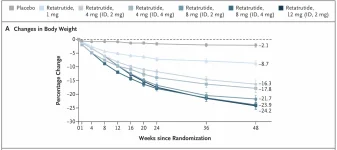
If you're trying to see the differences in average results, I'd recommend going back to the plot in the OP. It's going to be harder to see the difference in averages in waterfall plots.
 
Thanks tubby, my interpretation of the waterfall graphs is that maximum impact in terms of most people and loss occurs in the 4-8mg range , beyond that there is an increase however it's diminishing returns.
There's certainly going to be an element of diminishing returns, but keep in mind that you're looking at data from a 48 week trial in which the graph hasn't started to plateau yet for the 8mg and 12mg groups.
 
There's certainly going to be an element of diminishing returns, but keep in mind that you're looking at data from a 48 week trial in which the graph hasn't started to plateau yet for the 8mg and 12mg groups.

Great point , I guess the trials can only run for so long when share holders are screaming for results and returns.

Certainly makes me wonder what the higher doses may have achieved if they were given a longer runway. It's powerful stuff, the Reta and the empirical data collected. Award winning post from my perspective, thank you
 
Great post , and here I was thinking I needed to race to 8mg to have a meaningful impact . I'll hold on 6mg now for as long as I can
I was thinking I'd stay on 6 for quite a while too. I did 6mg for 6 weeks and doing great until those last 2, just slowed way down, did 2 weeks of 7mg, nothing special. 8mg is great so far, Friday was the first pin and it feels like I'm on Reta again. Hard to explain unless you've been there.
 
I added in Reta in January, titrating up to 8mg pretty quickly because I was using the bad information. With this information I think 4mg be more than enough for my continued weight loss as I'm down 85# already and while I could technically stop losing, I would like to go for another 15# more just to get that mental 100# loss. Thanks for posting!
 
Saw this pop up again today and figured it might be handy to have a post addressing the topic properly. It's commonly claimed that reta doesn't work differently from tirzepatide at doses lower than 4mg or that the glucagon agonist doesn't "kick in" until that level.
Thank you @tubby .
This myth has been a driving force in my escalation of dosage, a haunting concern that I might not be doing it right for the desired benefits. The impulsive sense of urgency to attain overnight results for years of damage can be strong.
 
Last edited:
I was thinking I'd stay on 6 for quite a while too. I did 6mg for 6 weeks and doing great until those last 2, just slowed way down, did 2 weeks of 7mg, nothing special. 8mg is great so far, Friday was the first pin and it feels like I'm on Reta again. Hard to explain unless you've been there.
Im chasing that felling since 3 weeks
next week will be it or back to GI issue 🙂
 
Saw this pop up again today and figured it might be handy to have a post addressing the topic properly. It's commonly claimed that reta doesn't work differently from tirzepatide at doses lower than 4mg or that the glucagon agonist doesn't "kick in" until that level.

The 4mg thing is a myth that persists based on someone misinterpreting data from a phase 1 trial. In that trial participants were given single doses of reta and then had various things tracked following that single dose. The 3mg group was the lowest dosed group where serum glucagon levels fell significantly from their previous baseline and at some point that got rounded to 4mg, as a 3mg dosing wasn't maintained in phase 2 trials.

View attachment 23959
View attachment 23960

Here's why that's dubious logic:

1: A single 4mg dose is roughly equivalent to a weekly 2mg dose (due to how drugs build up in your system over time) in terms of peak level. A weekly 4mg dose would lead to blood levels that roughly fluctuated from 8mg total back down to 4mg right before shot day. Single dose vs weekly dose is not apples to apples.

2: There's no reason to think every person is going to see glucagon levels fall at the same dosing level, since insulin and glucagon levels vary quite a bit from person to person (and baseline levels can be quite high in an obese or diabetic person). Someone who is less insulin resistant would likely see that same result occur at lower reta dosing, while someone who is more insulin resistant would likely need a higher dosing before observing such a result. Also, as one progresses through treatment, this is all a moving target, as degree of insulin resistance is going to change too.

3: Serum glucagon level itself isn't an isolated metric. Your body regulates metabolism by balancing your insulin to glucagon ratio. A GLP is already slightly bumping up your baseline insulin level. That means before factoring in glucagon agonism your body is already going to naturally raise your glucagon level in response to any GLP. This is observed in that same phase 1 trial where glucagon level goes up at a very low reta dosing level. That means when we see glucagon "unchanged" at a low dosing level, that's not the full story. That result would be better explained as "balanced," since it represents the point where the action of the glucagon agonist is balancing the GLP-1 RA's effect in raising glucagon. The 4mg dosing is simply the level at which the glucagon agonist began to dominate.

Note:
It's also worth pointing out that 99% of influencers don't even understand what that change in glucagon level actually means. The goal with reta isn't to lower glucagon level. Just as a GLP-1 agonist can be thought of as counterfeit GLP-1, the glucagon agonist in reta could be thought of as "counterfeit glucagon." The reason we're interested in seeing a lower level of real glucagon in the blood is because that indicates that your body believes the glucagon level is too high (due to sensing all of the counterfeit glucagon) and is taking steps to scale back production of it. It's a sign that your body is both being "fooled" by the counterfeit glucagon and believes that current glucagon levels are excessive.

Conceptually, your body would normally increase your glucagon levels when you haven't eaten in several hours and scale it back after a meal containing carbs. A glucagon agonist is overriding that and fooling your body into thinking that those levels are perpetually raised. Empirically, this seems to maintain an elevated metabolism, as well as driving certain other processes that on the whole seem to benefit those with obesity and/or diabetes and help drive weight loss, although I'm not sure the specific biochemical rationale for that result is completely nailed down.

Of course, none of this is to say that 4mg isn't a "good level" or anything like that, just that there's nothing magical or unique about that particular level VS any other level.

View attachment 23963
Thank you for this detailed explanation. I've been on 1mg/week (split into two 0.5mg doses) for 9 weeks now and it's been very successful. I tried increasing to 1.4mg two weeks ago and the sides were impacting my gym performance, in addition to causing unacceptable fatigue, so I took it back down and am now feeling much better.
I kept seeing this 4mg claim and because I can't see myself ever getting to or tolerating that dose, and was curious if I was missing out on the glucagon benefits.
For context, I'm female, 5'10.5", started at 162.4lb and after 9 weeks of reta am now 138.8lb. I'm going to start titrating down for maintenance (I went on reta to address perimenopausal weight gain).
 
I still don't know where this baby dose stuff has come from, and why it works. No offense baby dosers. 2.7lbs a week isn't right on 1mg/week.
 
Great post , and here I was thinking I needed to race to 8mg to have a meaningful impact . I'll hold on 6mg now for as long as I can
How long were you at 4 and did you jump from 4 to 6?
 
Thank you for this detailed explanation. I've been on 1mg/week (split into two 0.5mg doses) for 9 weeks now and it's been very successful. I tried increasing to 1.4mg two weeks ago and the sides were impacting my gym performance, in addition to causing unacceptable fatigue, so I took it back down and am now feeling much better.
I kept seeing this 4mg claim and because I can't see myself ever getting to or tolerating that dose, and was curious if I was missing out on the glucagon benefits.
For context, I'm female, 5'10.5", started at 162.4lb and after 9 weeks of reta am now 138.8lb. I'm going to start titrating down for maintenance (I went on reta to address perimenopausal weight gain).
I wonder the same thing. Maybe your body just needed a little nudge. You've been taking care of yourself & in great shape for years. Here come your hormones getting out of sync & that was prob what affected you. So your body just needed a little top off of glucagon, while others that are not in your shape need more to fill up the gap that they need help with. Prob why long time serious gym goers (or people that need to lose small amounts), etc can take small doses & it work equivalent to others that really need much more help.

I'm already up to 5mg Tirz, 3.5mg Reta & only lost 1.8lbs in the last month. Its definitely not my diet (I need to eat more & don't have an appetite) I must need much more bc my body must be lacking a lot, ha ha 🙂
 
I wonder the same thing. Maybe your body just needed a little nudge. You've been taking care of yourself & in great shape for years. Here come your hormones getting out of sync & that was prob what affected you. So your body just needed a little top off of glucagon, while others that are not in your shape need more to fill up the gap that they need help with. Prob why long time serious gym goers (or people that need to lose small amounts), etc can take small doses & it work equivalent to others that really need much more help.

I'm already up to 5mg Tirz, 3.5mg Reta & only lost 1.8lbs in the last month. Its definitely not my diet (I need to eat more & don't have an appetite) I must need much more bc my body must be lacking a lot, ha ha 🙂
Yeah that's also something I was curious about. I'm finding a handful of lifters/athletes using reta for a "cut" and their associated anecdotes, but there's no clear patterns I've found in dosing results, and the phase 3 trial participants and the corresponding trial data doesn't exactly include my demographic. 🙂
5mg tirz and 3.5mg reta? Wowza. Had you been on a GLP prior to your current stack?
 
Yeah that's also something I was curious about. I'm finding a handful of lifters/athletes using reta for a "cut" and their associated anecdotes, but there's no clear patterns I've found in dosing results, and the phase 3 trial participants and the corresponding trial data doesn't exactly include my demographic. 🙂
5mg tirz and 3.5mg reta? Wowza. Had you been on a GLP prior to your current stack?
I was thinking the same bc Ive read comments from many others with huge success on small doses. I guess there really is no answer.

Ive never taken any before Feb & still haven't reached the 15lb loss yet. I'm very thankful bc this is the most Ive lost in years but I have 40lbs to go. Ive literally done everything & never had an appetite. I was also doing 2-3 classes a day at the gym (for over a year so it wasn't wahhhh I didnt lose my weight in a week thing, lol) kick boxing, yoga, pilates, barre, swimming, sauna & boot camp (some were with light weights too) & was measuring food, intermittent fasting + had to be gluten free for 3 years. I was even prescribed phentermine & barely lost a few lbs.
 
I was thinking the same bc Ive read comments from many others with huge success on small doses. I guess there really is no answer.

Ive never taken any before Feb & still haven't reached the 15lb loss yet. I'm very thankful bc this is the most Ive lost in years but I have 40lbs to go. Ive literally done everything & never had an appetite. I was also doing 2-3 classes a day at the gym (for over a year so it wasn't wahhhh I didnt lose my weight in a week thing, lol) kick boxing, yoga, pilates, barre, swimming, sauna & boot camp (some were with light weights too) & was measuring food, intermittent fasting + had to be gluten free for 3 years. I was even prescribed phentermine & barely lost a few lbs.
That sounds frustrating - but your dedication is impressive!

Back in 2016 I weighed almost 300lb. I started a low carb diet (primarily as a therapeutic protocol for intractable epilepsy) and ended up losing 160lb in less than a year ( View: https://imgur.com/gallery/five-years-of-progress-ofUKKf1
). I got into fitness because the more weight I lost, the easier it was to be active. But the key was my diet - I didn't exercise as a weight loss method, but as a way to get stronger as I got older. Best decision I ever made, honestly. Maintained that weight for almost a decade until perimenopause hit and dumped about 25lb on me. Hence the reta, which has been incredible. My only problem is I need to force feed myself to get the fuel I need to support my activity level 🤣
 
That sounds frustrating - but your dedication is impressive!

Back in 2016 I weighed almost 300lb. I started a low carb diet (primarily as a therapeutic protocol for intractable epilepsy) and ended up losing 160lb in less than a year ( View: https://imgur.com/gallery/five-years-of-progress-ofUKKf1
). I got into fitness because the more weight I lost, the easier it was to be active. But the key was my diet - I didn't exercise as a weight loss method, but as a way to get stronger as I got older. Best decision I ever made, honestly. Maintained that weight for almost a decade until perimenopause hit and dumped about 25lb on me. Hence the reta, which has been incredible. My only problem is I need to force feed myself to get the fuel I need to support my activity level 🤣
I love your story & you look so happy & proud in your videos!! That made me smile!! One of my favorite trainers would always say you're 80% made in the kitchen so the workout is really the bonus!! I know what you mean. I have no appetite & when I think of what I need to eat nothing sounds good at all, ha ha 🤣
 
Thank you for this detailed explanation. I've been on 1mg/week (split into two 0.5mg doses) for 9 weeks now and it's been very successful. I tried increasing to 1.4mg two weeks ago and the sides were impacting my gym performance, in addition to causing unacceptable fatigue, so I took it back down and am now feeling much better.
I kept seeing this 4mg claim and because I can't see myself ever getting to or tolerating that dose, and was curious if I was missing out on the glucagon benefits.
For context, I'm female, 5'10.5", started at 162.4lb and after 9 weeks of reta am now 138.8lb. I'm going to start titrating down for maintenance (I went on reta to address perimenopausal weight gain).
Small world! Although, I don't think we've ever met, I recognize you from low-carb circles and was also at the COSCI the first year Dave and company ran that conference in Vegas.

It's fascinating that "our kind" has taken an interest in retatrutide after mostly shunning prior-generation GLPs. Something about the glucagon-agonism story just seemed more interesting to dig into than the prior generation ones for me, although I'm not sure I can explain exactly why that is. There's something about reta that seems to be drawing in the hardcore diet/nutrition "experimenting" crowd, whereas most of us shunned GLPs prior to this. In hindsight, that's pretty odd since most of us were cool with experimenting in unconventional ways that would scare most people off, but for whatever reason, even in the tirzepatide-era we shunned it, although that really would have been the point where they finally got good enough to be attractive. Go figure!

Speaking to your personal situation, I have a theory that the more insulin sensitive someone is, the more they're going to struggle with initial reta fatigue symptoms (and that will be true even at lower doses). I based this on the observation that if someone comes into this with a low fasted insulin level (which would imply a low baseline glucagon level as well), when these drugs start poking at hormones in a way that push around insulin and glucagon levels, that's going to feel like a much larger change to us than it would to someone with a significantly higher fasted insulin level starting out. I know when I first started at 1mg that the fatigue was fairly debilitating for several days before fading to a level of fatigue that I could function at. Don't have enough data to validate this one way or the other, but it's an educated guess and I know based on your low-carb history that you were (presumably) very metabolically healthy prior to starting reta.

I'll also throw out there that, GLP-assisted weight loss has some interesting quirks to it in that it seems to favor depletion of more lean mass than dietary forms usually do, which sounds bad at first, but seems to occur without significant losses in strength, as long as one remains active. I've found myself wondering if it could be something autophagy-like. Would be interesting to hear if you've found your loss corresponds to a significant body fat reduction, if you've lost any strength when lifting, or what has been unique and novel for you. Also would be interesting to hear if your diet has significantly changed pre-VS post reta.
 
Small world! Although, I don't think we've ever met, I recognize you from low-carb circles and was also at the COSCI the first year Dave and company ran that conference in Vegas.

It's fascinating that "our kind" has taken an interest in retatrutide after mostly shunning prior-generation GLPs. Something about the glucagon-agonism story just seemed more interesting to dig into than the prior generation ones for me, although I'm not sure I can explain exactly why that is. There's something about reta that seems to be drawing in the hardcore diet/nutrition "experimenting" crowd, whereas most of us shunned GLPs prior to this. In hindsight, that's pretty odd since most of us were cool with experimenting in unconventional ways that would scare most people off, but for whatever reason, even in the tirzepatide-era we shunned it, although that really would have been the point where they finally got good enough to be attractive. Go figure!

Speaking to your personal situation, I have a theory that the more insulin sensitive someone is, the more they're going to struggle with initial reta fatigue symptoms (and that will be true even at lower doses). I based this on the observation that if someone comes into this with a low fasted insulin level (which would imply a low baseline glucagon level as well), when these drugs start poking at hormones in a way that push around insulin and glucagon levels, that's going to feel like a much larger change to us than it would to someone with a significantly higher fasted insulin level starting out. I know when I first started at 1mg that the fatigue was fairly debilitating for several days before fading to a level of fatigue that I could function at. Don't have enough data to validate this one way or the other, but it's an educated guess and I know based on your low-carb history that you were (presumably) very metabolically healthy prior to starting reta.

I'll also throw out there that, GLP-assisted weight loss has some interesting quirks to it in that it seems to favor depletion of more lean mass than dietary forms usually do, which sounds bad at first, but seems to occur without significant losses in strength, as long as one remains active. I've found myself wondering if it could be something autophagy-like. Would be interesting to hear if you've found your loss corresponds to a significant body fat reduction, if you've lost any strength when lifting, or what has been unique and novel for you. Also would be interesting to hear if your diet has significantly changed pre-VS post reta.
Ok, that is funny - I've been in the keto/carnivore/low-carb/LMHR space on Twitter since I first started my keto journey in 2016 for epilepsy, so I'm guessing I might know who you are, even if it is only virtually. I keep my reta experiment off socials for obvious reasons, mostly due to the stigma of gray market peptides and I just don't need the headache. 😉
And I agree with you on the "shunning" tendency for GLPs in that space - especially as someone who lost 160lb on keto alone. Reta was the first one that piqued my interest, mostly because brilliant people in "my circle" were looking into it and even experimenting (namely Amber), and as I'm never one to shy from a health experiment I took the plunge a little over two months ago.
In terms of lifting, I haven't noticed a loss of strength that is any different from other forms of caloric restriction. That's been my main hurdle with reta, is being able to consume enough calories to fuel my training, particularly because I have a fondness for marathon+ length hikes on the weekends. When I increased my dose to 1.4mg/week (0.7mg 2x weekly) my lifting stamina noticeably tanked - it wasn't just that lifting the same weight was challenging, but my workouts were physically draining (in addition to the lingering daily fatigue). So for my Tuesday injection last week I took it back down to 1mg/week and my workouts are now back to normal.

Interestingly enough, my sleep has been solid (sleep scores in the 90s most nights), my RHR is still in the low to mid 40s (normal for me), my HRV remains balanced and VO2 max is holding steady. The one thing I do notice is that my HR does spike higher than normal during both lifting and hiking - nothing alarming, but it is much easier to hit zone 5 than usual.

Remarkably, the most surprising benefit of reta is that before, my brain was constantly running 24/7 - not just food noise, but everything noise. Racing thoughts, health anxiety, catastrophizing, rumination…it never really shut off. And now? The background noise is almost gone. My mind feels quiet for the first time in years, I can actually focus. The constant anxiety and spiraling have dramatically decreased. I genuinely didn’t expect this. The weight loss is great, but the mental peace has been miraculous for me. I knew reta shut off the "food noise" but never entertained the thought that it shut off the "everything" noise. I'm tempted to keep microdosing after my cut just for that benefit alone.

And my diet has not changed at all, aside from volume. I was LCHF from 2017-2019, then switched to LCHP to support muscle growth and have been there ever since. Usually average between 20-30g carbs per day.

I would be curious to know your thoughts on the common thinking that "reta needs carbs to work". I see this espoused everywhere on Reddit (which doesn't lend much credence to the theory I realize - r/retatrutide is a hot mess) but I'd love to know more about the science behind it.
So great to meet you - thanks for responding!
 
Last edited:
It can def be different for different people. I'm on 1mg, going on 11 weeks now. Started at 328, down 25lbs (7.6%, well ahead of the trial stats for 1mg) and have lost 4 inches in waist, so I would say for me 1mg is doing pretty well with visceral fat as well. Granted I am also eating differently and working out 3 times a week. It all adds up.
I honestly did better when I was at lower doses. It's also possible that my body is just used to it now that I am at 5mg and I'm starting to plateau.

I would be curious to know your thoughts on the common thinking that "reta needs carbs to work". I see this espoused everywhere on Reddit (which doesn't lend much credence to the theory I realize - r/retatrutide is a hot mess) but I'd love to know more about the science behind it.
I been wondering about this too. I lost weight doing low carb before I started reta but I heard about the carb thing on YouTube so I stopped.
 
Ok, that is funny - I've been in the keto/carnivore/low-carb/LMHR space on Twitter since I first started my keto journey in 2016 for epilepsy, so I'm guessing I might know who you are, even if it is only virtually. I keep my reta experiment off socials for obvious reasons, mostly due to the stigma of gray market peptides and I just don't need the headache. 😉
And I agree with you on the "shunning" tendency for GLPs in that space - especially as someone who lost 160lb on keto alone. Reta was the first one that piqued my interest, mostly because brilliant people in "my circle" were looking into it and even experimenting (namely Amber), and as I'm never one to shy from a health experiment I took the plunge a little over two months ago.
In terms of lifting, I haven't noticed a loss of strength that is any different from other forms of caloric restriction. That's been my main hurdle with reta, is being able to consume enough calories to fuel my training, particularly because I have a fondness for marathon+ length hikes on the weekends. When I increased my dose to 1.4mg/week (0.7mg 2x weekly) my lifting stamina noticeably tanked - it wasn't just that lifting the same weight was challenging, but my workouts were physically draining (in addition to the lingering daily fatigue). So for my Tuesday injection last week I took it back down to 1mg/week and my workouts are now back to normal.

Interestingly enough, my sleep has been solid (sleep scores in the 90s most nights), my RHR is still in the low to mid 40s (normal for me), my HRV remains balanced and VO2 max is holding steady. The one thing I do notice is that my HR does spike higher than normal during both lifting and hiking - nothing alarming, but it is much easier to hit zone 5 than usual.

Remarkably, the most surprising benefit of reta is that before, my brain was constantly running 24/7 - not just food noise, but everything noise. Racing thoughts, health anxiety, catastrophizing, rumination…it never really shut off. And now? The background noise is almost gone. My mind feels quiet for the first time in years, I can actually focus. The constant anxiety and spiraling have dramatically decreased. I genuinely didn’t expect this. The weight loss is great, but the mental peace has been miraculous for me. I knew reta shut off the "food noise" but never entertained the thought that it shut off the "everything" noise. I'm tempted to keep microdosing after my cut just for that benefit alone.

And my diet has not changed at all, aside from volume. I was LCHF from 2017-2019, then switched to LCHP to support muscle growth and have been there ever since. Usually average between 20-30g carbs per day.

I would be curious to know your thoughts on the common thinking that "reta needs carbs to work". I see this espoused everywhere on Reddit (which doesn't lend much credence to the theory I realize - r/retatrutide is a hot mess) but I'd love to know more about the science behind it.
So great to meet you - thanks for responding!
The Reta needs carbs to work might also be an an individual thing. I do know someone who works out a lot & had a stall until adding in more carbs
 
Ok, that is funny - I've been in the keto/carnivore/low-carb/LMHR space on Twitter since I first started my keto journey in 2016 for epilepsy, so I'm guessing I might know who you are, even if it is only virtually. I keep my reta experiment off socials for obvious reasons, mostly due to the stigma of gray market peptides and I just don't need the headache. 😉
And I agree with you on the "shunning" tendency for GLPs in that space - especially as someone who lost 160lb on keto alone. Reta was the first one that piqued my interest, mostly because brilliant people in "my circle" were looking into it and even experimenting (namely Amber), and as I'm never one to shy from a health experiment I took the plunge a little over two months ago.
In terms of lifting, I haven't noticed a loss of strength that is any different from other forms of caloric restriction. That's been my main hurdle with reta, is being able to consume enough calories to fuel my training, particularly because I have a fondness for marathon+ length hikes on the weekends. When I increased my dose to 1.4mg/week (0.7mg 2x weekly) my lifting stamina noticeably tanked - it wasn't just that lifting the same weight was challenging, but my workouts were physically draining (in addition to the lingering daily fatigue). So for my Tuesday injection last week I took it back down to 1mg/week and my workouts are now back to normal.

Interestingly enough, my sleep has been solid (sleep scores in the 90s most nights), my RHR is still in the low to mid 40s (normal for me), my HRV remains balanced and VO2 max is holding steady. The one thing I do notice is that my HR does spike higher than normal during both lifting and hiking - nothing alarming, but it is much easier to hit zone 5 than usual.

Remarkably, the most surprising benefit of reta is that before, my brain was constantly running 24/7 - not just food noise, but everything noise. Racing thoughts, health anxiety, catastrophizing, rumination…it never really shut off. And now? The background noise is almost gone. My mind feels quiet for the first time in years, I can actually focus. The constant anxiety and spiraling have dramatically decreased. I genuinely didn’t expect this. The weight loss is great, but the mental peace has been miraculous for me. I knew reta shut off the "food noise" but never entertained the thought that it shut off the "everything" noise. I'm tempted to keep microdosing after my cut just for that benefit alone.

And my diet has not changed at all, aside from volume. I was LCHF from 2017-2019, then switched to LCHP to support muscle growth and have been there ever since. Usually average between 20-30g carbs per day.

I would be curious to know your thoughts on the common thinking that "reta needs carbs to work". I see this espoused everywhere on Reddit (which doesn't lend much credence to the theory I realize - r/retatrutide is a hot mess) but I'd love to know more about the science behind it.
So great to meet you - thanks for responding!
Funny you mention Amber, as she recently popped up in my feed and I recall thinking "damn, she must have figured something out. " I recall she was a presenter at COSCI the year I went and had discussed her weight frustrations as part of her presentation, which was perplexing since so many in the zero-carb world find easy weight control comes as a bonus.

Otherwise, I'm not really actively engaged in the space currently (other than still periodically consuming some of the content). Did learn a ton in that space, though, and shaped a lot of my thinking in regards to metabolism and nutrition topics. Of course, between Ben posting more GLP-related content and Nick discussing his recent dabbling with reta, I wouldn't be surprised if next year someone even presents on reta. Maybe I'll have to poke my head in again. Will see!

I think it would be great if they investigated at a deeper level, though, as I suspect they'd have a much better framework to contextualize GLP-mediated weight loss than the way it's currently handled in the mainstream, which is superficial at best. It's surprisingly difficult to find high-quality analysis, or at least I've struggled to do so, and have been forced to infer a lot of things.

Can't say I understand the claims about carbs being "necessary" on reta. I suspect part of the story is that as metabolism is ramped up certain aspects of hunger (but not hunger itself) gets ramped up too, causing people to feel a stronger psychological need for carbs. Just as how when one has an intense workout they might feel greater hunger after that and the greater hunger pushes them to crave certain foods, I could see something analogous happening with reta, only most of the hunger signaling is lost with just the "carb craving" part getting through. But I'm really just spitballing here. Also, as one first starts reta, blood sugar levels are significantly reduced, which could factor into carb cravings too.
 
Funny you mention Amber, as she recently popped up in my feed and I recall thinking "damn, she must have figured something out. " I recall she was a presenter at COSCI the year I went and had discussed her weight frustrations as part of her presentation, which was perplexing since so many in the zero-carb world find easy weight control comes as a bonus.

Otherwise, I'm not really actively engaged in the space currently (other than still periodically consuming some of the content). Did learn a ton in that space, though, and shaped a lot of my thinking in regards to metabolism and nutrition topics. Of course, between Ben posting more GLP-related content and Nick discussing his recent dabbling with reta, I wouldn't be surprised if next year someone even presents on reta. Maybe I'll have to poke my head in again. Will see!

I think it would be great if they investigated at a deeper level, though, as I suspect they'd have a much better framework to contextualize GLP-mediated weight loss than the way it's currently handled in the mainstream, which is superficial at best. It's surprisingly difficult to find high-quality analysis, or at least I've struggled to do so, and have been forced to infer a lot of things.

Can't say I understand the claims about carbs being "necessary" on reta. I suspect part of the story is that as metabolism is ramped up certain aspects of hunger (but not hunger itself) gets ramped up too, causing people to feel a stronger psychological need for carbs. Just as how when one has an intense workout they might feel greater hunger after that and the greater hunger pushes them to crave certain foods, I could see something analogous happening with reta, only most of the hunger signaling is lost with just the "carb craving" part getting through. But I'm really just spitballing here. Also, as one first starts reta, blood sugar levels are significantly reduced, which could factor into carb cravings too.
Assuming you're referring to Ben Bikman? I haven't seen his recent conversations around GLPs (most likely due to the fact that I wasn't actively following him) so I'll have to take a look. And yeah, Nick is quite the character - he reminds me of a hamster on amphetamines 🤣 It's funny to see him do podcasts with Dave because their energies are such polar opposites.

I agree with your thinking on the carb theory - having been low carb myself for almost a decade, I had naturally suppressed my cravings for them pre-reta, and didn't notice any changes to that post-reta. As I've never had blood sugar issues (mine hover in the 80-90 mg/dl range) I did have some concerns around reta causing it to dip in a way that would be less than ideal, but I haven't noticed a change there either. I have a ketone meter at home that also tests BG, so I check my numbers occasionally. The only thing I've noticed is the need to up my electrolyte intake significantly from my low-carb baseline.

It will be interesting to see how the conversations evolve in the metabolic space now that GLPs, and especially reta, are becoming more mainstream. So far I'm seeing that tirz and reta don't seem to have the same stigma that sema suffers from.
 
Assuming you're referring to Ben Bikman? I haven't seen his recent conversations around GLPs (most likely due to the fact that I wasn't actively following him) so I'll have to take a look. And yeah, Nick is quite the character - he reminds me of a hamster on amphetamines 🤣 It's funny to see him do podcasts with Dave because their energies are such polar opposites.

I agree with your thinking on the carb theory - having been low carb myself for almost a decade, I had naturally suppressed my cravings for them pre-reta, and didn't notice any changes to that post-reta. As I've never had blood sugar issues (mine hover in the 80-90 mg/dl range) I did have some concerns around reta causing it to dip in a way that would be less than ideal, but I haven't noticed a change there either. I have a ketone meter at home that also tests BG, so I check my numbers occasionally. The only thing I've noticed is the need to up my electrolyte intake significantly from my low-carb baseline.

It will be interesting to see how the conversations evolve in the metabolic space now that GLPs, and especially reta, are becoming more mainstream. So far I'm seeing that tirz and reta don't seem to have the same stigma that sema suffers from.
Yes, you should check out some of Bikman's newer videos on Youtube regarding the subject. I think he has a better handle on the relevant hormones than most public-facing researchers in the space so his perspective adds value. He initially came at it from the angle as viewing it as an aid to help someone adopt a low-carb diet (which I suppose can't be helped, given his preferences) and as a temporary intervention to get someone over that bridge. And that's certainly one way a person could use these, but it was a less interesting viewpoint. More recently he has moved to pondering what is actually happening inside people taking GLPs and recently posted a video contextualizing why "GLPs increase insulin" is a flawed way of understanding them and since that coincidentally agrees with my viewpoint, I'm naturally going praise him for that. I think he's evolved from an instinctual skepticism of them to a stronger curiosity and it will be fun to see what directions he goes from here.

I had the same initial blood glucose experience and since I wear a CGM was able to observe that. For the first month it wasn't uncommon for me to hover in the 50-70 mg/dL range between meals and overnight, which is probably ~20 to 30 mg/dL lower than it had been prior to starting. Since then it's been more in the 65 to 80 mg/dL range between meals and overnight. Morning is always over 100mg/dL fasted in both cases. Initially, it was a lot easier to slip into ketosis on a mixed diet. Currently it seems like ketosis doesn't come any easier or harder than it did pre-GLP, even at a lower body weight, which is an interesting result to me. Normally I find that as my weight drops, ketosis is easier to maintain, presumably due to the lower fasted insulin level that comes at a lower weight. For example, when I got down to a BMI of 27 on low-carb (pre-GLP), as an experiment I scaled up small potato meals for dinner to see how high I could get and be back in ketosis the next morning. I was surprised to discover that even at 150g of carbs (with tons of fat mixed in, of course) I would still be back in ketosis the next morning! Very different from when my BMI is in the low 30s and simply getting too much protein (from a beef heavy but very low-carb diet) was enough to keep me out of ketosis. So long story short, it seems that the first month or two on reta ketosis came easy at a BMI (low 30s) where it normally would not. But now at a current BMI of ~29, despite the reta, it doesn't seem reta is tipping the scale towards ketosis the same way that it initially did. And in that context I think the blood sugar levels I observed make perfect sense, as sustained 50-60 mg/dL levels would imply a fat/ketone heavy metabolism, while the levels I'm at now imply a more glucose heavy metabolism for me.

You should nudge Amber towards poking her head in here (perhaps anonymously), as I suspect she'd have some really interesting thoughts on what's going on under the hood with these things, given her background. Most of the folks here are trapped in a "calories" mindset (which is understandable if someone hasn't properly explored the low-carb world), but sadly that also means most of the conversations taking place here are pretty worthless in terms of understanding the actual mechanisms, balances, and tipping points, that drive results.
 
Yes, you should check out some of Bikman's newer videos on Youtube regarding the subject. I think he has a better handle on the relevant hormones than most public-facing researchers in the space so his perspective adds value. He initially came at it from the angle as viewing it as an aid to help someone adopt a low-carb diet (which I suppose can't be helped, given his preferences) and as a temporary intervention to get someone over that bridge. And that's certainly one way a person could use these, but it was a less interesting viewpoint. More recently he has moved to pondering what is actually happening inside people taking GLPs and recently posted a video contextualizing why "GLPs increase insulin" is a flawed way of understanding them and since that coincidentally agrees with my viewpoint, I'm naturally going praise him for that. I think he's evolved from an instinctual skepticism of them to a stronger curiosity and it will be fun to see what directions he goes from here.

I had the same initial blood glucose experience and since I wear a CGM was able to observe that. For the first month it wasn't uncommon for me to hover in the 50-70 mg/dL range between meals and overnight, which is probably ~20 to 30 mg/dL lower than it had been prior to starting. Since then it's been more in the 65 to 80 mg/dL range between meals and overnight. Morning is always over 100mg/dL fasted in both cases. Initially, it was a lot easier to slip into ketosis on a mixed diet. Currently it seems like ketosis doesn't come any easier or harder than it did pre-GLP, even at a lower body weight, which is an interesting result to me. Normally I find that as my weight drops, ketosis is easier to maintain, presumably due to the lower fasted insulin level that comes at a lower weight. For example, when I got down to a BMI of 27 on low-carb (pre-GLP), as an experiment I scaled up small potato meals for dinner to see how high I could get and be back in ketosis the next morning. I was surprised to discover that even at 150g of carbs (with tons of fat mixed in, of course) I would still be back in ketosis the next morning! Very different from when my BMI is in the low 30s and simply getting too much protein (from a beef heavy but very low-carb diet) was enough to keep me out of ketosis. So long story short, it seems that the first month or two on reta ketosis came easy at a BMI (low 30s) where it normally would not. But now at a current BMI of ~29, despite the reta, it doesn't seem reta is tipping the scale towards ketosis the same way that it initially did. And in that context I think the blood sugar levels I observed make perfect sense, as sustained 50-60 mg/dL levels would imply a fat/ketone heavy metabolism, while the levels I'm at now imply a more glucose heavy metabolism for me.

You should nudge Amber towards poking her head in here (perhaps anonymously), as I suspect she'd have some really interesting thoughts on what's going on under the hood with these things, given her background. Most of the folks here are trapped in a "calories" mindset (which is understandable if someone hasn't properly explored the low-carb world), but sadly that also means most of the conversations taking place here are pretty worthless in terms of understanding the actual mechanisms, balances, and tipping points, that drive results.
Amber and I are friends IRL so I might shoot her a text on that. She's tried to discuss reta and metabolic affects on Reddit but with Reddit being what it is, the responses were predictable and not at all constructive to the discussion.

Your ketosis observations are interesting. Because I've been on LCHP for several years, my ketones usually hover in the 0.3-0.5 mmol range (as opposed to being LCHF where I would get as high as 3.0, but as I was actively losing large amounts of bodyfat that tracks). When I first started reta, say, the first 3 weeks, my ketones got up to 1.2 mmol but have since gone back to baseline LCHP levels, but I'm also sitting at 15.4% BF and 19.9% BMI with 113lb lean mass, so I'm running out of fat to burn. Hence my approaching titrating schedule to microdosing for the OCD benefits I've experienced.

But yes, I agree that Amber would provide a great deal of value to the conversation, as she's the most level-headed, analytical person I know. Her brain is very intimidating at times 🙂
 

Trending Topics

Forum Statistics

Threads
17,752
Posts
184,439
Members
59,646
Newest
onemorefortheroad
Back
Top Bottom