Stubborn Belly Fat

Virtually every cancer researcher would think HGH and the other GH peptides are a horrible idea for long-term recreational use:



Same with urologists regarding HGH and prostate growth, especially if on TRT as well. Same with cardiologists regarding LVH, stroke risk, etc:

Keeping the Genie in the Bottle: Growth Hormone and Cardiovascular Disease


Similarly:
Oh sweet summer child… I stopped reading the moment I saw "Dr. McDougall," the infamous chiropractor that pretends to be a real doctor on YouTube.

Poison is always in the dose. I could find research on how harmful drinking too much water is, even on PubMed.

None of your citations are credible, I’m afraid, and I think you’re mistaking the folks on this forum for the ones on Meso. I highly doubt any of us are blasting 10iu of GH for recreational use. I’m taking 1iu per day, which is really helping me sleep peacefully.

I think you also forgot to look into how harmful low levels of testosterone can be for both men and women, including increased all-cause mortality, bone loss, etc.

And you’re missing the essence of what I said. You told people to stop taking Reta, Tirz, and Cagri, and that is out of line. We will choose our own poison, and you, unfortunately, have no say in it.

I just posted about nootropics that help with mental clarity. It might be helpful for you, so I’ll link it here, my friend.

 
Last edited:
I never said I was lean Doctor Crowreap. I asked a question on how to deal with it. You're pretty good at reading mine and know what I think. Now.
Alright, fair enough. My mistake, I just assumed since you said you lost 50 lbs, I assumed you were... somewhat lean, like something like a skinny fat physique that a lot of people seem to have, and then they're always asking questions, like, how do I lose the love handles? so to answer your question. Just get leaner while putting on muscle. That's all there is to it! 💪💪
 
Some tesa protocols can also motivate intermittent fasting. In any case, tesa is one way to focus on body recomp, as is HCG for some men.

Some other options:

1) Move to Canada, apply for citizenship, and ask for "medical assistance in dying" (MAID). At some point, tell them you changed your mind. Between moving to another country and the near-death experience, you should lose a few pounds.

2) In theory, PT-141 can help with weight loss (one way or another, like with helping energy level -- not just libido). Some people say the same thing about SS-31 (energy boost and stopped the stall).

3) Elora or cagri (more practical than #1 or #2).

4) Just wait it out with reta.
Walk Towards Stairway To Heaven GIF by Mashed
 
Couple things, I'm older. Probably older than a bunch of you. Been retired for a couple of years and just don't do everything I used to, but I'm not a sit and watch TV all day guy.
A few people mentioned hgh or secretagogues but not sure anyone asked whether you've had a hormone panel run to see your Test, Estrogen, Thyroid, IGF-1, etc. levels? If not, never a bad idea to see where you are. If you were holding onto extra fat (and may still be), you could have lower than optimal hormone levels. Always good to get a baseline to determine if you want to look into optimization. If you have low test or high E, that could be making it harder to lose that extra fat. Same if your thyroid isn't functioning as it should.

You could be perfectly fine on everything, but it never hurts to look into the numbers and make sure.
 
Facing the same problem. Targeting visceral fat will accomplish very little, especially when it comes to love handles. Your love handles are not being pushed outward by the fat under your ribs.

I've concluded that the best way to lose this subcutaneous belly fat and love handle fat is to just become really lean and build muscle so I don't end up looking scrawny. Being very lean has other health benefits. But there's a lot of work ahead in this approach.

I confess also that I find myself intrigued by products like Lemon Bottle and deoxycholic acid. I was initially creeped out by the notion of chemically killing fat cells, but I'm starting to rationalize it more and more and thinking it may be an option at some point.

Then there's this other thing called cryolipolisis, or "Cool Sculpting" which I find fascinating. Kills fat cells by freezing them at 40 degrees F while keeping water-based cells unharmed (since they freeze at 32F).

Not sure if there are options beyond this.
I would personally say DO NOT do Coolsculpting. I did it years ago and it was the worst thing ever. Zero belly fat loss, random insane sharp pains like being stabbed by a knife for a month - so bad I had to sit down. The worst part, other than losing $1,500, was that my skin got really stretched, making it look a LOT worse than before. I ended up getting liposuction and that did the trick. More expensive, but at least it works.
 
Last edited:
Oh sweet summer child… I stopped reading the moment I saw "Dr. McDougall," the infamous chiropractor that pretends to be a real doctor on YouTube.
John McDougall, MD was a board-certified internist with lots of citations. Known as the "potato doctor," he became a medical doctor and researcher after having a stroke at the age of 18.

He thought the number one reason people turn to supplements (and GLPs) is because they are making themselves sick with GI-inflaming, cardiovascular-aging foods, which also have a high caloric density compared to starches:

We’re not sick from lack of protein. We’re sick from excess fat, oils, animal products and processed foods...What actually builds muscle is doing the work – consistent resistance training and adequate overall calorie intake to support your activity.
 
Last edited:
I would personally say DO NOT do Coolsculpting. I did it years ago and it was the worse thing ever. Zero belly fat loss, random insane sharp pains like being stabbed by a knife for a month - so bad I had to sit down. The worst part, other than losing $1,500, was that my skin got really stretched, making it look a LOT worse than before. I ended up getting liposuction and that did the trick. More expensive, but at least it works.
Thank you! I really appreciate hearing from someone with first-hand experience.
 
John McDougall, MD was a board-certified internist with lots of citations. Known as the "potato doctor," he became a medical doctor and researcher after having a stroke at the age of 18.

He thought the number one reason people turn to supplements (and GLPs) is because they are making themselves sick with GI-inflaming, cardiovascular-aging foods, which also have a high caloric density compared to starches:

All the “doctors” from the Freelee the Banana Girl era are kind of a blur at this point.

Being an MD doesn’t make someone an expert in nutrition, as evidenced by his ridiculous claims: like saying protein is all marketing hype, that a low-protein diet is healthy, and promoting ultra-low-fat, high-carb diets. This is a disaster for aging and diabetic populations. Surely, that should be common sense.

Also, anyone who doesn’t think protein is important, especially as you age, is not worth anyone’s time. The guy profits from selling a low-fat diet program through his “clinic,” so of course he’s going to die on that hill promoting it.

I really hope you’re not listening to this guy, for your own sake. Even Freelee doesn’t support Dr. McDougall anymore, which says a lot.
 
All the “doctors” from the Freelee the Banana Girl era are kind of a blur at this point.

Being an MD doesn’t make someone an expert in nutrition, as evidenced by his ridiculous claims: like saying protein is all marketing hype, that a low-protein diet is healthy, and promoting ultra-low-fat, high-carb diets. This is a disaster for aging and diabetic populations. Surely, that should be common sense.

Also, anyone who doesn’t think protein is important, especially as you age, is not worth anyone’s time. The guy profits from selling a low-fat diet program through his “clinic,” so of course he’s going to die on that hill promoting it.

I really hope you’re not listening to this guy, for your own sake. Even Freelee doesn’t support Dr. McDougall anymore, which says a lot.
Yes, he was a controversial figure, but so is everything else when it comes to nutrition, except that plant-based diets are healthy. Even the Mediterranean diet has its critics.
 
John McDougall, MD was a board-certified internist with lots of citations. Known as the "potato doctor," he became a medical doctor and researcher after having a stroke at the age of 18.

He thought the number one reason people turn to supplements (and GLPs) is because they are making themselves sick with GI-inflaming, cardiovascular-aging foods, which also have a high caloric density compared to starches:


When I ate what he recommended for several weeks, I ended up writhing in pain, gaining 5 to 10 kg, and losing both my social life and my couple life.

It’s so much easier to become an ideologue and make people feel guilty; it requires far less intelligence. (I'm not talking about you CalmLogic 😉

It took me about twenty years to appreciate the wisdom of my university physics professor. He told us one day: “I’m teaching you the same course I teach to medical students (at Henri Mondor University Hospital). I ask them to memorize it by heart; I ask you to understand it.”

I was able to observe doctors’ biases and limitations when I was doing research, and later during my time in HR when I recruited hundreds of them. I met some amazing people, and many people with good will, but also some savant-like idiots and scumbags.

When a doctor tells you that everyone else is wrong and that there’s only one right way to do things, you should check first. That’s the principle of reproducibility in experimental methods. It’s worked for handwashing and hygiene in general. But when it comes to nutrition, it doesn’t work quite so easily. Even the Mayo Clinic’s recommendations aren’t right for everyone.

Several studies have shown that some people feel much better on less than 2-3 grams of fiber a day. Yet for a long time, more than 6 grams was recommended; in the following decade, more than 10 grams; and now I’m seeing recommendations for more than 20 or 30 grams. The human body hasn’t changed, the ideology has. It’s just doing more of the same thing that isn’t working in the first place.
 
Tesamorelin is actually FDA approved for that exact use. The trials were on adults whit HIV but that shouldn't change anything. Generally, weightloss comes from everywhere and you can't really target it. If you get lean enough, it will go, but Tesa is probably the only thing that would be an exception to that and may help you focus on that area.
yes ive used Tesamorelin for this and it works love handles have gone its amazing
 
The importance of protein is not up for debate at all my friend, especially as we age.
Even for an aging bodybuilder, McDougall would argue the focus should be on ensuring enough starch intake to fuel the workouts in the first place (like 12 slices of bread or 4 cups of noodles or rice). By eating enough of these starches, the protein intake will be sufficient, especially if including protein-rich options such as beans, lentils, and barley.
 
Last edited:
Several studies have shown that some people feel much better on less than 2-3 grams of fiber a day. Yet for a long time, more than 6 grams was recommended; in the following decade, more than 10 grams; and now I’m seeing recommendations for more than 20 or 30 grams. The human body hasn’t changed, the ideology has. It’s just doing more of the same thing that isn’t working in the first place.
The big thing for McDougall was starch, more so than fiber. White bread, white rice, and white potatoes were all fine for him.

And the Kempner Rice Diet is partly what inspired McDougall's diet (which McDougall developed to prevent himself from having a second stroke). The rice diet was lower in fiber and low in sodium. It was used at Duke University for treating kidney disease, hypertension, diabetes, etc. It consisted of white rice, juice, fruit, and plain white sugar.
 
Last edited:
I decided to stay on my 9mg of Reta and start with the weights.
The strength training here is the key. BMI doesn't tell you enough. Get a Dexa scan and that will tell you exactly what your bf % is and where it sits. Sounds like you lost a good deal of muscle too. Rebuilding that will go a long way. I was in the same boat, though not as low of a BMI, I have a decent amount of muscle despite losing 14 lbs of muscle. In my case strength training alone wasn't enough to rebuild the muscle, but I am 52. My T was low, and once I got on TRT that was the game changer, started seeing body recomp start, muscle starting building and fat burning. I then started HGH and saw even more shift. HGH isn't for everyone, but is effective. Tesa would be sufficient for most, unless your body doesn't produce enough GH on its own for Tesa to accelerate.
 
Even for an aging bodybuilder, McDougall would argue the focus should be on ensuring enough starch intake to fuel the workouts in the first place (like 12 slices of bread or 4 cups of noodles or rice). By eating enough of these starches, the protein intake will be sufficient, especially if including protein-rich options such as beans, lentils, and barley.
Yes, I’m aware of his argument, which is technically possible, but very impractical.

The issue is not whether plants contain protein. Obviously they do. The issue is whether a starch-heavy, ultra-low-fat diet is an efficient or practical way to get enough high-quality protein, essential amino acids, and leucine for optimal muscle and bone health, especially as people age.

For many people, the sheer volume of food required to get an optimal amino acid profile from starches and legumes alone is too much. And for aging or diabetic populations, telling people to rely heavily on bread, noodles, rice, and starches while minimizing protein focus is not good advice.

I know you’re probably going to die on this hill with McDougall, but I think one day you’ll realize you were on the wrong train, again, for your own sake.
 
The big thing for McDougall was starch, more so than fiber. White bread, white rice, and white potatoes were all fine for him.

And the Kempner Rice Diet is partly what inspired McDougall's diet (which McDougall developed to prevent himself from having a second stroke). The rice diet was lower in fiber and low in sodium. It was used at Duke University for treating kidney disease, hypertension, diabetes, etc. It consisted of white rice, juice, fruit, and plain white sugar.
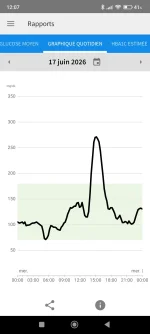
For the past 6 years, I’ve been eating less than 25g of carbs a day. Sometimes I experiment to see what happens. Last week, for a birthday, we went to a small, typical local restaurant. I had a poached egg served with a carrot and a piece of Limousin beef, a little smaller than my hand, served with sautéed potatoes and a green salad. A serving of potatoes about the size of my palm. That should give you an idea of the portions without having to use a calculator.

I've attached the CGM Freestyle plot.

As anyone can see, the spike indicates that starch is toxic to me. The only good news is that the spike declined within about an hour, which shows that my pancreas is starting to function better and my insulin sensitivity is improving. Combined effects of Reta Tirz MOTS-c 5-amino-1-mq ss-31.

« No amount of experimentation can ever prove me right; a single experiment can prove me wrong. » Albert E.

« Agree to disagree. That's what I love about science: there's no one right answer. » Zack from TBBT

My rules: 1. I'm always right. 2. When I'm wrong, the first rule applies.
 

Attachments

  • Screenshot_2026-06-23-12-07-42-993_com.freestylelibre.app.fr.webp
    Screenshot_2026-06-23-12-07-42-993_com.freestylelibre.app.fr.webp
    45 KB · Views: 0

Trending Topics

Forum Statistics

Threads
18,376
Posts
191,618
Members
61,564
Newest
Aloha_hou
Back
Top Bottom