kugelblitz
GLP-1 Apprentice

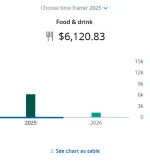
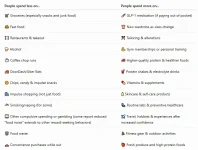
I read recently that grocery markets are feeling the squeeze of people eating less and purchasing fewer groceries.
https://www.theguardian.com/business/2026/jun/10/weight-loss-drugs-grocery-bills-glp-1s
https://www.newsweek.com/ozempic-costing-grocery-stores-billions-2099920
https://www.mjemcgill.com/articles/vhlei566e9xnm86weq3jtxudjcwacv
http://archive.today/2026.06.25-052...cle/glp-1-weight-loss-pill-shopping-sntdn9hcr
(paywall, so archive link)
That made me wonder of the impact that my intake of retatrutide is having on my personal finances. I calculated my food costs per month and my treatment costs per month, calculated my total food savings per month by assuming my intake is 25% less (this number is highly debatable, I just found it online, and it tracks with my own experience of retatrutide, if you disagree, please propose a better one), and deducted my monthly treatment cost from my food grocery savings.
I arrived at net grocery savings of 22.88% at my current monthly dose, and 12.30% savings at max dose of 12mg per week (48mg per month).
That's pretty remarkable. Has anyone else run this kind of calculation?
EDIT: If I also added the cost of Janoshik GLP1 test (one per 10 vials), and the cost of a comprehensive blood panel every 3 months, at my current dose of 2mg, I'm still saving 7.95%. If I go up to 12mg per week, I am no longer saving, in fact my total cost of diet (food + treatment cost) is 24.41% up.
(Disclaimer: I am a liberal arts graduate, I couldn't mathematically model my way out of a paper bag. My model can be validly criticised on many axes, and likelihood of logic or arithmetic errors is very high. This is just a back of an envelope number. Anyone who wishes to propose a more robust model, please do so, I'd love to plug in my numbers.)
https://www.theguardian.com/business/2026/jun/10/weight-loss-drugs-grocery-bills-glp-1s
https://www.newsweek.com/ozempic-costing-grocery-stores-billions-2099920
https://www.mjemcgill.com/articles/vhlei566e9xnm86weq3jtxudjcwacv
http://archive.today/2026.06.25-052...cle/glp-1-weight-loss-pill-shopping-sntdn9hcr
(paywall, so archive link)
That made me wonder of the impact that my intake of retatrutide is having on my personal finances. I calculated my food costs per month and my treatment costs per month, calculated my total food savings per month by assuming my intake is 25% less (this number is highly debatable, I just found it online, and it tracks with my own experience of retatrutide, if you disagree, please propose a better one), and deducted my monthly treatment cost from my food grocery savings.
I arrived at net grocery savings of 22.88% at my current monthly dose, and 12.30% savings at max dose of 12mg per week (48mg per month).
That's pretty remarkable. Has anyone else run this kind of calculation?
EDIT: If I also added the cost of Janoshik GLP1 test (one per 10 vials), and the cost of a comprehensive blood panel every 3 months, at my current dose of 2mg, I'm still saving 7.95%. If I go up to 12mg per week, I am no longer saving, in fact my total cost of diet (food + treatment cost) is 24.41% up.
(Disclaimer: I am a liberal arts graduate, I couldn't mathematically model my way out of a paper bag. My model can be validly criticised on many axes, and likelihood of logic or arithmetic errors is very high. This is just a back of an envelope number. Anyone who wishes to propose a more robust model, please do so, I'd love to plug in my numbers.)
Last edited: