Which is the best GLP-1 for reducing systemic inflammation?

Bioexplorer

GLP-1 Apprentice
Member Since
Apr 18, 2026
Posts
78
Likes Received
110
Location
Lexington, KY
United-States
There seems to be a consensus here that tirzepitide is best for reducing inflammation with lots of anecdotal reports that this particular dual agonist provides better pain relief for various ailments than semaglutide or retatrutide. And several members have reported that they switched from Reta to Tirz specifically for this effect.

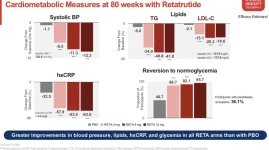
But it is generally accepted that hs-CRP is the best indicator of systemic inflammation so we have a non-subjective way to measure inflammation reduction already. 10mg Tirz gave a 34% reduction. EL reports substantial reduction in the Reta trials but I haven't seen any numbers. However, based on liver and kidney effects, many people expect a greater reduction in hs-CRP than Tirz.

Did I miss some data showing actual CRP numbers for Reta? Any insight on why Tirz could provide a better subjective effect on inflammation even though Reta probably has similar hs-CRP benefits?
 
Did I miss some data showing actual CRP numbers for Reta? Any insight on why Tirz could provide a better subjective effect on inflammation even though Reta probably has similar hs-CRP benefits?
I just looked and in the phase 2 and 3 trials there were mentions of significant changes vs placebo for hs-crp, but no data provided.

Also supposedly reta has higher GIP activation so its not GIP for inflammation. Tirz has lower GLP1 than Sema, so not the reason. I think this falls under we know it lowers inflammation, but not why. And there are a shocking amount of meds, and medical stuff that we accept it does x without not knowing why.

And hs-CRP has its limitations. Not be all end all. There is a bunch of stuff with cytokines and hs-crp doesn't pick up tissue localized inflammation. Any further is way beyond the scope of a health focused normie.
 
Reta has been shown to reduce inflammation. The question is, is the reduction in inflammation on Reta independent of weight loss. We don't seem to know that. As Reta puts more stress on the body than Tirz so I would be skeptical that it is independent of weight loss or, if it is, that it is as good at it as Tirz.

We know that Tirz definitely has an large impact on inflammation. Anecdotally, I am running a low dose stack that is mostly Tirz with a little Reta for maintenance (3.5mg/1mg) my CRP dropped from 2.1 to 0.2.
 
I had a conversation with AI in the last week about inflammation reduction of Tirz vs Reta. Its consensus was that the reduction primarily comes from the weight loss. The quality data supports Tirz, primarily due to more time to research it. It expects Reta to be on par with Tirz or perhaps better, but it didn't think stacking Tirz with Reta would increase inflammation reduction, unless it caused additional weigh tloss.


Since you mentioned hs-CRP: I started Tirz on 12/10/25. In January I had 3 capillary drawn labs done (Siphox and Rythm, capillary sucks). I started Reta on 1/10/26. I had venous labs (Labcorop) done in May and June and will have it again next month.

January, 2 results that were at 2.0mg/L, one in between that was considerably higher.
May, .66mg/L
June, .58mg/L

My weight dropped from 274lb on the first January draw date to 217lb on the June draw date. In theory, still have ~30+lb to go to seeing abs.
 
what is inflammation and how do you know you have it or resolved? Genuine question.

It's a normal human function that is in response to an issue. If you had a serious inflammatory response, you'd know about it.

Get sleep, nutrition, stress and training perfect then worry about inflammation.
 
It's a normal human function that is in response to an issue. If you had a serious inflammatory response, you'd know about it.
Yeah except people sometimes have autoimmune stuff that causes inflammation or chronic injuries.
Get sleep, nutrition, stress and training perfect then worry about inflammation
Not wrong, but also not right. Sometimes you need to control inflamation. To get sleep, stress, and training down. Nutrition should be cornerstone.
 
My last hs-CRP test was a couple years ago when the GI doc was testing everything to identify severe abdominal pain. It was over 80. And it still never occurred to him that I might have a raging infection! It took an ER visit and CT scan to finally get a diagnosis and antibiotics.
 
Reta was my gateway peptide. It knocked the edema out of my ankles in the first week. I think its anti-inflammatory effects are underappreciated.
 
Reta was my gateway peptide. It knocked the edema out of my ankles in the first week. I think its anti-inflammatory effects are underappreciated.
I agree! I no longer have the joint stiffness, neck or back pains that I had 2 months ago. Now is it because I lost 20 lbs? I don't know.
 
Well, I'll disagree that Tirz's anti-inflammatory benefits is primarily from weight loss just based on my own experience, granting a trial group of exactly one. The anti-inflammatory aspect was a huge reason for me even starting on Tirz, I'd gotten to the age where everything hurt every day. Figured if even a 10th of what was claimed about Tirz was true, I'd be ok with that bonus gift. I felt SIGNIFICANT decrease in aches and pains week one, way too soon to be claiming it was because of weight loss. In less than a month I stopped the Mobic I'd been on for years. Only inflammation I've experienced ever since has been those occasions when the Tirz whispers to me, "Don't you feel like you're 20 again?!" and I go do something stupid until I remember I'm 65.
 
what is inflammation and how do you know you have it or resolved? Genuine question.

It's a normal human function that is in response to an issue. If you had a serious inflammatory response, you'd know about it.

Get sleep, nutrition, stress and training perfect then worry about inflammation.
Metabolic syndrome associated with type 2 diabetes causes inflammasomes to form around the pancreas, which further aggravates the problem.
 
I noticed a gradual reduction in skin inflammation on my thighs, progressing from the Victoza (lira) injection sites, even though I did not lose weight nor reduce my blood sugar levels with this aGLP-1.

Since taking Reta, the problem is that it exacerbates a minor chronic viral infection (pityriasis). And since I've watched every episode of House, I've learned that you don't give corticosteroids for an infection. It seems to have a similar effect, possibly indirect.
 
FWIW, here's my inflammation story: I used Tirzepatide over 6 months and lost 60 pounds. At the end of that period, I did a blood test that showed my inflammation levels were elevated. CRP came in at 3.0 and another calculated marker SII (Systemic Immune-Inflammation Index) came in at 1892. The normal range for the latter is considered to be 0-800. But apparently this number came out high because of high neutrophils and low lymphoctyes which are used in the SII calculation.

Every AI engine I fed my data into believed that the inflammation was related to physiological stress from rapid weight loss. They expected SII would fall once my weight stabilized. So I guess the conclusion is that while Tirzepatide may reduce inflammation, losing weight rapidly can have the opposite effect, at least temporarily.

Has anyone else experienced this?
 
FWIW, here's my inflammation story: I used Tirzepatide over 6 months and lost 60 pounds. At the end of that period, I did a blood test that showed my inflammation levels were elevated. CRP came in at 3.0 and another calculated marker SII (Systemic Immune-Inflammation Index) came in at 1892. The normal range for the latter is considered to be 0-800. But apparently this number came out high because of high neutrophils and low lymphoctyes which are used in the SII calculation.

Every AI engine I fed my data into believed that the inflammation was related to physiological stress from rapid weight loss. They expected SII would fall once my weight stabilized. So I guess the conclusion is that while Tirzepatide may reduce inflammation, losing weight rapidly can have the opposite effect, at least temporarily.

Has anyone else experienced this?
Interesting. Never heard of that
 
I don't know scientifically & have not done any bloodwork pertaining to this subject (yet). This is just based on my experience (of course everyone can have a different experience).

I started with Tirz & my pain levels did go down from the beginning. Soon after I decided to switch to Reta (dazzled by the faster weight loss idea) but immediately the pain came back (both were started low since I was worried about side effects). This is why I decided to stack. Now up to 5.5 Tirz & 3 Reta pain is on & off but much better controlled.
 
Well, I'll disagree that Tirz's anti-inflammatory benefits is primarily from weight loss just based on my own experience, granting a trial group of exactly one. The anti-inflammatory aspect was a huge reason for me even starting on Tirz, I'd gotten to the age where everything hurt every day. Figured if even a 10th of what was claimed about Tirz was true, I'd be ok with that bonus gift. I felt SIGNIFICANT decrease in aches and pains week one, way too soon to be claiming it was because of weight loss.
I’m not trying to argue that GLP-1s don’t have an anti-inflammatory effect, but the benefit preceding the actual weight loss doesn’t really disprove that weight loss was driving the effect. It’s not just about body mass, but rather energy abundance and scarcity are major players in inflammatory tone. When you start pushing a meaningful calorie deficit you would expect a large reduction in inflammation because that’s just a normal part of the physiological scarcity response, and that’s going to happen before you’ve actually lost pounds on the scale. Blood pressure is another one where the benefits of weight loss largely precede the actual weight loss.
 
Personal wild speculation: the perceived difference between tirz and reta in anti-inflammatory effect may have less to do with actual anti-inflammatory effect and more to do with sensory perception.

Think about the skin sensitivity issues we see with reta. That could be due to reta causing a direct pain response in skin tissue (though I don’t recall a ton of relevant receptors in this tissue), or an indirect pain response via hepatokines or adipokines or whatever. But there’s a compelling alternative hypothesis that this could be due to changed perception of existing nervous signals. We have a ton of GLP-1 and glucagon receptors in the nervous system and reta may be affecting how existing sensory signals are transmitted through the nervous system. So rather than reta itself causing skin pain, it’s making existing sensations more perceived.

Similar mechanisms could easily apply to inflammatory discomfort. Rather than one being better or worse for inflammation, which we don’t really have evidence for, it could be that reta makes existing inflammation more noticeable.

But that’s feral speculation.
 

Trending Topics

Forum Statistics

Threads
18,591
Posts
193,645
Members
62,079
Newest
mmueller913
Back
Top Bottom