
You are using an out of date browser. It may not display this or other websites correctly.
You should upgrade or use an alternative browser.
You should upgrade or use an alternative browser.
SS-31 + MOTs-C vs NAD+
- Thread starter Desieldogg
- Start date

ContainHer
GLP-1 Apprentice

Is anyone filtering their NAD+? I'd like to filter mine but wasn't sure if it can be done.
PAPoots
GLP-1 Enthusiast
You had me a freaky orange stuff.Somewhere in there someone should work in 5A1MQ. Mix in that freaky orange stuff for added energy and increased NAD+ through the NNMT inhibition.
PAPoots
GLP-1 Enthusiast
You might ask that in the Reta forum. For me, no. The higher heart rate, more frequent trips to the bathroom... according to my sleep tracker I get a lot less REM sleep. So rarely do i dream. I'm hoping long term my body adjusts, or when I get to my goal weight, I can back off enough to get better sleep.Do any of you notice having more dreams when taking RETA? I hope this doesn't last long because they are not always pleasant dreams, and I remember them too long.

Get yourself some Prazosin. It will stop your dreams.Do any of you notice having more dreams when taking RETA? I hope this doesn't last long because they are not always pleasant dreams, and I remember them too long.

Chili777
GLP-1 Apprentice
I'm doing the same. I looked at cerebrolysin but I think I'm going to start with Epitalon for brain health first followed by Semax, both via IN. I read that Epitalon potentially helps with TBIs by restoring brain signal intensity. I've had a couple due to car accidents, none my fault. I read that Epitalon followed by Cerebrolysin acts synergistically. So, continuing Reta, followed by the mitochondrial protocol, followed by KLOW and then the brain health protocol, sequentially.74 year old male. My research is to follow the 14 week mitochondria protocol for molecular repair and enhancement. After that, my research will be 6 weeks on followed by 3 weeks off for a few cycles of GLOW. This will benefit cellular repair and enhancement. Molecular first followed by cellular.

Could you please please please link me to the pdf with the research documentation? I’m not finding it somehow.This is a 14 Week protocol. Weeks 13 and 14 are the same as Week 12..MOTS-c and NADS+. The PDF has links to files and research documentation to explain the reasoning behind this schedule. I started it Firday.
Does your pdf have the references to the research supporting the protocol? Would you mind sharing that with me please?Did you make it or did it originate here? I just had the PDF shared with me.
Chili777
GLP-1 Apprentice
It has all that info. I attached it.Does your pdf have the references to the research supporting the protocol? Would you mind sharing that with me please?
Attachments
Ah, thank you so much! I see the attachment. ETA oooh very meaty and presented so thoroughly!It has all that info. I attached it.
Chili777
GLP-1 Apprentice
I found the research quite compelling. I'll be starting it in about 10 days as written. As I posted above, some people did mention that these dosages might be a bit high for a younger researcher.Ah, thank you so much! I see the attachment. ETA oooh very meaty and presented so thoroughly!
Yeah there is so much good stuff all laid out! This is so very helpful,I found the research quite compelling. I'll be starting it in about 10 days as written. As I posted above, some people did mention that these dosages might be a bit high for a younger researcher.
I did see the rationale for lower doses, since it seems to work in the non-congenital population. And that new study uses lower doses also.
Are you just hoping for general increased vitality? (apologies and ok to just ignore question if too personal) Please let us know your experience!
Chili777
GLP-1 Apprentice
I'm 67 so it's kind of a no-brainer. I've been taking NR orally for 10 years, so I think I'm prepped there. I'm just going to see if I can recapture some of the energy I used to have. My main concern for all of this research is aging gracefully and independently with all my facilities and mobility.Yeah there is so much good stuff all laid out! This is so very helpful,
I did see the rationale for lower doses, since it seems to work in the non-congenital population. And that new study uses lower doses also.
Are you just hoping for general increased vitality? (apologies and ok to just ignore question if too personal) Please let us know your experience!
That last line is so key and so fraught what with the rising incidence of dementia worldwide. I have family history and hisotry of injury also.I'm 67 so it's kind of a no-brainer. I've been taking NR orally for 10 years, so I think I'm prepped there. I'm just going to see if I can recapture some of the energy I used to have. My main concern for all of this research is aging gracefully and independently with all my facilities and mobility.
Well the brain exercise even sorting out and setting up this stuff should also help.
PAPoots
GLP-1 Enthusiast
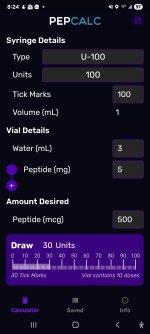
Your last line is key for me. After a few more months of research, I won't need pepcalc anymore. I'll be doing mg, mcg, ml, and unit calcs in my sleep.That last line is so key and so fraught what with the rising incidence of dementia worldwide. I have family history and hisotry of injury also.
Well the brain exercise even sorting out and setting up this stuff should also help.
You can then help scads of people online with their calculations… this is some amazing sort of person to person training in taking one’s health back.Your last line is key for me. After a few more months of research, I won't need pepcalc anymore. I'll be doing mg, mcg, ml, and unit calcs in my sleep.
PAPoots
GLP-1 Enthusiast
lessthanhalf
GLP-1 Apprentice

Referring to the original post.
The problem with the protocol , and the article attatched, is the implication that these substances have been studied in humans, are safe, and the effects are known, and beneficial. Mostly this is not actually true. In general, the effects of the substances in humans individually are either not known at all, as for Mots c , or not well understood , or not very effective. Combined the effects are completely unknown, and have never been tested in animals or humans.
Many of the references are to something that is not a peer reviewed journal, the international peptide society, I tried to look it up to get a better idea of what it was but their website did not work. But mixing up genuine scientific references to animal studies with non scientific references is at best misleading.
SS-31 or Elamipretide has had human trials, so is known to be safe. Apart from treatment for Barth's syndrome, a genetic mitochondrial disorder, which was successful, the results of the human trials were generally disappointing, failed to meet their end points, and its use for more generalised purposes such as heart failure have been abandoned.
Mots c sounds amazing from animal studies, but has not been tested in humans. It is present naturally in the body so that gives it a bit of a safety factor, but the lack of any testing in humans means it effects in humans are currently completely unknown. There is definite interest from the drug companies in it and modifications to the peptide have been made and tested, mainly so it can be patented, and further research will happen.
There have been quite a few trials of various compounds to increase cellular NAD+, mainly NMN and N Riboside. They showed great promise in animal studies, and it is an important biological chemical, the question is - has it been proved that supplementation has beneficial effects in general or on specific disease states in humans? It has been studied enough to know that it is safe but effectiveness is much more questionable. There are lots of small studies so finding one that shows a benefit is easy, but in general unless enormous very expensive studies are done ( which is not going to happen unless it can be patented ) the easiest way to asses the research is a meta analysis that adds them all together and there are quite a few of them. For example - DOI: 10.1055/a-2382-6829
It's conclusions were pretty underwhelming
"Supplementation with NAD + precursors reduced plasma levels of total cholesterol and triglycerides in volunteers, but the intervention did not significantly affect the other outcomes analyzed *. Three of the included articles presented a high risk of bias. The quality of evidence varied between very low and low due to the risk of bias, imprecision, and indirectness. The number of participants in outcomes other than lipidemia is still generally tiny; therefore, more clinical trials evaluating these parameters will increase the quality of the evidence."
*outcomes tested were
Fasting blood glucose. Fasting blood insulin. Glycated hemoglobin.
HOMA index. Systolic blood pressure. Diastolic blood pressure. Body weight.
Cholesterolemia. Plasma LDL cholesterol levels. Plasma HDL cholesterol levels. Triglyceridemia.
This does not mean that these substances alone or together might not have benefits, they might but it is not known. My objection is that information presented in the protocol and the accompanying article very strongly imply that the science of this recommendation is established fact, it is not. I would guess no reputable clinicians ( which does not include celebrity doctors or similar who sadly seem more interested in making money than providing sound advice ) would recommend mots c or ss-31 on the basis of current available evidence. NAD+ therapies are almost certainly safe, but there is a serious lack of evidence that they work in humans, except for low quality evidence they lower lipid levels and statins are much more effective at lowering blood lipids.
The problem with the protocol , and the article attatched, is the implication that these substances have been studied in humans, are safe, and the effects are known, and beneficial. Mostly this is not actually true. In general, the effects of the substances in humans individually are either not known at all, as for Mots c , or not well understood , or not very effective. Combined the effects are completely unknown, and have never been tested in animals or humans.
Many of the references are to something that is not a peer reviewed journal, the international peptide society, I tried to look it up to get a better idea of what it was but their website did not work. But mixing up genuine scientific references to animal studies with non scientific references is at best misleading.
SS-31 or Elamipretide has had human trials, so is known to be safe. Apart from treatment for Barth's syndrome, a genetic mitochondrial disorder, which was successful, the results of the human trials were generally disappointing, failed to meet their end points, and its use for more generalised purposes such as heart failure have been abandoned.
Mots c sounds amazing from animal studies, but has not been tested in humans. It is present naturally in the body so that gives it a bit of a safety factor, but the lack of any testing in humans means it effects in humans are currently completely unknown. There is definite interest from the drug companies in it and modifications to the peptide have been made and tested, mainly so it can be patented, and further research will happen.
There have been quite a few trials of various compounds to increase cellular NAD+, mainly NMN and N Riboside. They showed great promise in animal studies, and it is an important biological chemical, the question is - has it been proved that supplementation has beneficial effects in general or on specific disease states in humans? It has been studied enough to know that it is safe but effectiveness is much more questionable. There are lots of small studies so finding one that shows a benefit is easy, but in general unless enormous very expensive studies are done ( which is not going to happen unless it can be patented ) the easiest way to asses the research is a meta analysis that adds them all together and there are quite a few of them. For example - DOI: 10.1055/a-2382-6829
It's conclusions were pretty underwhelming
"Supplementation with NAD + precursors reduced plasma levels of total cholesterol and triglycerides in volunteers, but the intervention did not significantly affect the other outcomes analyzed *. Three of the included articles presented a high risk of bias. The quality of evidence varied between very low and low due to the risk of bias, imprecision, and indirectness. The number of participants in outcomes other than lipidemia is still generally tiny; therefore, more clinical trials evaluating these parameters will increase the quality of the evidence."
*outcomes tested were
Fasting blood glucose. Fasting blood insulin. Glycated hemoglobin.
HOMA index. Systolic blood pressure. Diastolic blood pressure. Body weight.
Cholesterolemia. Plasma LDL cholesterol levels. Plasma HDL cholesterol levels. Triglyceridemia.
This does not mean that these substances alone or together might not have benefits, they might but it is not known. My objection is that information presented in the protocol and the accompanying article very strongly imply that the science of this recommendation is established fact, it is not. I would guess no reputable clinicians ( which does not include celebrity doctors or similar who sadly seem more interested in making money than providing sound advice ) would recommend mots c or ss-31 on the basis of current available evidence. NAD+ therapies are almost certainly safe, but there is a serious lack of evidence that they work in humans, except for low quality evidence they lower lipid levels and statins are much more effective at lowering blood lipids.

Calm Logic
GLP-1 Specialist
Except for a few newbies, I don't think people assume such protocols are gospel,. More like a shot in the dark, often trying to also balance cost with potential effectiveness.
For SS-31, one could argue for 40 mg a day instead of 4 mg, but who can afford that?
Regarding lab results, there is always more that can be tested. Like telomere testing, but that is expensive too. Not to mention heart imaging, nerve conduction tests, brain tests, etc.
But to echo an earlier comment, I see it as more like insurance -- you may not need it and they may not pay the claim, but you don't want to be without it either.
For SS-31, one could argue for 40 mg a day instead of 4 mg, but who can afford that?
Regarding lab results, there is always more that can be tested. Like telomere testing, but that is expensive too. Not to mention heart imaging, nerve conduction tests, brain tests, etc.
But to echo an earlier comment, I see it as more like insurance -- you may not need it and they may not pay the claim, but you don't want to be without it either.
Last edited:
Calm Logic
GLP-1 Specialist
Seems like a great plot for a movie. But seriously, it is interesting that the vividness of dreams is often not a good thing, especially when it is every night. That's one reason I didn't like Prozac.Get yourself some Prazosin. It will stop your dreams.
Trending Topics
-
-

-
-
All right, i searched for freezing tirz, specifically the Jano response but...
- Gr33dyOctopus
Replies: 73 -
 What will gray vendors do to compete with new highly reduced prices for US GLP drugs?
- AndyPanda
Replies: 68


Members Online
- graca123
- d0se1
- Not_Your_Dad
- TacoLifter420
- Christina
- Beowulf_1973
- Mayostardayonnaise
- Calm Logic
- Nokish1
- TK1!!
- jemifus
- DustAndDignity
- Zydeceltico
- zzonell
- Tirzenewuser
- wooods75
- jamnorway
- Camlbacker
- TreyCrittenden
- Nad123
- mraajr
- Eepdjp
- Ragu1
- Boxmas
- hege08
- Peotidethrowaway
- LazysodLondon
- cldfront
- ladynicole
- brunobcandido
- Bella.xtp
- Cmonster
- LiftandLearn
- Chemsales
- kiloyankee07
- UpDownLeftRightAS*
Total: 208 (38 Members & 170 Guests)