Blood sugar drop on Reta?

Hichewgoddess

GLP-1 Apprentice
Member Since
Nov 22, 2025
Posts
43
Likes Received
114
Location
Seattle, Wa
United-States
I’ve just started Reta 1mg per week and currently on week 4. After about 24 hours I get a blood sugar drop. I get dizzy, nauseous, and feel feint. At least I’m assuming that’s what it is as it seems to be fixed by water and a small piece of candy/sugary food. I am eating carbs, drinking my water, and drinking my electrolytes (1 packet of liquid IV per day), and still feel like I have to really be careful. Is this hypoglycemia? Low blood pressure due to not enough water/electrolytes?
 
Do you have any preexisting glucose issues?

I don’t, but I’ve seen reta can be tougher on blood sugar in the lower direction. Carbs in general help with mine.
I just had some insulin resistance going in, so I’m used to eating only 60-100 carbs a day. Maybe I’m too low?
 
I’ve just started Reta 1mg per week and currently on week 4. After about 24 hours I get a blood sugar drop. I get dizzy, nauseous, and feel feint. At least I’m assuming that’s what it is as it seems to be fixed by water and a small piece of candy/sugary food. I am eating carbs, drinking my water, and drinking my electrolytes (1 packet of liquid IV per day), and still feel like I have to really be careful. Is this hypoglycemia? Low blood pressure due to not enough water/electrolytes?
In general, GLP-1's do not cause low blood sugar, even thought they do reduce blood sugar in those who are diabetic. However, there may be exceptions.
 
I just had some insulin resistance going in, so I’m used to eating only 60-100 carbs a day. Maybe I’m too low?

I can speak to gross generalizations, but for me, timing matters a bit. Exertion can depress glucose levels, I don’t worry about carb loading before exercise, but I do evaluate how I feel before I start.

The last two weeks I’ve averaged 130g per day. There’s only been once I had the starting symptoms of low blood sugar that eating some carbs fixed.

Anecdotally, people talk about carbs being important on Reta, which I tend to agree based on my own observations.

I’ve thought about getting a CGM to track my levels in combination with my observations, but haven’t done so yet.
 
I’ve just started Reta 1mg per week and currently on week 4. After about 24 hours I get a blood sugar drop. I get dizzy, nauseous, and feel feint. At least I’m assuming that’s what it is as it seems to be fixed by water and a small piece of candy/sugary food. I am eating carbs, drinking my water, and drinking my electrolytes (1 packet of liquid IV per day), and still feel like I have to really be careful. Is this hypoglycemia? Low blood pressure due to not enough water/electrolytes?
It could be either (or both). The fact that it resolves with candy/sugar makes hypoglycemia likely, which can happen with Reta especially early on. Low blood pressure and dehydration can feel very similar too. You might try checking your blood sugar during an episode if possible. More frequent meals with protein + complex carbs, extra fluids/sodium, and slowing titration can help. If it keeps happening, definitely worth talking to a provider.
 
That’s a good point, if I had reoccurring issues I’d be much more likely to get a GCM. Only once in the 3 weeks I’ve been bridging to Reta did I notice a light starting symptom which was easily addressed and I moved on with my day.
 
I’ve just started Reta 1mg per week and currently on week 4. After about 24 hours I get a blood sugar drop. I get dizzy, nauseous, and feel feint. At least I’m assuming that’s what it is as it seems to be fixed by water and a small piece of candy/sugary food. I am eating carbs, drinking my water, and drinking my electrolytes (1 packet of liquid IV per day), and still feel like I have to really be careful. Is this hypoglycemia? Low blood pressure due to not enough water/electrolytes?
The feelings you described are a very common initial side effects with retatrutide that often pass over time.

In addition, GLPs (including retatrutide) are also highly effective at normalizing blood sugar levels in diabetics. For some diabetics this effect is very rapid and starts to happen in the first few days.

It wouldn't be my first guess, but it's certainly possible that you are experiencing symptoms of hypoglycemia, especially if you historically have a problem with that. Regardless of cause, I'd avoid putting myself in situations where rapid reflexes (e.g. driving) are important during periods when I experienced those symptoms. If you want to use this as an excuse to eat candy, nobody is going to judge you for doing that either, although that's generally going to be counterproductive unless you inject insulin or are on certain drugs that force your pancreas to produce more insulin than it otherwise would (not GLPs).
 
According to the companies that sell glp's and chatgpt 5 in scholar/academic mode , none of the GLP medications cause hypoglycaemia in non diabetics.( and then it is caused by an interaction with other glucose lowering medications )
Non medical diagnoses of hypoglycaemia with symptoms like that are very common and when blood sugar is tested in people complaining of those symptoms true hypoglycaemia is very rare.
You would think that reta especially initially, having glucagon agonism would be the least likely to cause it.
True hypoglycaemia is a fairly serious problem, it can cause loss of consciousness and is not great for brain cells. In people who feel tired, shaky and dizzy after not eating for a while, which is very common, calling these symptoms hypoglycaemia, when usually it is not when measured, is really only a problem as it confuses a problem that is quite serious medically with one that is fairly harmless. For example if these episodes were true hypoglycaemia then you should not be driving if there is any risk of one occurring.
All GLP medications lower blood pressure directly, and in many reduce fluid intake by direct action on brain thirst centers. Plus the loss of fluid and electrolytes from initial weight loss, all make postural hypotension more likely, which is the more likely cause of the symptoms. If it goes away sitting or lying down , that would confirm it . Doing what you are doing - having a drink and something to eat is fine as a way to deal with it . But I would suggest paying more attention to fluid and salt/electrolyte intake as important to prevent it from continuing to happen.
 
I have had problems with low blood sugar on Reta. My PCP did a non fasting blood test and my blood sugar was in the 60's. She told me to keep high sugar snacks on me and eat some when I get symptoms.

In my case I don't think it's primarily the Reta just that I don't eat enough, regularly, on it. Make sure you are eating something on a regular basis.
 
I’ve just started Reta 1mg per week and currently on week 4. After about 24 hours I get a blood sugar drop. I get dizzy, nauseous, and feel feint. At least I’m assuming that’s what it is as it seems to be fixed by water and a small piece of candy/sugary food. I am eating carbs, drinking my water, and drinking my electrolytes (1 packet of liquid IV per day), and still feel like I have to really be careful. Is this hypoglycemia? Low blood pressure due to not enough water/electrolytes?
Check your blood pressure. Especially if you are currently on medication. I had to lower my dose because I was dropping to low.
 
The feelings you described are a very common initial side effects with retatrutide that often pass over time.

In addition, GLPs (including retatrutide) are also highly effective at normalizing blood sugar levels in diabetics. For some diabetics this effect is very rapid and starts to happen in the first few days.

It wouldn't be my first guess, but it's certainly possible that you are experiencing symptoms of hypoglycemia, especially if you historically have a problem with that. Regardless of cause, I'd avoid putting myself in situations where rapid reflexes (e.g. driving) are important during periods when I experienced those symptoms. If you want to use this as an excuse to eat candy, nobody is going to judge you for doing that either, although that's generally going to be counterproductive unless you inject insulin or are on certain drugs that force your pancreas to produce more insulin than it otherwise would (not GLPs).
Or, go for some candied ginger for both the sugar boost and the possible help with any nausea.
 
Was it due to the glp1 or a result of losing weight?
I am guessing the two episodes I experienced were a combination of weight loss, being on vacation (no work stress) and dose of Reta was too high and I wasn't able to eat much. I saw the doctor a couple of weeks prior and he told me I still needed the blood pressure medicine even with the weight loss. My first thought went to blood sugar was low when I got dizzy and had to sit down. Blood sugar was normal so I checked my blood pressure and it was low for me 85/69. I am still on medication but at a lower dose.
 
In response to Purplepansy.
I realise you said your doctor asked you to continue blood pressure medications at a lower dose, but I would be surprised if he said that after seeing a bp reading of 85/69. Even fairly aggressive bp lowering is only aiming for 120/80, and there is no known benefit from dropping it further and there are definite downsides to dropping it too much, the most obvious one being falling over from postural hypotension. I am not saying this is happening to you but it is possible to cause kidney damage by dropping bp too much and dropping kidney blood flow too much.
I would suggest do a fair few different blood pressure readings over a few days to get a good average say 10-20. If you have symptoms on standing like dizzyness or things going grey or black for a few seconds then you definitely have postural hypotension. If not you can just measure it sitting then standing and see what the difference is. And write them all down for your Dr.
Without knowing all your medical history I am not going to say you should stop the medication, but I think given that reading , checking it a few times and checking in again with your Dr might be a good idea, especially if you have any symptoms on standing.
 
I just had my yearly appointment last Wednesday regarding my blood tests. I had been on 2mg Reta for a month, and had just started 4mg the previous Friday. BP was 128/70, HR 76 and all my tests were spot on. I was actually shocked. I take Metoprolol 50mg and Lisinopril 10mg twice daily.
 
My RS subject has struggled with low blood sugar and keep some kind of sugary product around at all times. The automatic trigger for big drops is alcohol intake , 2 drinks somewhat and 3 definitely cause big, scary drops. Good news is little to no real desire but even three drinks spread out over hours causes major issues. Liver focuses on alcohol metabolism wrecking blood sugar.
 
In response to Purplepansy.
I realise you said your doctor asked you to continue blood pressure medications at a lower dose, but I would be surprised if he said that after seeing a bp reading of 85/69. Even fairly aggressive bp lowering is only aiming for 120/80, and there is no known benefit from dropping it further and there are definite downsides to dropping it too much, the most obvious one being falling over from postural hypotension. I am not saying this is happening to you but it is possible to cause kidney damage by dropping bp too much and dropping kidney blood flow too much.
I would suggest do a fair few different blood pressure readings over a few days to get a good average say 10-20. If you have symptoms on standing like dizzyness or things going grey or black for a few seconds then you definitely have postural hypotension. If not you can just measure it sitting then standing and see what the difference is. And write them all down for your Dr.
Without knowing all your medical history I am not going to say you should stop the medication, but I think given that reading , checking it a few times and checking in again with your Dr might be a good idea, especially if you have any symptoms on standing.
My blood pressure did not stay this low. I continued to monitor several times during the day. before taking any medication. I was upright and moving both times my blood pressure dropped and I got dizzy. This happened in September while traveling. I do continue to monitor and take my medication as directed by my doctor. My job can be stressful and I have found both my blood pressure and blood sugar will rise. I wore a CGM for awhile to see what my blood sugar was doing. I was on vacation the first week I had it on and my numbers were low but when I went back to work they climbed. I didn't realize that stress can also raise your levels. I am not diabetic and was just looking for more information on how I reacted to different foods. I have been trying to lose weight for many years after surgical menopause in my 30's along with Hashimotos. I have followed a gluten free low carb diet for many years. Reta has finally gotten me close to my goal weight,
 
I am not a diabetic, but through work I have an almost unlimited supply of continuous glucose monitors (CGMs) and have them previously to track my BGLs whilst not on retatrutide. I typically hovered between 6-8mmol (108-144 mg/dl).

Have been uptitrating Reta for a few weeks and now stable at a dose of 4mg for the past 3.

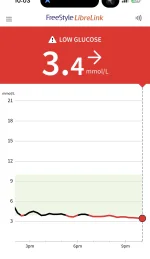
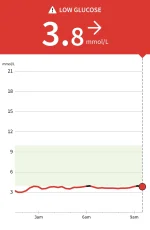
Decided to chuck on a CGM again this week with the below findings.

- I had a significant low episode of about 3mmol/L ~12 hours after my weekly dose of retatrutide. Non-symptomatic.

- I typically now hover around 4mmol/L, but I am also spending a lot of time between 3.2-3.7. This is especially consistent during work hours where I may not actually get time to eat for 8-10 hours.

- I’m yet to be symptomatic from a low, but during these lower levels I do feel at the very least a tad bit fatigued and spaced out + hungry

Some of my personal take aways from this

- Reta is VERY GOOD for my glycemic control, that’s a 2mmol drop on average compared to prior

- That said, I think the risk of hypoglycaemia on a GLP1 is not talked about enough

- There is likely a subset of the population like me which already have a ‘borderline’ BGL on no medication, who would be at risk of hypoglycaemia whilst on a GLP1 and not know about it. It’s important to remember the population selected in all the trial so far are pre-disposed to insulin resistance (I.e BMI >31). On the other hand anyone can use it on the grey market and that population isn’t reflected well in trials.

- I certainly don’t think I feel safe uptitrating any higher than 4mg given the risk of a proper symptomatic hypoglycaemic event. As an example, in my state T1 diabetics are legally required to check their BGL before driving and aren’t allowed to drive unless it’s >5mmol/L.

- It’s important to have at least small meals throughout the day whilst on this medication, i’m not sure prolonged intermittent fasting is very safe on this medication.

- I do wonder if some of the side effects people experience from retatrutide can be explained exclusively by persistent hypoglycaemia

Photo attached below of my trend whilst working yesterday on a busy shift with no snacking time!
 

Attachments

  • IMG_7975.webp
    IMG_7975.webp
    37.2 KB · Views: 2
And this is a photo of my trend overnight.
 

Attachments

  • IMG_7980.webp
    IMG_7980.webp
    29.6 KB · Views: 2
I’ve just started Reta 1mg per week and currently on week 4. After about 24 hours I get a blood sugar drop. I get dizzy, nauseous, and feel feint. At least I’m assuming that’s what it is as it seems to be fixed by water and a small piece of candy/sugary food. I am eating carbs, drinking my water, and drinking my electrolytes (1 packet of liquid IV per day), and still feel like I have to really be careful. Is this hypoglycemia? Low blood pressure due to not enough water/electrolytes?
I did feel a little dizzy one time and took the opportunity to eat some sugar. I still eat some sugar snacks even though I have cut way back. I usually eat a small meal and a snack for lunch, and a damp meal and a snack for dinner and sometimes two snacks. When I first started I cut way down on sugar so I was easily able to attribute how I felt to needing some sugar at least that is what I figured.
 
I usually eat bigger portions of carb before and after my workouts, 3 weeks in and didn't had any drops as for now
 
I usually eat bigger portions of carb before and after my workouts, 3 weeks in and didn't had any drops as for now
Are you using an intermittent pinprick BGL measurement or a CGM? I did notice it varies throughout the day.
 
Lots of FUD here:

"Asymptomatic hypoglycemia" isn't a legitimate concern. This is actually part of the reason why (although I think it would be a great thing) doctors are often opposed to prescribing CGMs for non-diabetics (or even many type 2 diabetics). They know their patients are going to read too deeply into the numbers and start role-playing as if they were type-1 diabetics (e.g. sugar snacks when things go lower and making other bizarre decisions to smooth out the number shown on their phone app). You're also conflating initial common GLP symptoms with hypoglycemia. I experienced those symptoms too initially. I have worn a CGM for years. My blood sugar went down on reta. It regularly hovered in the 50-60 mg/dL range during periods of dose escalation. It's not unusual. Normally I'd have to fast for 4-5 days to get it to hover in that range.

If you're injecting insulin and taking sulfonylureas then you should be tracking your blood sugar and doing things like a sugar snack if you start to see it dip. Otherwise, unless you have something highly unusual going on, you're not going to benefit from role-playing type-1 diabetic behavior.
 
Lots of FUD here:

"Asymptomatic hypoglycemia" isn't a legitimate concern. This is actually part of the reason why (although I think it would be a great thing) doctors are often opposed to prescribing CGMs for non-diabetics (or even many type 2 diabetics). They know their patients are going to read too deeply into the numbers and start role-playing as if they were type-1 diabetics (e.g. sugar snacks when things go lower and making other bizarre decisions to smooth out the number shown on their phone app). You're also conflating initial common GLP symptoms with hypoglycemia. I experienced those symptoms too initially. I have worn a CGM for years. My blood sugar went down on reta. It regularly hovered in the 50-60 mg/dL range during periods of dose escalation. It's not unusual. Normally I'd have to fast for 4-5 days to get it to hover in that range.

If you're injecting insulin and taking sulfonylureas then you should be tracking your blood sugar and doing things like a sugar snack if you start to see it dip. Otherwise, unless you have something highly unusual going on, you're not going to benefit from role-playing type-1 diabetic behavior.
I don’t see anyone in this thread concerned about asymptomatic hypoglycaemia. If I could be asymptomatically hypoglycaemic long term I’d be over the moon given we know there’s a direct correlation between elevated HbA1c and atherosclerotic burden.

It is certainly brave to be so confident that someone can’t have hypoglycaemia related symptoms whilst commencing retatrutide and that everything is just explained by ‘normal initial symptoms’. Once again, GLP1 medications were literally designed initially to lower blood glucose levels in T2DM.
You do not have to have T1DM to experience hypoglycaemia symptoms. There is significant variation in what levels people experience hypoglycaemic symptoms - otherwise known as hypoglycaemia awareness.

Glad you felt fine at 50–60 mg/dL, but your personal experience probably shouldn’t be presented as though it’s universally safe or normal for everyone else.
 
It is certainly brave to be so confident that someone can’t have hypoglycaemia related symptoms
I didn't use the word "can't." My point was that there's a reason why doctors will warn you about hypoglycemia when starting injectable insulin or a sulfonylurea, but they won't warn you about it when starting a GLP. It's because (symptomatic) hypoglycemia isn't a common risk factor associated with GLP use (unless that person is also taking injectable insulin or a sulfonylurea).

Now every once in a blue moon someone will have something deranged going on with their metabolism where adding a GLP into the mix could lead to symptomatic hypoglycemia, just as every once in a blue moon someone will go blind after starting a GLP. Both are rare conditions and in the case of hypos that person is usually aware that it's a problem for them before starting the GLP because it's historically been a problem.

What you're doing it reading into values on your CGM and even in the absence of feeling light headed, clammy, or losing consciousness you're convincing yourself that you're at risk of something. This is causing you to misapply type-1 diabetic thumb rules in regards to hypoglycemia and think 50-60 mg/dL is a dangerously low blood sugar, despite being a very common level one will achieve on an extended fast and a significant number of normal healthy people will see as a reactive level after a meal without experiencing those symptoms.

Here's what's tripping you up: A type 1 diabetic will sweat a 50-60 mg/dL level, not because that level itself is harmful, but because of the trend that it represents. If their blood sugar is trending downwards AND their body lacks the ability to course correct then by the time they see 50-60 mg/dL on their CGM it's likely their actual blood sugar level is already lower than that. Also, since their body lacks the ability to course correct on its own hormonally, it's important that they initiate action now, since if they wait until it has fallen to a harmful level, it will be too late for them to do so.

So again, everyone is free to wear a CGM and role-play being a type 1 diabetic, but the vast majority of the time it will be unnecessary.

 

Trending Topics

Forum Statistics

Threads
18,078
Posts
188,325
Members
60,616
Newest
ant718
Back
Top Bottom