Filter yes or no

I also plan on bringing back my microbiology lab days and DIY sterility testing on agar plates
I considered that too, but it’s a bit complicated because it requires two or three culture media, and anaerobic bacteria will be missing. I saw that there are protocols in the pharmacopoeia, but it’s even more complicated in a mini-lab.

Have you thought of a specific protocol?
 
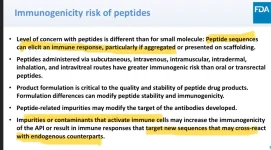
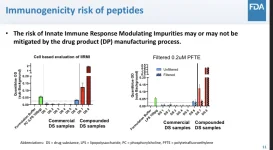
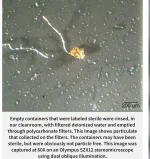
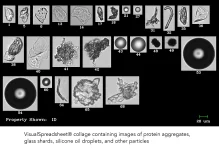
More reasons to filter below. Per the FDA (when it was the FDA).
 

Attachments

  • IMG_3505.webp
    IMG_3505.webp
    42.7 KB · Views: 2
  • IMG_9532.webp
    IMG_9532.webp
    86.9 KB · Views: 2
  • IMG_9531.webp
    IMG_9531.webp
    52.5 KB · Views: 2
I am extremely new to peptides. In fact, today was my first day. 😅

After spending months of time (if not more) reading research papers, forum discussions, watching videos, and safety information, I decided to use a filter. I completely understand that there is always some level of risk involved, especially when sourcing research peptides, but I wanted to add every reasonable safety measure I could.

For me, it is less about assuming there is a problem and more about having an extra layer of protection and peace of mind. The filters are relatively inexpensive, so if there is even a small chance they help remove particulates or reduce risk, I feel the cost is well worth it.

At the end of the day, I know it is still a gamble to some extent, but I would rather take advantage of every safety measure available than skip one and wish I had not. 🤷‍♀️😅
 
I considered that too, but it’s a bit complicated because it requires two or three culture media, and anaerobic bacteria will be missing. I saw that there are protocols in the pharmacopoeia, but it’s even more complicated in a mini-lab.

Have you thought of a specific protocol?
I haven’t gone that deep yet, but I got a good idea for a liquid culture medium from here, and I’m thinking if I could put it in a vial and somehow maintain the vacuum partially, or even just filling it to the cap/self sealing lid, that would be neat for anaerobic testing, and agar and blood agar are pretty cheap and easy to get. I also have a test tube warmer that may come into play. It’s been 10 years since I was in microbiology and I loved it, but a lot of that knowledge was pushed to the side from years of grad school, if you buy into Sherlock’s brain attic idea 😂
 
It's a great idea to do it in a vial in a liquid medium. It will probably require a spectrophotometer.

My microbiology certificate and my Droso counter badge are probably older than you ;-) But the aGLP-1s have helped me regain the cognitive acuity I had in my 20s. It’s easy and enjoyable again.

I find "mental palace" cooler.
😎
 
I have the whole filter set up, but have not used it. I bought it to have precautionary measures in place. My risk threshold is higher than most. If something does not feel or look right, I toss the vial, which I have only done a couple of times. Never a whole kit. Some singles. I am much more conscious now that I am gray, and I use the vials more quickly because I control the timeline. I will probably never use my Tele Health Tirz stash, as some are approaching 8-12 months and now understand the degradation process despite the preservatives 503a,b use. That was a pretty expensive lesson.
 
Does everyone understand filtering originated because of glass ampules?
Have a look at the size of the molecules you wish to filter.
Have a look at the filter sizes available.
How clean is the room or booth you are filtering in?
 
I will probably never use my Tele Health Tirz stash, as some are approaching 8-12 months and now understand the degradation process despite the preservatives 503a,b use. That was a pretty expensive lesson.

I used them and even past BUD and never had an issue. This past week I pinned with some Hallendale that was really kinda old. I'm almost out of compound, but I'm using it.
 
I used them and even past BUD and never had an issue. This past week I pinned with some Hallendale that was really kinda old. I'm almost out of compound, but I'm using it.
It is funny. My BPI no additive did awesome after it expired, but my Olympia faded quickly.
 
In terms of the vials you are putting the filtered peps back into, are people sterilising them there selves or assuming that purchased vials are sterile?
 
Just my 2 cents — yes, filtering will add a few extra bucks and save you a lot of headache. That said, I think it's worth adding a small disclaimer here. I'm not saying you're one of these people, but I've heard a lot of 'I filter because I don't want to deal with endotoxins' and... those filters won't do a thing against endotoxins. They'll slide right through.

But bacteria won’t. Endotoxin is far less of a threat than the cumulative effect of hundreds of injections of other contaminants, bacteria, aggregates, and inorganics like glass and plastics.

Or just trust your health to the humanitarians we all know the criminals operating unlicensed Chinese underground labs are.


IMG_2180.webpIMG_0893.webp
 
Last edited:
I used them and even past BUD and never had an issue. This past week I pinned with some Hallendale that was really kinda old. I'm almost out of compound, but I'm using it.
How was the Hallendale? I can't even remember the strength? I think was 5 or 10mg. It was "screwing in a canoe." (Fucking near water)
 
How was the Hallendale? I can't even remember the strength? I think was 5 or 10mg. It was "screwing in a canoe." (Fucking near water)

Not my favorite, but I took 20mg this past Saturday and it felt feels good this week, but I know a lot of folks who think it's really week. The concentration is so low I had to pin 135 units 🤷🏻‍♂️.
 
I just started filtering. I just assume the vials that I buy are sterile. Be careful if your buying from Amazon.
 
Recon. Draw. Remove needle, attach filter, attach new needle. Inject into a clean, depyrogenated, sterile vial. Doesn't hurt to also attach a vent.
If using a 13mm filter, flush with 0.2ml bac to push the held back peptide solution into the vial.
This was the most direct, easy to follow instruction on filtering I've seen so far. Ty ty!
 
So you would reconstitute, draw with filter and put into a new sterile vial
search filtering filters etc on here there are very detailed instructions and discussions.
Also videos on You tube.. peptidetest and others. It's easier to understand when you watch the process.
There have been accounts of people finding bits of unknown stuff floating in their peptides besides the danger of bacteria, which some deny. I'd much rather be safe than sorry. and you do get to feel like a scientist.. 😁
many vendors of supplies sell kits for this process. Including Peptidetest.com, underground supply, injection shop..
 
Last edited:
Passing it through a 0.22 filter does not make it sterile lol...just bacteria free? I don't know why that is a prevailing thought in this community.

It doesn't make any sense to me. If ur worried about filtering out bacteria there is a bigger problem at hand a filter won't save you from an unsafe vial. Just toss it if u visibly see something floating in ur recon'd vial

If there is bacteria and other contaminants in ur vial you will still contract some type of reaction bc the filter won't catch endos or viruses, misfolded peps, contamination from synthesis etc.

In the lab we use filters bc we are ASSUMING what we are handling is sterile, and it's just a failsafe to remove bacteria bc it's easy to contaminate whatever ur handling w/ur hands or even breath. We don't think it's not sterile from the jump. Think of filtering as a minimizing contamination technique, it's not a decontamination technique.
 
I used to filter and still have hundreds of filters in a box. I no longer do it though. I personally feel that the risk of introducing contaminates from filtering is higher than what I may be removing. The "sterile" vials I get are rarely actually sterile. I have bought them from many sources and I always eventually find some dust or floaters in one. I'm not against filtering if it gives you piece of mind, but I think the risk of inducing problems is higher unless you are in a sterile environment under a laminar flow hood and autoclaving your own supplies. I actually have the autoclave and hood from my mycology hobby and sometimes think about setting them up for filtering. But then I remember that I used to bang drugs under bridges when I was younger, so the thought of a peptide taking me out seems pretty comical.
 
I always filter. Even it is just covers sterility mistakes I make while reconstituting, it's worth it. I also have a lab test of filtering in process right now. Excited to see the results.
 
Passing it through a 0.22 filter does not make it sterile lol...just bacteria free? I don't know why that is a prevailing thought in this community.

It doesn't make any sense to me. If ur worried about filtering out bacteria there is a bigger problem at hand a filter won't save you from an unsafe vial. Just toss it if u visibly see something floating in ur recon'd vial

If there is bacteria and other contaminants in ur vial you will still contract some type of reaction bc the filter won't catch endos or viruses, misfolded peps, contamination from synthesis etc.

In the lab we use filters bc we are ASSUMING what we are handling is sterile, and it's just a failsafe to remove bacteria bc it's easy to contaminate whatever ur handling w/ur hands or even breath. We don't think it's not sterile from the jump. Think of filtering as a minimizing contamination technique, it's not a decontamination technique.

Sterile means the absence of living organism. It doesn’t mean “free from all contaminants”. That’s why “sterile water” doesn’t make it safe for injecting unless it specifies “for injection”, which is a higher standard defined by USP.

.22um filtration removes all viable bacteria. It’s called “sterile filtration” for that reason and one of the final steps (usually one of several) before filling injector pens in pharma peptide production meant as a safeguard against any earlier failure to prevent bacterial contamination.

It doesn’t remove virii, though it’s unlikely any could survive in a lyophiiized peptide vial, and it doesn’t remove endotoxin (which are evidence bacteria are or were present at some point, only emphasizing why one should always sterile filter). But the risk presented by bacteria is far larger than endotoxin.

Nearly 5% of peptide samples submitted to Jano fail sterility testing, and that’s only testing for the 5 most common types of bacteria. Since subQ injections are going into the area where immune surveillance is most active, it’s understandable why small amounts of bacteria aren’t causing noticeable issues. But that doesn’t mean someone’s luck won’t run out at some point, either by being exposed to something their immune system isn’t up to defending against, or that the cumulative load of many asymptomatic injections of bacteria isn’t causing some long term damage that’s not easily attributable to them. There’s some evidence bacteria from “dirty” injections can accumulate in joints, where they are out of the reach of immune cells, and take advantage of a weakened immune system later, or just cause arthritis (something observed to happen at exponentially higher rates in people who injected street drugs at some point in their lives).

The idea that either you “trust” the product enough to use it without filtering, or don’t use it at all is a flawed approach with UGL drugs.

Telling a heroin user they should stop using is both obvious and ineffective. Meeting them where they are by offering clean injection gear is far more likely to lower the harm they’re exposed to.

Harm reduction is about reducing risk, not eliminating it. Filtering absolutely reduces risk.
 
Last edited:
Sterile means the absence of living organism. It doesn’t mean “free from all contaminants”. That’s why “sterile water” doesn’t make it safe for injecting unless it specifies “for injection”, which is a higher standard defined by USP.

.22um filtration removes all viable bacteria. It’s called “sterile filtration” for that reason and one of the final steps (usually one of several) before filling injector pens in pharma peptide production meant as a safeguard against any earlier failure to prevent bacterial contamination.

It doesn’t remove virii, though it’s unlikely any could survive in a lyophiiized peptide vial, and it doesn’t remove endotoxin (which are evidence bacteria are or were present at some point, only emphasizing why one should always sterile filter). But the risk presented by bacteria is far larger than endotoxin.

Nearly 5% of peptide samples submitted to Jano fail sterility testing, and that’s only testing for the 5 most common types of bacteria. Since subQ injections are going into the area where immune surveillance is most active, it’s understandable why small amounts of bacteria aren’t causing noticeable issues. But that doesn’t mean someone’s luck won’t run out at some point, either by being exposed to something their immune system isn’t up to defending against, or that the cumulative load of many asymptomatic injections of bacteria isn’t causing some long term damage that’s not easily attributable to them. There’s some evidence bacteria from “dirty” injections can accumulate in joints, where they are out of the reach of immune cells, and take advantage of a weakened immune system later, or just cause arthritis (something observed to happen at exponentially higher rates in people who injected street drugs at some point in their lives).

The idea that either you “trust” the product enough to use it without filtering, or don’t use it at all is a flawed approach with UGL drugs.

Telling a heroin user they should stop using is both obvious and ineffective. Meeting them where they are by offering clean injection gear is far more likely to lower the harm they’re exposed to.

Harm reduction is about reducing risk, not eliminating it. Filtering absolutely reduces risk.
It is better use of ppl's time to use products tested for sterility and endos. If your vial is contaminated a filter doesn't decontaminate it. We aren't taking a dirty sample and filtering it to make it whole again. You can't change the definition of sterile. If something is NOT sterile, passing it through a filter does NOT make it sterile. Filters aren't bulletproof.

You said sterile water isn't safe for injection unless it meets USP standards. You are injecting these filtered peps. That means they should meet that same standard. They don't. USP doesn't stop at a filter. It requires multiple purification steps and autoclaving.

You also said sterile filtration is one of several safeguards in pharma production. Yes. A failsafe. Big pharma uses nanofiltration and robotics to minimize contamination. You (or avg consumer) don't have that.

Filtering removes bacteria in a statistically significant way. I'm not disputing that. But 'significant' in a study doesn't mean 'sufficient' for a contaminated vial. Pharma standards assume bioburden of nearly and/or approaching zero going in. Like 1 CFU/10 mL. If you're worried about bacteria, you're past that by powers of 10s magnitude.

And even if the filter catches every bacteria, endotoxins remain. They can possibly cause fever, inflammation, sepsis. No filter fixes that (despite resellers bundling it with the dirty kits). Bigger picture, SubQ injection has a different risk profile compared to IV injection which is a whole nother can of worms. I don't want to overblow endo or fear monger. But my point is if there is significant bacteria then there is significant endotoxins being produced which can NOT be removed with a filter.

So yeah it's a Hail Mary. Reduces bacteria. Technically harm reduction. Let's not strawman, my main point in my comment is, "It does not make a safe vial sterile, and is not a decontamination technique". If you want to reduce glass and bacteria, go ahead and filter but don't get comfortable into thinking filtering makes a dirty vial sterile for inj.

I used to filter and still have hundreds of filters in a box. I no longer do it though. I personally feel that the risk of introducing contaminates from filtering is higher than what I may be removing. The "sterile" vials I get are rarely actually sterile. I have bought them from many sources and I always eventually find some dust or floaters in one. I'm not against filtering if it gives you piece of mind, but I think the risk of inducing problems is higher unless you are in a sterile environment under a laminar flow hood and autoclaving your own supplies. I actually have the autoclave and hood from my mycology hobby and sometimes think about setting them up for filtering. But then I remember that I used to bang drugs under bridges when I was younger, so the thought of a peptide taking me out seems pretty comical.
I came to that conclusion too, even if you use perfect aseptic technique, there is a huge chance you transferred ur filtered pep into a dirty vial that was labelled as "sterile". I think there are more efficient ways to reduce contamination when dealing with peps such as limiting a vial to a month tops. Not using the same syringe/needle for recon between vials. I hope no pep is loaded w/something to cause a severe rxn or even death, but ppl still can get nasty ISR such as lumps or a fever which is still terrible to go through.

I agree filtering adds steps and increase risk of introducing contamination. For me, simplifying my process and focusing on basic aseptic technique made more sense than hoping a filter can fix problems that it can't + problems the vial shouldn't have in the first place.

He's a know it all, and only his opinion matters. To him anyways.
Thank you for the compliment! I don't think I know it all, I'm stating lab technique and/or pharma manufacturing processes. And I read everyone one's opinion, and I replied to the thread with my opinion/what I believe is true with whatever topic we are discussing.

Overall, I do think filtering has a place like when preparing pens' cartridges since you have to transfer the whole recon solution into a different container (a needed step) and that is a step where risk of bacterial contamination from you (or environment) can be introduced etc. and that is a direct parallel to when you would use a filter in a lab setting (ex transferring solutions between sterile containers).

 
Last edited:

Trending Topics

Forum Statistics

Threads
17,674
Posts
183,308
Members
59,379
Newest
mrmocha83
Back
Top Bottom