Because glutathione is naturally produced by your body, most people do not have an immune response to the molecule itself. However, reactions often occur due to additives, preservatives, or the concentration of the dose being administered.
If you are alone and lose consciousness or go into respiratory distress, there is no one to pull the line, stop the flow, or call 911.
Glutathione Administration Safety Comparison
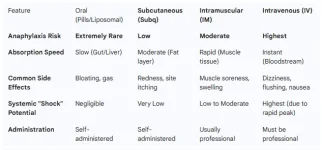
[Med spa vs. Hospital]
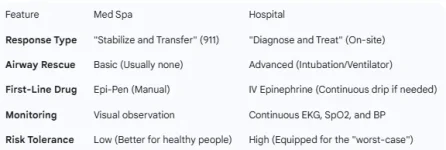
If a clinic is pushing Glutathione into your veins, they should, at a minimum, have:
Epinephrine (Epi-Pen or vials): To treat sudden anaphylaxis.
Oxygen Tank and Masks: In case of bronchial spasms (common in asthmatics reacting to glutathione).
AED (Defibrillator): To treat sudden cardiac events triggered by the shock of a reaction.
Diphenhydramine (Benadryl) IV/IM: To stop a spreading histamine reaction.
Vital Sign Monitoring: They should be checking your blood pressure and heart rate before and during the drip.