MIX “Recall” R30 & T60

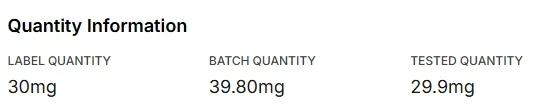
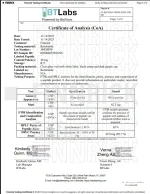
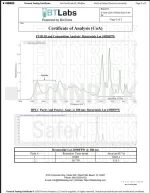
According to the attached results from always-questionable Finn-rick/BTLabs done in November, the R30's purity is low at 80 percent, and the reta mass is about 30 mg. Same batch number as the recall, but the vial crimps are black for the attached test (same purple caps). Silver crimps are what I am receiving, as with the original, good-looking COA for MIX that predated the recall:


In any case, I guess there may be some free tirz in addition to the R30, given what others said earlier:


And:


In that case, 4.5 mg of tirz would be only 12.8 percent of a combined GLP total of 35.25 mg (30.75 mg of reta and 4.5 mg of tirz).

And there was a second peak in the attached Finn-rick test results from November, unlike R30 with a different batch number, tested this month by Finn-rick from Mix.

I wouldn't otherwise mind an unknown amount of tirz since I could go on feelz. But I don't even buy KLOW since it is a mix. Even though a few Chinese vendors sell a mix of tirz and reta on their pricelists, mixing GLPs is never a good idea. If I had to use it (with an EpiPen or something similar available), the first dose would arguably be the safest regarding cross-aggregation from having less time to interact.

And I can't go on looks:


No, I have plenty of reta. The R30 vials by MIX were resold cheap, haha. Though 55 cents per mg is very cheap for reta singles, it would obviously be expensive for a bad batch.

I only got two vials for $22 each ($44 total), so not a big loss at all. I will probably keep them for any peptide apocalypse. So just a backup to a backup that will probably never be used. All of my other reta is tested by GBs.
Ironically, this has been the best reta that I've been on.

None of their subsequent batches have had anything like this happen and have all tested perfectly. The - 10 batch was group tested and all 3 vials were perfect.
 
Ironically, this has been the best reta that I've been on.
So what is your theory, that you got about 40 mg of reta, less than 40 mg of reta, or 30 mg of reta stacked with an unknown amount of tirz?

What was your crimp color with the purple caps? Silver or black? Do you have any idea if that matters?
 
Last edited:
So what is your theory, that you got about 40 mg of reta, less than 40 mg of reta, or 30 mg of reta stacked with an unknown amount of tirz?

What was your crimp color with the purple caps? Silver or black? Do you have any idea if that matters?
This batch also affected their t60 from the same production run. On those COAs and I believe one of the COAs of the R30, the total mass was around 36 but the purity was around 75 to 80 with a second unknown spike which was determined to likely be the tirz but because the test wasn't blind they were only looking for the reta.
 
Oh the coa I was looking for was already posted. The 80 percent purity indicated a 20 or so percent amount of t.
 
Even though a few Chinese vendors sell a mix of tirz and reta on their pricelists, mixing GLPs is never a good idea.
That leads to an interesting question. People are mixing tirz and reta every day in their bodies. If a person switches from one GLP to another, unless they're engaging in a 1-2 month washout period where they abstain from GLPs entirely, they ARE mixing peptides in their bloodstream.

At the same time, mixing inside of a vial during manufacturing is very different. The lyophilization process itself requires various excipients to ensure stability of the peptides contained in the vial. For example, let's say a certain level/mix of excipients is sufficient for tirz, but a higher (or different) level is required for reta. If just the tirz specifications are used, that could theoretically lead to degradation of reta during the lyophilization process.

Presumably manufacturers selling a tirz/reta mix have crossed that bridge and worked out what is needed to stabilize both in combination, but it's certainly possible that an accidentally contaminated batch might be subject to degradation that is missed in the follow-on testing, since it's imperfect at detecting that.
 
That leads to an interesting question. People are mixing tirz and reta every day in their bodies. If a person switches from one GLP to another, unless they're engaging in a 1-2 month washout period where they abstain from GLPs entirely, they ARE mixing peptides in their bloodstream.

At the same time, mixing inside of a vial during manufacturing is very different. The lyophilization process itself requires various excipients to ensure stability of the peptides contained in the vial. For example, let's say a certain level/mix of excipients is sufficient for tirz, but a higher (or different) level is required for reta. If just the tirz specifications are used, that could theoretically lead to degradation of reta during the lyophilization process.

Presumably manufacturers selling a tirz/reta mix have crossed that bridge and worked out what is needed to stabilize both in combination, but it's certainly possible that an accidentally contaminated batch might be subject to degradation that is missed in the follow-on testing, since it's imperfect at detecting that.
My concern is not degradation as much as aggregation. In any case, something leading to more antibodies or another immune reaction.

Stacking (mixing in the body) doesn't seem to be an issue, but now that you mention it, sema seems inherently safer regarding antibodies and cross-reactivity, compared to tirz. I assume the same is true with sema vs. reta.

Regarding allergic reactions to GLPs:

Cross-reactivity between GLP-1 receptor agonists is unknown

Serious, immediate hypersensitivity reactions, including anaphylaxis and angioedema, have been reported with glucagon-like peptide 1 (GLP-1) receptor agonists. Exendin-based GLP-1 receptor agonists (eg, exenatide, lixisenatide) are associated with a doubling of reporting odds of an anaphylactic reaction, compared with human-analogue GLP-1 receptor agonists (eg, liraglutide, dulaglutide, albiglutide, semaglutide).

Systemic Allergic Reaction to the GLP-1 Receptor Agonist Exenatide (2014)
A few hours after the second injection, local urticaria and disseminated pruritus evolved and after the third injection pruritus, urticaria, and shortness of breath developed, which resolved to antihistamines and corticosteroids.
 
Last edited:
My concern is not degradation as much as aggregation. In any case, something leading to more antibodies or another immune reaction.

Stacking (mixing in the body) doesn't seem to be an issue, but now that you mention it, sema seems inherently safer regarding antibodies and cross-reactivity, compared to tirz. I assume the same is true with sema vs. reta.

Regarding allergic reactions to GLPs:


That's an interesting idea. The very nature of subcutaneous delivery does mean that for some period of time a local region of your body will have a much higher concentration of a peptide (or peptides) than the rest of your body and if your immune system catches onto that and reacts, perhaps the implications would be different VS both floating around at lower concentrations in your blood.

It's not clear to me that having two VS one peptides present would be expected to have implications for such an immune reaction (beyond having either there individually would).

And I think there could be some sense in dual/triple agonist peptides being at greater risk for antibody development, but this is speculating well beyond my already limited biochem knowledge. My thinking is that perhaps a peptide that exposes one "key" (receptor agonist) to fit one "lock" (receptor) might be statistically less likely to be noticed by the immune system than another peptide exposing two or three "keys" on similar structures. No idea if that's a valid way of modeling it, though.
 
It doesn't seem as potentially horrific now, playing with Gemini:

Cross-aggregated Tirzepatide and Retatrutide would still likely be safer from an immunogenic standpoint than Exenatide.

Even if you combined Tirzepatide (Tirz) and Retatrutide (Reta), the immune system would be looking at sequences that are roughly 94% identical to human GIP.

Based on Exendin-4 (from Gila monster venom), which has only about 53% homology with human GLP-1. To your immune system, Exenatide is fundamentally a "foreign protein."
 
I can imagine the report to the FDA: "I bought GLP-1 from a vendor called Homopeptide and ever since I purchased that vial, I've been having gay sex twice a day. But I'm not gay. Really. I'm not that type of person."
Doc: But did you say “no homo” before you pinned?

Patient: Girl, no….I mean…YASSSSSSS!!!
 
Nerding out on antibodies:

[Treatment-emergent anti-drug antibodies] developed in 51.1% of tirzepatide-treated patients.

Immunogenicity did not affect TZP pharmacokinetics or efficacy. The majority of hypersensitivity or injection site reactions experienced by TE ADA+ patients were mild to moderate in severity.
Approximately 50% of TZP-treated patients developed TE ADA [treatment-emergent anti-drug antibodies]. This is within the range of published studies for other incretin therapies, including dulaglutide (up to 4.1%), semaglutide (up to 4.3%), lixisenatide (up to 71.2%), liraglutide (up to 8.7%), albiglutide (2.5%), exenatide twice-daily (up to 36.7%), and exenatide once-weekly (56.8%).
 
Last edited:
I really question how mature of a science immunology is, since the popular vaccine origin stories were always a little fishy. With smallpox they took cowpox (a separate virus) to induce immunity to smallpox. At that point they weren't injecting stuff yet, just exposing via scraping skin or inhaling, but apparently was effective. Apparently they lucked out and the viruses were close enough variants to get the job done. Then with polio they were doing crazy experiments on monkeys where they were injecting spinal fluid extracts from victims into the test subjects (without cleaning them up) to try to replicate polio spreading. Never mind that injecting random biological fluids that have been festering from a deceased animal into another animal in itself has the potential to induce polio-like symptoms and maim that animal. It's gotten a lot better since then, but a lot of stuff that was "discovered" back in those days remain thumb rules today, despite our knowledge of disease being much broader now.

So when they detect antibodies being produced, yet the drug still remains effective, I'm not even sure if immunologists really know what that even means or implies. At first glance you assume that means your immune system is going to aggressively attack the molecule, but it sure doesn't seem to be doing that. I suspect in 50 years we'll look back at today and marvel how naive our view of the immune system during this time was.
 
Ironically, this has been the best reta that I've been on.

None of their subsequent batches have had anything like this happen and have all tested perfectly. The - 10 batch was group tested and all 3 vials were perfect.
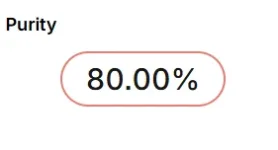
Oh the coa I was looking for was already posted. The 80 percent purity indicated a 20 or so percent amount of t.
So that would indicate 7.5 mg of tirz (as the 20 percent), with the 29.9 mg of reta (as the 80 percent). Total GLP would be 37.4 mg.

So if that was the best GLP ever, that's good news for tirz + reta stackers.

OTOH, seems safe to assume that some of the vials in the batch were not mixed, being more like the reta-only COA from Mix (almost 40 mg of reta). This is what the single-vial reseller seems to be conveniently saying, with black-colored vial crimps in the BTLabs sample vs. silver-colored vial crimps in the reta-only Jano sample.

So still a mystery:

1774743269298.png
 
Last edited:
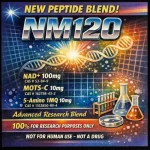
The craziest mix I have seen sold lately, and it sold out:

View attachment 18354
I mean, it clearly states "Advanced Research Blend" right there, so that is as sciency as it can possibly ever be, and all the reassurance one would ever need, right? Right?

That said, I actually like the 80s video-game vibe of that AI slop ad... 😛
 
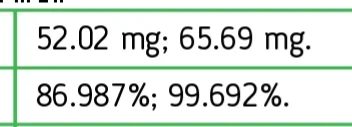
So it still seems this recalled R30 is like the recalled T60 in that some vials/kits affected, others not. The T60 Jano where one vial of two tested fine:


1777398183227.webp
 
Last edited:
Its out of sales now, isn’t it?
So it still seems this recalled R30 is like the recalled T60 in that some vials/kits affected, others not. The T60 Jano where one vial of two tested fine:


View attachment 21459
 
I'm a little late to the thread, but I did send in a vial to be tested by the scammers manipulating test results for profit at Finnrisk (Yes, I know, I know, it was free, ok?). It came back with a purity of 80%, so I assume the other 20% is tirz. I personally love the stuff and am currently taking it. Good appetite suppression, no sides. I always offer to buy or trade with anyone that still has the batch 2025b56-09 if they're uncomfortable taking an unknown substance, but I haven't had any takers yet.
 
I'm a little late to the thread, but I did send in a vial to be tested by the scammers manipulating test results for profit at Finnrisk (Yes, I know, I know, it was free, ok?). It came back with a purity of 80%, so I assume the other 20% is tirz. I personally love the stuff and am currently taking it. Good appetite suppression, no sides. I always offer to buy or trade with anyone that still has the batch 2025b56-09 if they're uncomfortable taking an unknown substance, but I haven't had any takers yet.
I’m assuming that was a typo - the contaminated vials of batch 09 are 87% tirz, 13% reta.

And I still use them personally. Works great.
 

Trending Topics

Latest Posts

Forum Statistics

Threads
17,645
Posts
183,089
Members
59,334
Newest
vanelo2001
Back
Top Bottom