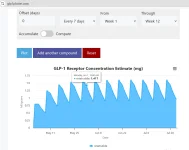
Before even considering messing with the standard dosing arrangement, you need to be sure you understand the pharmacokinetics of the drug. GLP's are totally different to just about any other drugs. They take around 24h to be absorbed and get to peak drug levels in the blood and the half life is 6 days for reta, so it takes 6 days for that peak to drop by half. The amount in your system will continue to increase over 4 weeks, which is why it is recommended to increase doses every 4 weeks.
GLPplotter is a good way to understand what is going on as it shows you this in a graph of blood levels over time.
The issue with increasing doses more often or by a larger amount is side effects. Most people will get some , most common are nausea, vomiting , diarrhoea or constipation and with reta skin sensation weirdness. Side effects typically are worst at 2-4 months after starting with dose increases at around 4-8mg/w and usually very slowly improve.
Because of the long half life if you do get unpleasant side effects like vomiting, it might improve over a few days, but if you are unlucky you could be puking for a week, and when that happens there is a good chance you will need medical treatment.
Side effects or having them get worse are always a risk with any dose increases, but you are more likely to get more severe or prolonged ones if you push dose increases faster, and because of the slow build up of levels over 4 weeks , it might become a problem weeks after a dose increase, which is not intuitively obvious. And individual responses to the hunger reducing effects and the side effects are very variable, which is the reason for the slow careful dose increases plan.