


Hi Everyone,
I am seeking advice on what Blood Work Panels I should be getting to get some objective measures on how my stack is performing.
I have been using the following for about 3 months:
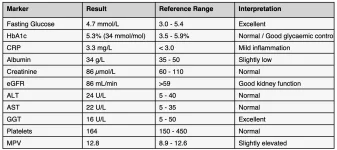
Prior to starting (3months ago) I had a the following Blood Panels done (although this coincided with recovering from a low grade infection) so that may explain why CRP was mildly elevated.
BUT I am keen for advice on what other factors I should be monitoring. For example: how do I know if SS31 / MOTS-C is having any noticeable impact on Mitochondrial function / efficiency.
I also have Stable Angina, so any other factors/tests I should be scheduling? I check in with the Cardiologist once a year and he does not have any concerns, other than get the weight off.
I am seeking advice on what Blood Work Panels I should be getting to get some objective measures on how my stack is performing.
I have been using the following for about 3 months:
- Retatrutide (currently 5mg weekly)
- MOTS-C (10weeks on / 4 weeks off)
- SS31 (10weeks on / 4 weeks off)
Prior to starting (3months ago) I had a the following Blood Panels done (although this coincided with recovering from a low grade infection) so that may explain why CRP was mildly elevated.
BUT I am keen for advice on what other factors I should be monitoring. For example: how do I know if SS31 / MOTS-C is having any noticeable impact on Mitochondrial function / efficiency.
I also have Stable Angina, so any other factors/tests I should be scheduling? I check in with the Cardiologist once a year and he does not have any concerns, other than get the weight off.


