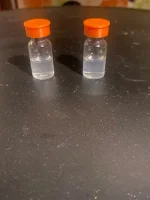
cloudy reta (I have good BAC)

ambot88

GLP-1 Enthusiast
Member Since
Nov 3, 2025
Posts
247
Likes Received
777
Location
alberta
I just got a kit of reta20 from a vendor I've used frequently - reconned the first vial and it was cloudy, shit happens was willing to let it slide, did a second vial, also cloudy. I am using a brand new vial of hospira bac. I then reconned an older vial just to make sure it wasn't my bac and it was crystal clear. I have contacted the vendor with pics and hope they make it right but even if they do, I'm now out of Reta and assume I'll weigh 300lbs by next month.
 

Attachments

  • IMG_8979.webp
    IMG_8979.webp
    39.1 KB · Views: 49
You just got a kit, you reconstituted two plus an older vial, and you’re out of Reta.

Don’t you have 8 new vials plus the old vial that was clear?
 
I've seen AA water recommended to help clear up cloudy Reta
 
30ml of Hospira is hard for me to use in a reasonable time and it’s relatively cheap.

If I got in a bind on supply I’d recon more with 1mL to start with until I found one that was clear (or not).

Sounds like you have time to wait for their response.
 
I just got a kit of reta20 from a vendor I've used frequently - reconned the first vial and it was cloudy, shit happens was willing to let it slide, did a second vial, also cloudy. I am using a brand new vial of hospira bac. I then reconned an older vial just to make sure it wasn't my bac and it was crystal clear. I have contacted the vendor with pics and hope they make it right but even if they do, I'm now out of Reta and assume I'll weigh 300lbs by next month.
Filter it to see if that clears it up
 
I've seen AA water recommended to help clear up cloudy Reta
Not for Reta. It's too fragile and adding AA can lead to clumping and aggregation, or exactly this situation. BAC saline is also not recommended. If your source is a known good one and you know it's tests well, I guess you could filter it, which I do anyway. If I had a kit or 5 though, I'd toss it and try another vial.
 
Not for Reta. It's too fragile and adding AA can lead to clumping and aggregation, or exactly this situation. BAC saline is also not recommended. If your source is a known good one and you know it's tests well, I guess you could filter it, which I do anyway. If I had a kit or 5 though, I'd toss it and try another vial.

Interesting. My vendor recommended AA for my cloudy reta. The next vial was clear so I never bothered seeing if it would work. They also recommended BAC saline as an additional solution.
 
I just got a kit of reta20 from a vendor I've used frequently - reconned the first vial and it was cloudy, shit happens was willing to let it slide, did a second vial, also cloudy. I am using a brand new vial of hospira bac. I then reconned an older vial just to make sure it wasn't my bac and it was crystal clear. I have contacted the vendor with pics and hope they make it right but even if they do, I'm now out of Reta and assume I'll weigh 300lbs by next month.
If your BAC water has Sodium Chloride, it will result in precipitation of Reta and looks like the ones in you image

With Tirz there is no problem
 
Interesting. My vendor recommended AA for my cloudy reta. The next vial was clear so I never bothered seeing if it would work. They also recommended BAC saline as an additional solution.
AA is the go-to for every cloudy vial, it seems. Very few peptides need it, with good BAC, and it's been shown to breakdown the amino bonds in Reta. BAC saline, while not as damaging, has been shown to degrade Reta quickly. A BAC like Hospira is all you need.
 
AA is the go-to for every cloudy vial, it seems. Very few peptides need it, with good BAC, and it's been shown to breakdown the amino bonds in Reta. BAC saline, while not as damaging, has been shown to degrade Reta quickly. A BAC like Hospira is all you need.
Crazy thing is I used Hospira and got a cloudy vial. Tried the next one with random BAC that came with a different order and it worked fine. 🤷‍♂️

Thanks for sharing your knowledge on the subject!
 
Not sure where you got yours but saw this posted in the ERP tg. I’d probably start with some extra bac to see what happens.

“Folks, I chatted with Louise and got the lowdown on the factory issues. It’s residual TFA salts in the finishing process as expected. Please read below.


After confirming exactly what the issue was, I found a much better option for most.

Although AA (Acetic Acid) could work, it is way less than ideal as it can cause a severe sting on injection.


Note: if you already added BAC, you may need to transfer to a larger sterile vial for the rescue. 🛟

🧪 THE HIDDEN SALT PROBLEM: WHY YOUR RETA IS CLOUDY

The ERP factory source is admitting to a salt content issue in recent batches of Retatrutide. If your vial is cloudy after reconstitution, it isn't a bad peptide—it is a chemistry failure in the finishing process. 🌨️

1. The Salt Gap: Why It Passes Every Test 🔍


Standard tests don't catch this because they aren't looking for residual solvent or salt content.


• The Purity Test: Measures if the peptide sequence is correct. It doesn’t care about the salts surrounding it. 🧬


• The Sterility Test: Checks for bacteria. Residual acid (TFA) isn't a living thing, so it won’t grow in a lab dish. 🧫


• The Reality: During manufacturing, a harsh acid called TFA is used. If the lab rushes the "wash" phase, the peptide arrives heavy with acidic salts. You can have a 99% pure peptide that is 30% acid by weight. 🧂


2. The Retatrutide Cliff 📉


Every peptide has a specific pH "cliff" (pH 5.1 for Reta) where the molecules lose their magnetic charge. Instead of repelling each other, they clump together and crash out of the liquid. Since BAC water is naturally acidic, it pushes these high-acid vials right over that cliff. 🧲


3. The Rescue Methods 🛠️


Method A: Adding More BAC Water 💧


Adding another 1mL–2mL can sometimes nudge the pH enough to clear a "barely" cloudy vial.


• Pros: Easiest; no extra supplies.


• Cons: Low success rate. You’re adding more acidic liquid to an acidic problem.


Method B: The "Acid Force" (Acetic Acid / AA) 🍋


This moves the pH down significantly to force the peptide to dissolve in an ultra-acidic state.


• Pros: Dirt cheap; shelf-stable for years.


• Cons: The "Sting Factor." It can feel like a bee sting at the site and may cause tissue irritation.


Method C: The "Alkaline Nudge" (Sodium Bicarbonate) ⚗️


Adding a tiny drop of a strong base (8.4% SB) to neutralize the acid.


• Pros: Sting-free; very effective.


• Cons: High risk of "over-shooting" the pH and damaging the peptide. Expensive and short shelf life.


Method D: 1X PBS Buffer (The Winner) 🥇


Phosphate-Buffered Saline pulls the pH to exactly 7.4 and locks it there.


• Pros: Foolproof and self-limiting. It mimics the body’s natural environment for a smooth injection.


• Cons: Requires a separate lab-grade buffer.


4. Minimizing the AA Sting 🐝


If you use the vendor-provided AA kit, follow these comfort protocols:


• Post-Clearance Dilution: Once the vial is clear, add 0.5mL–1.0mL of Sterile Water to dilute the acid.


• The Room Temp Rule: Never inject cold acid. Let the syringe reach room temperature first.


• The Slow Flow: Use a 31G needle and push the plunger as slowly as possible (10–15 seconds).


• Topical Prep: Use Lidocaine cream 20 minutes before.


5. Recommendation: The Rescue Filter 🛡️


When buying PBS, look for 0.1 or 0.2 micron sterile-filtered solution. This ensures no contaminants are introduced during your rescue. 🔬


6. Instructions & Storage 🧊


1. The Rescue: Draw 0.2mL to 0.5mL of sterile 1X PBS and add it to the cloudy vial. Gently swirl. The cloud should vanish in minutes. ✨


2. Note: Recalculate your syringe units since your total volume is now higher!


3. Storage: Keep opened PBS in the fridge. It stays viable for 3–6 months if you use sterile techniques.


4. Peptide Stability: Once cleared with PBS, the peptide is actually more stable than in acidic BAC and lasts 30–60 days in the fridge.
 
Not sure where you got yours but saw this posted in the ERP tg. I’d probably start with some extra bac to see what happens.

“Folks, I chatted with Louise and got the lowdown on the factory issues. It’s residual TFA salts in the finishing process as expected. Please read below.


After confirming exactly what the issue was, I found a much better option for most.

Although AA (Acetic Acid) could work, it is way less than ideal as it can cause a severe sting on injection.


Note: if you already added BAC, you may need to transfer to a larger sterile vial for the rescue. 🛟

🧪 THE HIDDEN SALT PROBLEM: WHY YOUR RETA IS CLOUDY

The ERP factory source is admitting to a salt content issue in recent batches of Retatrutide. If your vial is cloudy after reconstitution, it isn't a bad peptide—it is a chemistry failure in the finishing process. 🌨️

1. The Salt Gap: Why It Passes Every Test 🔍


Standard tests don't catch this because they aren't looking for residual solvent or salt content.


• The Purity Test: Measures if the peptide sequence is correct. It doesn’t care about the salts surrounding it. 🧬


• The Sterility Test: Checks for bacteria. Residual acid (TFA) isn't a living thing, so it won’t grow in a lab dish. 🧫


• The Reality: During manufacturing, a harsh acid called TFA is used. If the lab rushes the "wash" phase, the peptide arrives heavy with acidic salts. You can have a 99% pure peptide that is 30% acid by weight. 🧂


2. The Retatrutide Cliff 📉


Every peptide has a specific pH "cliff" (pH 5.1 for Reta) where the molecules lose their magnetic charge. Instead of repelling each other, they clump together and crash out of the liquid. Since BAC water is naturally acidic, it pushes these high-acid vials right over that cliff. 🧲


3. The Rescue Methods 🛠️


Method A: Adding More BAC Water 💧


Adding another 1mL–2mL can sometimes nudge the pH enough to clear a "barely" cloudy vial.


• Pros: Easiest; no extra supplies.


• Cons: Low success rate. You’re adding more acidic liquid to an acidic problem.


Method B: The "Acid Force" (Acetic Acid / AA) 🍋


This moves the pH down significantly to force the peptide to dissolve in an ultra-acidic state.


• Pros: Dirt cheap; shelf-stable for years.


• Cons: The "Sting Factor." It can feel like a bee sting at the site and may cause tissue irritation.


Method C: The "Alkaline Nudge" (Sodium Bicarbonate) ⚗️


Adding a tiny drop of a strong base (8.4% SB) to neutralize the acid.


• Pros: Sting-free; very effective.


• Cons: High risk of "over-shooting" the pH and damaging the peptide. Expensive and short shelf life.


Method D: 1X PBS Buffer (The Winner) 🥇


Phosphate-Buffered Saline pulls the pH to exactly 7.4 and locks it there.


• Pros: Foolproof and self-limiting. It mimics the body’s natural environment for a smooth injection.


• Cons: Requires a separate lab-grade buffer.


4. Minimizing the AA Sting 🐝


If you use the vendor-provided AA kit, follow these comfort protocols:


• Post-Clearance Dilution: Once the vial is clear, add 0.5mL–1.0mL of Sterile Water to dilute the acid.


• The Room Temp Rule: Never inject cold acid. Let the syringe reach room temperature first.


• The Slow Flow: Use a 31G needle and push the plunger as slowly as possible (10–15 seconds).


• Topical Prep: Use Lidocaine cream 20 minutes before.


5. Recommendation: The Rescue Filter 🛡️


When buying PBS, look for 0.1 or 0.2 micron sterile-filtered solution. This ensures no contaminants are introduced during your rescue. 🔬


6. Instructions & Storage 🧊


1. The Rescue: Draw 0.2mL to 0.5mL of sterile 1X PBS and add it to the cloudy vial. Gently swirl. The cloud should vanish in minutes. ✨


2. Note: Recalculate your syringe units since your total volume is now higher!


3. Storage: Keep opened PBS in the fridge. It stays viable for 3–6 months if you use sterile techniques.


4. Peptide Stability: Once cleared with PBS, the peptide is actually more stable than in acidic BAC and lasts 30–60 days in the fridge.

That sure sounds like a great candidate for this issue, and it says it's from ERPs factory source which means there may be more out there from other vendors. PBS seems like the only real answer if it's still going to be used. If it was me, I'd want either a credit or a replacement of equal weight from another batch.
 
Last edited:
adding more water didn't help and all that other stuff is way over my willingness level. Vendor has agreed to reship so I'm satisfied with how they're handling it but super interested if more people have had this problem. RT20 Purple cap.
 
Lots more. ERP TG is filled with them, but the vendor is doing a reship there too, so good. I have kits of R20s coming myself. Won't know until they get here. The issue is being reported with vials from Swiss now, too. So far it's R10s and R20s with a red cap. The ERP batch has blue tops, so that may be a poor indicator and shows that multiple finishers may have received this product.
 
Last edited:
Phosphate buffered saline is cheaper than BAC water, if a bit harder to find.
I think there are going to be a lot more vendors affected by this. The TFA salts issue at ERP is at the manufacturer level. There aren't many manufacturers compared to finishers. I've heard between 3 and 5 of them in CN. This could just be the tip of the iceberg.
 
I think there are going to be a lot more vendors affected by this. The TFA salts issue at ERP is at the manufacturer level. There aren't many manufacturers compared to finishers. I've heard between 3 and 5 of them.in CN. This could just be the tip of the iceberg.
I don't frequent the other vendor TGs too much, but in my testing group I'm hearing that other providers are having the same kind of issues that suggest exactly what you are. I managed to dodge the bullet in advance by getting the R30, which hasn't had any reported problems. The TFA salts issue is the first real product related issue I think I've heard about with ERP other than the guy who bought the kits of Melanotan 2 and Mots-C, promptly got the the lids to the kits mixed up and subsequently shot 5mgs of MT2. Not ERP's fault of course, and fortunately he was ok.
 
I don't frequent the other vendor TGs too much, but in my testing group I'm hearing that other providers are having the same kind of issues that suggest exactly what you are. I managed to dodge the bullet in advance by getting the R30, which hasn't had any reported problems. The TFA salts issue is the first real product related issue I think I've heard about with ERP other than the guy who bought the kits of Melanotan 2 and Mots-C, promptly got the the lids to the kits mixed up and subsequently shot 5mgs of MT2. Not ERP's fault of course, and fortunately he was ok.
I've made a few people in the community aware of it and Uzorak Labs is looking for samples vials to test. He (Alex) has the proper equipment to test for this. A regular Jano test won't catch it so purity, sterility, and weight all look fine. He just caught a contaminated batch of SS-31 from FSD.

It's no vendor's fault as this happened before they ever received the APIs so that's understood.
 
Last edited:
I have ordered a vial or acetic acid to see if I can cure it with that. Just going to experiment at this point. I upgraded my replacement order to R30 to hopefully avoid more issue
 
okay I found buffer solution on amazon - am I adding buffer solution to my BAC or reconning entirely with it?
 
okay I found buffer solution on amazon - am I adding buffer solution to my BAC or reconning entirely with it?
According to the post above:

1. The Rescue: Draw 0.2mL to 0.5mL of sterile 1X PBS and add it to the cloudy vial. Gently swirl. The cloud should vanish in minutes. ✨


2. Note: Recalculate your syringe units since your total volume is now higher!

You could also just add PBS bit by bit, until it clears. Just make sure you keep track of how much you're adding and adjust your dosing units accordingly.
 
I bought some PBS from amazon and a it comes in a giant jug so any chance of sterility is gone, but it totally did clear up the reta. I will use it for my pin tomorrow and see if I live. yay science.
I did some more research and it seems the peptide is fine after PBS. I wanted to know: where do the TFA salts actually go? I found a technical analysis of what the salts do to the peptide, and it sounds like nothing, once the environment is corrected. I'm not a chemist, so I ran it through an AI and got this summary:

1. Residual TFA is the hidden problem
• During peptide manufacturing, TFA (trifluoroacetic acid) is commonly used
• Some of it stays behind as TFA salts
• If not properly removed:

the peptide powder is acidic


2. When you add BAC water → pH crashes
• BAC water pH ≈ 5.7
• Add residual TFA → drops to ~4–4.5

👉 That matters because:
• Reta’s isoelectric point (pI) ≈ 6
• Near that point → peptides lose charge
• When they lose charge → they clump together

👉 Result:
cloudiness / flakes (“snowflakes”)


3. Salt and solvent effects worsen it

He explains three environments:

🟢 Filtered water
• No buffering → unstable → can crash

🟡 BAC water
• Alcohol reduces solubility
• pH too close to pI → aggregation

🔴 Saline
• “salting out” effect
• pushes molecules together → precipitation


💡 His solution

👉 Use PBS (phosphate-buffered saline)

Why?
• PBS buffers pH at ~7.4
• keeps you away from the pI danger zone
• neutralizes residual acid (TFA)
• stabilizes the peptide in solution

Your peptide is fine — it’s just crashing out because the environment is wrong.

Fix the environment → it stays clear.

 
I bought some PBS from amazon and a it comes in a giant jug so any chance of sterility is gone, but it totally did clear up the reta. I will use it for my pin tomorrow and see if I live. yay science.
Anyone have a solid source for vials of PBS smaller than those jugs?
I found one, but they sell only to labs and schools. I found one on a peptide site, but who knows if they just take it out of the big jug and put it into vials?
 
You could always get the premixed powder and make a lifetime supply with sterile water. It's still a liter at a time though.

 
I mixed another vial of my old stash to compare clarity and while the PBS did make it more clear, it did not clear it the level of the 'good' vial. I did try just adding a lot of PBS just too see how much it took to make it clear and after a certain amount of clearing no further addition made any difference. I tried adding BAC, and then PBS and I tried PBS and then BAC and in all cases still vaguely cloudy. I have some ascetic acid otw and I'll experiment with that. I've accepted this whole kit is pretty much a loss for science.

Any thoughts on whether it being cloudy is actually danger though? like if it's just some salt reside can I just pin it anyway? I probably will, I'll report back for the science
 

Trending Topics

Forum Statistics

Threads
17,755
Posts
184,470
Members
59,658
Newest
Jvstin24
Back
Top Bottom