

What I find hilarious is that all these companies are the same ones running ads all over Reddit, too. Yet you can't mention them in the subs. 😆This is exactly what happened to me. As soon as I googled I had ads popping up on Facebook, TikTok, etc. for the single vial sellers.

You are using an out of date browser. It may not display this or other websites correctly.
You should upgrade or use an alternative browser.
You should upgrade or use an alternative browser.
How many people do you think are going gray for their supply?
- Thread starter Hichewgoddess
- Start date

Foggy-Hollow
GLP-1 Enthusiast

I actually disagree with that.
Remember that these numbers are based solely on BMI and the US has a very large population of fitness fanatics. Heavily muscled men and women have higher BMIs and are often counted as being obese.
Yes, these are some of the same people that decry BMI as a poor tool.
Yet I’m willing to bet they’re not getting any sort of body fat testing (much less paying up for an accurate test) to back up that claim.
InBody puts my arms at 135th %ile for amount of muscle for a woman. I’m obese, both from BMI and body fat percentage. If I maintain lean body mass, I could get 10 pounds below top end of healthy-BMI before having to consider I might be getting into “athletic” body fat percentages.
In other words it takes a LOT of muscle to truly be BMI-overweight and body-fat athletic.
I used to be a believer that I was one of those until the time I got into “healthy” weight and knew I had plenty of fat left to lose.
I've never put a lot of stock in BMI because of my experience. I've never been below 27 in my life. When I was 30, I had a 32" waist and a 52" chest and could bench 280, and I still had a BMI of 28. That's as close as ever got to not being "clinically obese". It's a metric defined by height and weight standards, which is fine, but I don't think it's a consistent measure of obesity to rely on and doctors are now starting to combine it with other metrics, which is good.Yes, these are some of the same people that decry BMI as a poor tool.
Yet I’m willing to bet they’re not getting any sort of body fat testing (much less paying up for an accurate test) to back up that claim.
InBody puts my arms at 135th %ile for amount of muscle for a woman. I’m obese, both from BMI and body fat percentage. If I maintain lean body mass, I could get 10 pounds below top end of healthy-BMI before having to consider I might be getting into “athletic” body fat percentages.
In other words it takes a LOT of muscle to truly be BMI-overweight and body-fat athletic.
I used to be a believer that I was one of those until the time I got into “healthy” weight and knew I had plenty of fat left to lose.

HZM808
GLP-1 Apprentice
Pretty much verbatim how it went for me!I think most start local and from there it's a natural progression to the gray market. I'd venture to guess, gray market popped up peoples radar when they were googling things like dosing. I know it did for me. Both YT and Reddit. Reddit is where I learnt about this forum.
Foggy-Hollow
GLP-1 Enthusiast
I've never put a lot of stock in BMI because of my experience. I've never been below 27 in my life. When I was 30, I had a 32" waist and a 52" chest and could bench 280, and I still had a BMI of 28. That's as close as ever got to not being "clinically obese". It's a metric defined by height and weight standards, which is fine, but I don't think it's a consistent measure of obesity to rely on and doctors are now starting to combine it with other metrics, which is good.
BMI was developed by the insurance industry as a measure of risk. Higher BMI means higher likelihood of adverse health events. It’s a large count, statistical measure. For the broader population it’s by definition telling them it’s not healthy to be heavy.
Here’s the newer measures being developed (lancet link) for anyone interested: https://www.thelancet.com/infographics-do/clinical-obesity-25
Here’s an article from AP, they seem to think the misclassification shuffle will about equal out: skinny-fat and athletic-yet-heavy trading places in the obese category.
Moving away from BMI, experts propose a new definition for obesity
New recommendations on how to define obesity would reduce the emphasis on body mass index and also take into account health problems from extra weight and other measurements.
 apnews.com
Maybe you’re an exception. But it’s not common and more than a few people think they’re an exception to BMI. Body fat is a better measure.

MsGizmo
GLP-1 Enthusiast
Oh God, no. I am absolutely obese. No question. I never said otherwise. I just mentioned that the US also has a large number of people who take steroids and that they could be counted as obese based only on BMI. The difference between a "healthy" weight and being obese for a 6 foot tall man is only 40 pounds.BMI was developed by the insurance industry as a measure of risk. Higher BMI means higher likelihood of adverse health events. It’s a large count, statistical measure. For the broader population it’s by definition telling them it’s not healthy to be heavy.
Here’s the newer measures being developed (lancet link) for anyone interested: https://www.thelancet.com/infographics-do/clinical-obesity-25
Here’s an article from AP, they seem to think the misclassification shuffle will about equal out: skinny-fat and athletic-yet-heavy trading places in the obese category.

Moving away from BMI, experts propose a new definition for obesity
New recommendations on how to define obesity would reduce the emphasis on body mass index and also take into account health problems from extra weight and other measurements.
Maybe you’re an exception. But it’s not common and more than a few people think they’re an exception to BMI. Body fat is a better measure.
DustAndDignity
GLP-1 Apprentice
Agreed. During my last DEXA scan I was told I’d never fit into a healthy BMI due to my bone density and weight alone. 😅I've never put a lot of stock in BMI because of my experience. I've never been below 27 in my life. When I was 30, I had a 32" waist and a 52" chest and could bench 280, and I still had a BMI of 28. That's as close as ever got to not being "clinically obese". It's a metric defined by height and weight standards, which is fine, but I don't think it's a consistent measure of obesity to rely on and doctors are now starting to combine it with other metrics, which is good.
Exactly. I have high bone density also. I had to get a knee replaced some years ago and I asked the surgeon if they kept an additional saw blade in the operating room. He laughed and said yes, they do have a spare, if needed. They needed it. He told me after the operation that it was only the third time in his career he had to use a second one. Muscle is also denser than fat, meaning it takes up less space for the same weight which skews the BMI.Agreed. During my last DEXA scan I was told I’d never fit into a healthy BMI due to my bone density and weight alone. 😅

Retazempic
GLP-1 Enthusiast
There are 38,000 people in just one buyers group in NJ. I know of another one with ~24,000 in CA. So lots.
I’m in Jersey. If you could make the connection ….
I saw this on meso. It's another glp forum.I’m in Jersey. If you could make the connection ….

I would have no idea. I have never told any family members about doing grey. They think I just took regular shots. However, in my case I was prescribed Wegovy which didn't work for me and wanted to do Mounjaro/Tirz which my insurance did not cover. I had tried Mounjaro for 2 months under the coupon period back in 2022 when it seemed like everyone was able to use that $25 coupon. So I knew that worked. Anyway, I was desperate and was willing to do whatever to get Tirz. I'm so glad I did because I lost 85lbs since then.
Anyway, even if people are buying grey, I don't think you would necessarily know. There have been so many people like me, people who lost insurance coverage, know something works, and are willing to take the risk of grey.
Anyway, even if people are buying grey, I don't think you would necessarily know. There have been so many people like me, people who lost insurance coverage, know something works, and are willing to take the risk of grey.

NoTMYNAMEGIRL
Recently Joined
🚫No Source Discussion🚫

“Korea is the best source for glutathione, btw.” Really??? Can you elaborate? Please?I don't know, but there are different segments that add up. And TikTok, YouTube, and Facebook make grey seem like no big deal. Type "reta vial" into Google and you get Google legitimizing grey through sponsored product listings. Facebook has a ton of ads for overpriced single vials.
As mentioned before, the med spa people are a huge percentage. And it's true that many/most people don't even know they are going grey by getting some things from a med spa.
You've got gym and steroid users using peptides, especially reta, HGH, HCG, and BPC-157. And some guys start doing TRT legally but then want higher dosing. The whole grey market really started with steroid users, is my understanding. And some Chinese vendors make more selling steroids than peptides.
Then you've got the beauty crowd that doesn't want to donate money to med spas, even doing Botox at home thanks to YouTube videos and shipments from Korea. Korea is the best source for glutathione, btw.

Calm Logic
GLP-1 Specialist
Lyophilized glutathione from Korea is apparently gentler (less sting) for subq use (probably due to better excipients for better pH, etc). More likely to be sterile since they are made for the general public at regulated Korean facilities (not produced at underground facilities as with peptides from China).“Korea is the best source for glutathione, btw.” Really??? Can you elaborate? Please?
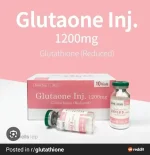
The cost from a domestic reseller like Glow-Unique or TheBeautyDeli is $45+ for a kit of glutathione 1200 mg, plus $12 shipping. Glow-Unique is the cheaper of the two, but TheBeautyDeli sells singles for $6.
Last edited:

I agree that it’s likely tons of people will get into this without understanding the seriousness of what they’re soing. I mean, when did “med spa”, casual botox and fillers, and casual IV clinics running all sorts of things into your veins… become widely accepted everywhere, run by who knows who wearing scrubs? Once peptides become popular culture it might slide under all regulatory control, and people pop peptides like they use supplements (what even are all those bottles promising everything in shops and online?)I don't know, but there are different segments that add up. And TikTok, YouTube, and Facebook make grey seem like no big deal. Type "reta vial" into Google and you get Google legitimizing grey through sponsored product listings. Facebook has a ton of ads for overpriced single vials.
As mentioned before, the med spa people are a huge percentage. And it's true that many/most people don't even know they are going grey by getting some things from a med spa.
You've got gym and steroid users using peptides, especially reta, HGH, HCG, and BPC-157. And some guys start doing TRT legally but then want higher dosing. The whole grey market really started with steroid users, is my understanding. And some Chinese vendors make more selling steroids than peptides.
Then you've got the beauty crowd that doesn't want to donate money to med spas, even doing Botox at home thanks to YouTube videos and shipments from Korea. Korea is the best source for glutathione, btw.

FlowerFairy
GLP-1 Enthusiast
You think they’re better than India? Give me deets! I’ve been very happy with my $8/box glutathione..I don't know, but there are different segments that add up. And TikTok, YouTube, and Facebook make grey seem like no big deal. Type "reta vial" into Google and you get Google legitimizing grey through sponsored product listings. Facebook has a ton of ads for overpriced single vials.
As mentioned before, the med spa people are a huge percentage. And it's true that many/most people don't even know they are going grey by getting some things from a med spa.
You've got gym and steroid users using peptides, especially reta, HGH, HCG, and BPC-157. And some guys start doing TRT legally but then want higher dosing. The whole grey market really started with steroid users, is my understanding. And some Chinese vendors make more selling steroids than peptides.
Then you've got the beauty crowd that doesn't want to donate money to med spas, even doing Botox at home thanks to YouTube videos and shipments from Korea. Korea is the best source for glutathione, btw.
Calm Logic
GLP-1 Specialist
You think they’re better than India? Give me deets! I’ve been very happy with my $8/box glutathione..
All the cool kids say Korea.
As long as it recons well and has a vacuum you are doing better than the vial I got from India. I threw it out due to bad vibes. The one from China was better and perfect for IM. But will try Korea next.
FlowerFairy
GLP-1 Enthusiast
I’ve never used gluta from China, only India. Does Korean glutathione come with vitamin c for recon? Dm me some Korean websites? The glutathione from India is spicy.. I’ve resorted to adding a few units of lido..All the cool kids say Korea.
As long as it recons well and has a vacuum you are doing better than the vial I got from India. I threw it out due to bad vibes. The one from China was better and perfect for IM. But will try Korea next.
Calm Logic
GLP-1 Specialist
Since vitamin C only adds to the spicy sting, I just take oral vitamin C so far and recon with just BAC. Will try saline BAC next time.I’ve never used gluta from China, only India. Does Korean glutathione come with vitamin c for recon? Dm me some Korean websites? The glutathione from India is spicy.. I’ve resorted to adding a few units of lido..
The Koreans make/sell the vitamin C separately, usually in vials. For that, TheBeautyDeli website is best since Glow-Unique doesn't sell vitamin C for injection.
Last edited:
FlowerFairy
GLP-1 Enthusiast
I can always get the vitamin C for injection from India.Since vitamin C only adds to the spicy sting, I just take oral vitamin C so far and recon with just BAC. Will try saline BAC next time.
The Koreans make/sell the vitamin C separately, usually in vials. For that, TheBeautyDeli website is best since Glow-Unique doesn't sell vitamin C for injection.
And I had one vial that refused to recon with just vitamin C serum and I had to add bac.. that one stung worse than just reconning w/the vitamin C. I don’t think I’ve ever used one just reconned with bac.. maybe I’ll try it.
HZM808
GLP-1 Apprentice
All the cool kids say Korea.
That's been all the same talk on a DIY beauty board....can I name other boards? China stingy, Korea best, pink cap esp. but haven't been able to find that...only green.Glow-Unique is the cheaper of the two
It's $60 on AceCosm and a coupon code if anyone wants, it looks like the exact box but $45 is even better. "topical only" is akin to "not for human use" on this? Ace isn't bothering with that so just want to make sure it isn't like the copper with two kinds, inj. and cosm. Also, seeing the credit card icons...is that straight up cc or Wise?
I do have a full cart in AceCosm though...so I may just use them to keep it simple. Simple, ha! 😛 Every time I decide I'm set on what I want to do, someone shows me something new and shiny 👀👀. In 8 months I've gone from starting Dr. prescribed Tirz to other gray market peps and now planning to inject my own face in the name of beauty. Starting slow, though, with Dr.Pen and a variety of skin boosters, peels, and some diy skincare on my Black Friday haul. Very excited.
Calm Logic
GLP-1 Specialist
Yes, you can name them.That's been all the same talk on a DIY beauty board....can I name other boards? China stingy, Korea best, pink cap esp. but haven't been able to find that...only green.
It's $60 on AceCosm and a coupon code if anyone wants, it looks like the exact box but $45 is even better. "topical only" is akin to "not for human use" on this? Ace isn't bothering with that so just want to make sure it isn't like the copper with two kinds, inj. and cosm. Also, seeing the credit card icons...is that straight up cc or Wise?
I do have a full cart in AceCosm though...so I may just use them to keep it simple. Simple, ha! 😛 Every time I decide I'm set on what I want to do, someone shows me something new and shiny 👀👀. In 8 months I've gone from starting Dr. prescribed Tirz to other gray market peps and now planning to inject my own face in the name of beauty. Starting slow, though, with Dr.Pen and a variety of skin boosters, peels, and some diy skincare on my Black Friday haul. Very excited.
And I was going to post the same thing today, so thanks for confirming it: The pink box/brand (Glutaone) is preferred over the green, even at Reddit. Because the pink brand is a better brand or less sting or whatever. Glow-Unique's website does not even bother selling the green boxes.
Recon for Korean brands is said to be fine with 3 mL of BAC (400 mg/mL), but IM rather than subq is the standard on the Korean boxes (along with IV). Even at a high concentration of 400 mg/ML, doing IM gluta did not sting and no ISR.
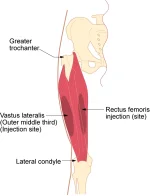
IM is easy and painless for me in the thigh thanks to Nurse Scott on Youtube, using the vl (vastus lateralis) muscle in the thigh. His best tip is to cough as a distraction while jabbing yourself. I prefer 1" 27g needle:
https://www.amazon.com/dp/B0CS3S9GVB
I injected the China this morning subq (thigh) and it was fine going in but there was a small, temporary ISR/lump even at a very low concentration (about 150 mg/mL). My first subq with the China stung somewhat going in at 400 mg/mL but the bigger issue was a large lump that went away upon waking (injected at night).
I got my single China vial from BioBombshell since it was 2400 mg and in a large bottle. But Korea is cheaper, more trustworthy, and likely better for subq than China. China was perfect for IM though, with IM being the standard at clinics rather than subq.
Attachments
Last edited:
Calm Logic
GLP-1 Specialist
Most of the people I know have scripts for it. THey think I am crazy and stupid because they heard it is soooo dangerous doing what I do all over the news.
I see now glutathione is at a concentration of 200 mg/mL at online compounding pharmacies. An IM shot of 200 mg (in one mL) is also what a local wellness clinic offers. From what I can see online, the max dose by IM by a clinic is 600 mg.
For high doses like 600 mg, 200 mL/mg would require injecting 3 mL, which would only be easy for me by IM. But it is not either/or. For slower absorption, one could do some subq. Or do multiple subq shots, even on the same day.
That is interesting! Maybe the India excipients in their glutathione are more selected for buffering vitamin C? In any case, I will try C with glutathione eventually and report back here and in DM. Will get some pH strips too.I can always get the vitamin C for injection from India.
And I had one vial that refused to recon with just vitamin C serum and I had to add bac.. that one stung worse than just reconning w/the vitamin C. I don’t think I’ve ever used one just reconned with bac.. maybe I’ll try it.
Last edited:
Frozenfrog
GLP-1 Novice
🚫No Source Discussion🚫
Oh wow your last comment has sent me down a whole new rabbit hole! Botox at home, it hadn't even crossed my mind! If you have any links please do pm me please!I don't know, but there are different segments that add up. And TikTok, YouTube, and Facebook make grey seem like no big deal. Type "reta vial" into Google and you get Google legitimizing grey through sponsored product listings. Facebook has a ton of ads for overpriced single vials.
As mentioned before, the med spa people are a huge percentage. And it's true that many/most people don't even know they are going grey by getting some things from a med spa.
You've got gym and steroid users using peptides, especially reta, HGH, HCG, and BPC-157. And some guys start doing TRT legally but then want higher dosing. The whole grey market really started with steroid users, is my understanding. And some Chinese vendors make more selling steroids than peptides.
Then you've got the beauty crowd that doesn't want to donate money to med spas, even doing Botox at home thanks to YouTube videos and shipments from Korea. Korea is the best source for glutathione, btw.
Calm Logic
GLP-1 Specialist
Oh wow your last comment has sent me down a whole new rabbit hole! Botox at home, it hadn't even crossed my mind! If you have any links please do pm me please!
The Botox at home is still shocking.
By the way, I only DM at TG and Discord.
I get glutathione for 47.00 per ten vials of 1200mg each from filler outlet (Korean). There are other IV meds there, including vitamin c. There is a cheaper brand of glutathione for 36.00, but I prefer the brand Luthione as it is the main brand used in hospitals. This is one of the few peps I don't filter.
As for some anecdotal information: I am a mental health therapist, a generalist in family medicine, so my focus is not necessarily on weight, yet of my 100+ patients, I know that 5 of them are open about being on Brello's GLP1s. As for true grey, I don't know, but I am someone who started on Brand, then went to Brello, then found my way here.
I do botox at home, I also do mesotherapy and microneedling. Check out the reddit forums, a good one is https://www.reddit.com/r/DIYaesthetics/. I don't do fillers or anything that can scar or mess up my face forever. There are a lot of ebooks you can download from that reddit regarding botox, microneedling, mesotherapy, etc. Most of it comes from Korea, but I have started paying a lot more and buying it from an American warehouse so that I can avoid any potential problems with customs and the FDA. If you are going to do botox, get it soon, some companies are no longer shipping it to USA due to recent legal threats. The USA seems to care more about botox than Fentanyl.
As for some anecdotal information: I am a mental health therapist, a generalist in family medicine, so my focus is not necessarily on weight, yet of my 100+ patients, I know that 5 of them are open about being on Brello's GLP1s. As for true grey, I don't know, but I am someone who started on Brand, then went to Brello, then found my way here.
Oh wow your last comment has sent me down a whole new rabbit hole! Botox at home, it hadn't even crossed my mind! If you have any links please do pm me please!
I do botox at home, I also do mesotherapy and microneedling. Check out the reddit forums, a good one is https://www.reddit.com/r/DIYaesthetics/. I don't do fillers or anything that can scar or mess up my face forever. There are a lot of ebooks you can download from that reddit regarding botox, microneedling, mesotherapy, etc. Most of it comes from Korea, but I have started paying a lot more and buying it from an American warehouse so that I can avoid any potential problems with customs and the FDA. If you are going to do botox, get it soon, some companies are no longer shipping it to USA due to recent legal threats. The USA seems to care more about botox than Fentanyl.

Summer48
GLP-1 Apprentice

The situation in the UK is very different than what is going on in the US. You have a much smaller population overall and GLP1 drugs are MASSIVELY cheaper for you. To top it all off you are much more likely to get insurance coverage for it. Add that all together you end up with a much smaller pool of people feeling the need for the grey market.
Here in the US our limited access to a GLP1 has driven us to the grey market in droves.
Summer48
GLP-1 Apprentice
Definitely not true until Aug 25 they were cheaper to buy then come sept 25 everything changed and the price more than doubled and many people just can’t afford the rise also we don’t have insurance in the uk ) unless u have a decent salary) so we can’t get price covered by insurance. The nhs is extremely strict on how they give it to for free so that’s out too. If I had to pay the costs now then I doubt I would be able to carry on with it I’m soooo please I found a way of continuing without having to sell a kidneyThe situation in the UK is very different than what is going on in the US. You have a much smaller population overall and GLP1 drugs are MASSIVELY cheaper for you. To top it all off you are much more likely to get insurance coverage for it. Add that all together you end up with a much smaller pool of people feeling the need for the grey market.
Here in the US our limited access to a GLP1 has driven us to the grey market in droves.
Frozenfrog
GLP-1 Novice
🚫No Source Discussion🚫
I'm in the UK but new laws have just made botox even more expensive, so being able to do it at home would be ideal!I get glutathione for 47.00 per ten vials of 1200mg each from filler outlet (Korean). There are other IV meds there, including vitamin c. There is a cheaper brand of glutathione for 36.00, but I prefer the brand Luthione as it is the main brand used in hospitals. This is one of the few peps I don't filter.
As for some anecdotal information: I am a mental health therapist, a generalist in family medicine, so my focus is not necessarily on weight, yet of my 100+ patients, I know that 5 of them are open about being on Brello's GLP1s. As for true grey, I don't know, but I am someone who started on Brand, then went to Brello, then found my way here.
I do botox at home, I also do mesotherapy and microneedling. Check out the reddit forums, a good one is https://www.reddit.com/r/DIYaesthetics/. I don't do fillers or anything that can scar or mess up my face forever. There are a lot of ebooks you can download from that reddit regarding botox, microneedling, mesotherapy, etc. Most of it comes from Korea, but I have started paying a lot more and buying it from an American warehouse so that I can avoid any potential problems with customs and the FDA. If you are going to do botox, get it soon, some companies are no longer shipping it to USA due to recent legal threats. The USA seems to care more about botox than Fentanyl.
That reddit forum looks great thank you! Botox is definitely going to be my next project. Can you recommend any brands?
This glutathione... I was thinking about starting klow, but might this be an alternative?
MWAH2u
Recently Joined
🚫No Source Discussion🚫
Hi! It’s me! I’m one of those beauty crowd people that do tox at home and get it from Korea 🤣😅I don't know, but there are different segments that add up. And TikTok, YouTube, and Facebook make grey seem like no big deal. Type "reta vial" into Google and you get Google legitimizing grey through sponsored product listings. Facebook has a ton of ads for overpriced single vials.
As mentioned before, the med spa people are a huge percentage. And it's true that many/most people don't even know they are going grey by getting some things from a med spa.
You've got gym and steroid users using peptides, especially reta, HGH, HCG, and BPC-157. And some guys start doing TRT legally but then want higher dosing. The whole grey market really started with steroid users, is my understanding. And some Chinese vendors make more selling steroids than peptides.
Then you've got the beauty crowd that doesn't want to donate money to med spas, even doing Botox at home thanks to YouTube videos and shipments from Korea. Korea is the best source for glutathione, btw.


