Retatrutide plateau / Adaptation or resistance to reta

bluefootedboobie

GLP-1 Novice
🚫No Source Discussion🚫
Member Since
Jun 28, 2025
Posts
20
Likes Received
37
Location
New York, NY
United-States
Has anyone here successfully overcome a retatrutide plateau, that couldn't be overcome by increasing the dose?

I dropped approximately 30 lbs of fat in my first three months taking reta, titrating up to 6 mg per week. I'd had food noise / food addiction all my life, but reta was finally the cure that got my brain to say hey, I'm just not interested in overeating. The reta also manifested with lower alcohol. I was a problem drinker, but found myself drinking a LOT less.

After those three months though, it was like my brain hit a wall and the mental effects of reta completely stopped working. Cravings returned and I again started having no trouble putting down 7 to 8000 calories in a day. The desire to drink returned eventually as well.

Gastric motility appears to have been impacted as well. For those three months when reta was working, it felt like my stomach was constantly full, to the point that my esophagus was "backed up" and I couldn't physically cram food down my throat. I believe my motility remains a bit slower than it was prior to reta, but unlike before when it was 1000% crystal clear, I now have no trouble always fitting food in.

I've since titrated up to 12 mg of reta per week in an attempt to overcome the plateau, but it hasn't had any affect whatsoever. For several months now, in short, it simply feels like reta no longer works.

For what it's worth, and for those who haven't heard -- this plateau-ing seems to be very individualized. Some folks experience it, and many don't.

The question:

What is the solution for this?

Has anyone had success with reta for a period, had it lose its effectiveness, then regained it?

If so, how did you do it? Perhaps by taking a sustained break? If so, for how long?

Or perhaps the introduction of cagrilintine? Or tesofensine?

Any and all advice would be greatly appreciated.
 
Most popular options seem to be sema or cagri for stacking with reta at that dose.

Cagri more as like a cycle eventually since it tends to poop out.

The teso seems like a decent idea to me as an additional add-on, and it's also sold in oral liquid form at Umbrella Labs (and even more expensive elsewhere). The liquid dosing helps with lower dosing, since the long half-life causes issues for people.

Another option would be EOD dosing (every other day) with the teso capsules. I haven't tried it myself, but I have tried other stimulants like modafinil. GLPs are way better though than such stimulants. I haven't seen any glowing success stories using stimulants long-term.
 
Last edited:
Most popular options seem to be sema or cagri for stacking with reta at that dose.

Cagri more as like a cycle eventually since it tends to poop out.

The teso seems like a decent idea to me as an additional add-on, and it's also sold in oral liquid form at Umbrella Labs (and even more expensive elsewhere). The liquid dosing helps with lower dosing, since the long half-life causes issues for people. I haven't tried it myself, but I have tried other stimulants like modafinil. GLPs are way better though than such stimulants.
Agreed, I take tirz along with reta
 
I've since titrated up to 12 mg of reta per week in an attempt to overcome the plateau, but it hasn't had any affect whatsoever. For several months now, in short, it simply feels like reta no longer works.

Is your weight going up (overall) or staying the same (overall)?

If it is staying the same, then it's still working to some degree at least. Though taking a lower dose may be just as effective/ineffective.

How much more weight are you trying to lose?
 
Last edited:
Is your weight going up (overall) or staying the same (overall)?

If it is staying the same, then it's still working to some degree at least. Though taking a lower dose may be just as effective/ineffective.

How much more weight are you trying to lose?
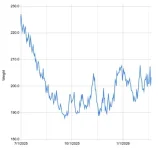
It's had a slow rebound trending up, but I feel at least a little more in control of my eating than I did pre-reta. I do feel it's working to at least some degree (just not close to what it was the first few months).

From the reta low, I'd like to lose another ~18 lbs (which is 30 lbs from current). 170 would be an "ideal" weight, but 180 is probably a fairer target where I'd be considered a good, muscular lean and would fit well in my many unworn size medium shirts.
 

Attachments

  • 01.webp
    01.webp
    12.5 KB · Views: 58
I'm currently splitting the 12 mg to 6 mg taken twice per week, but EOD or even daily would be easily doable. I'll give that a try, the only downside is the hassle of extra pinning but that's not all that bothersome to me. Thank you for the idea, I appreciate it!

I have cagri and teso on the way, hopefully arriving today. Those might be my first attempts (introduced one at a time of course, and in a very small dose to start (.125 mg), I'm aware that cagrilintide in particular can really mess some people up).
 
Of course, another add-on people try are the GH secretagogues, like tesamorelin (tesa) for visceral fat loss. I haven't taken them long enough to notice any fat loss, but I like them for recovery. Though there can be more risk with them, Dr. Seeds is a fan. I fast for doing those (before and after) and take twice a day, so that routine helps with me doing some intermittent fasting.

More controversially, @DwightTheDelight once reminded me that the focus on protein in the peptide community can lead to weight gain (at least with fatty protein sources) since starches, beans, and lentils generally have a higher satiety per calorie than animal protein:

Google Gemini said:
While some ultra-lean dairy might be lower in calories by volume, beans and starches offer higher satiety per calorie because their fiber content physically keeps the stomach full and promotes better insulin sensitivity compared to the high insulin response triggered by dairy proteins.

Dairy products have a low Glycemic Index (low blood sugar rise) but a high Insulin Index. Amino acids "mimic" a sugar spike to the pancreas. High insulin index foods are notorious for causing "rebound hunger," even if they are low in calories.

Food TypeInsulin ResponseBrain Fuel (Glucose)Fiber/BulkResulting Hunger
Beans/LentilsLow & SteadyYes (Slow release)HighLow (Full for hours)
Boiled PotatoModerateYesModerateLowest (Top satiety score)
Lean Dairy/WheyHighNoZeroHigh (The "1-hour" hunger)

 
Last edited:
I have cagri and teso on the way, hopefully arriving today. Those might be my first attempts (introduced one at a time of course, and in a very small dose to start (.125 mg), I'm aware that cagrilintide in particular can really mess some people up).

"Low and slow" for teso too since you are already on 12 mg of reta. The 9-day half life of teso is something else. It takes a long time to reach steady state (making it tempting to raise the dose), and longer to clear, which is a problem if your HR spikes (which is more likely being on both reta and teso). Heart rate and BP should be checked often/daily:

Google Gemini said:
Because it takes so long to build up, you won't feel the full effect of a specific dose for several weeks. Many people think it’s not working at week 2, raise the dose, and then get hit with severe insomnia or heart rate spikes at week 6 when the "steady state" finally hits.
Google Gemini said:
DoseFrequencyDaily Avg.Time to Steady StateKey Characteristic
0.25 mgDaily0.25 mg6–9 WeeksStandard low-dose entry point.
0.50 mgDaily0.50 mg6–9 WeeksClinical weight loss dose.
0.50 mgEOD0.25 mg6–10 WeeksSmoother levels; reduces jitters/insomnia.
1.00 mgDaily1.00 mg6–9 WeeksHigh risk of HR/BP spikes.
1.00 mgEOD0.50 mg6–10 WeeksAlternative to 0.5mg Daily; long half-life allows this.


On the standard 0.5 mg dose, resting heart rate rose by about 7–8 beats per minute on average, which is a fat-burning supplement-like effect of its stimulant properties. Blood pressure did not significantly increase at that dose in trials – changes in systolic/diastolic blood pressure were minimal.

This cardiovascular data is encouraging, since some past appetite suppressant pills were notorious for causing dangerous blood pressure spikes or heart valve issues. Tesofensine’s impact on pulse and blood pressure appears comparatively mild, but it will still require careful monitoring, especially in individuals who have pre-existing hypertension or heart conditions.

Tesofensine has been found relatively safe and the most common adverse events
observed are nausea, dry mouth, constipation, hard stool, diarrhea and insomnia.

Elevations in blood pressure and heart rate have been reported with clinically used doses.
To overcome the cardiac adverse effects, its combination with metoprolol is under investigation in clinical trials.
 
Last edited:
Has anyone here successfully overcome a retatrutide plateau, that couldn't be overcome by increasing the dose?

I dropped approximately 30 lbs of fat in my first three months taking reta, titrating up to 6 mg per week. I'd had food noise / food addiction all my life, but reta was finally the cure that got my brain to say hey, I'm just not interested in overeating. The reta also manifested with lower alcohol. I was a problem drinker, but found myself drinking a LOT less.

After those three months though, it was like my brain hit a wall and the mental effects of reta completely stopped working. Cravings returned and I again started having no trouble putting down 7 to 8000 calories in a day. The desire to drink returned eventually as well.

Gastric motility appears to have been impacted as well. For those three months when reta was working, it felt like my stomach was constantly full, to the point that my esophagus was "backed up" and I couldn't physically cram food down my throat. I believe my motility remains a bit slower than it was prior to reta, but unlike before when it was 1000% crystal clear, I now have no trouble always fitting food in.

I've since titrated up to 12 mg of reta per week in an attempt to overcome the plateau, but it hasn't had any affect whatsoever. For several months now, in short, it simply feels like reta no longer works.

For what it's worth, and for those who haven't heard -- this plateau-ing seems to be very individualized. Some folks experience it, and many don't.

The question:

What is the solution for this?

Has anyone had success with reta for a period, had it lose its effectiveness, then regained it?

If so, how did you do it? Perhaps by taking a sustained break? If so, for how long?

Or perhaps the introduction of cagrilintine? Or tesofensine?

Any and all advice would be greatly appreciated.
Yep drinking is down not gone but light and few and far between…man does beer and wine make you feel like s*^t the that night and next day. Gin was ok.

Sounds like very similar first three months weight and dose and same increased dose too.

Hunger and gastric mobility (nice term) seem like pre Reta start. Luckily I started with with a little base so while hungry I am still keeping calories in check….but has been no weight lock for 7 weeks

I started mid August 314 area with a 5 day water ,minerals , vitamins fast which’s sets a mental stage for “yes I can” mentality and followed will good sleep focus and two meals and few drinks, 8 pounds in 6 weeks of this… this gets me feeling that I am taking it seriously. Added Reta as an agent of change after I was on The right track. Worked like charm , definitely focused more on hydration, vitamins and minerals and higher protein .

Ohh really liked the addition of NAC and glycine (for sleep quality

2 1/2 months great progress.. thought I would spice it up focusing muscle maintenance and bell fat so I turned to add Tessa/ipa… I am not thinking that that addition may have fully stopped weight loss and may be associated with hunger returning even though Reta dose was being increased. Felt like food noice was back in full effect and no scale losses for the past 7 weeks. Only Reta side effect has been cold feet (literal cold feet)
Stopped ipa and Tessa Feb 17 ( 5 days ago) because it may have been effecting Reta positives and that’s not cool , it’s simply not worth it to me. Weight target is my primary goal . Pandemic game me bad habits which bumped me from previous high about 280 into 305-320 for past 5 years.. that’s just too much and start to snore and feel slow. Headed back to mid 250’s which good fighting weight …feel quick and not sluggish and better sleep..

Sleep is soo important.. never thought like that before.

Focused getting 140-170 grams of protein daily, hydration and good sleep.

I was thinking of adding another hunger thing…but I will not at least for the next month as I and going to see if Tessa/ipa was THE factor in my weight loss stall.

If this does not reboot some progress in the next month then maybe another fast is in the cards .. good for the mind too..first two days suck then it smooth sailing
 
What you are describing does sound a lot like some genuine loss of effect of reta. Normally when people say this, it is just that they have lost weight, their metabolic rate goes down, hunger goes up, so it feels like it is not working but if your weight is not going up then it is working fine. I think some of that is happening here as you are still 20 pounds or so down.
The simplest add on is low and slow cagrilintide, but if you are not getting nausea from reta, semaglutide as an add on might also be an option instead.
As you describe eating many thousands of calories per day when you would clearly prefer not to be eating that much, that does sound suspiciously like binge eating disorder. GLP medications are probably the most effective medical treatment for it but this is not yet scientifically proven. My personal solution was to treat high calorie, highly rewarding foods as dangerous addictive drugs and avoid them totally and hopefully forever, but this is a fairly drastic way to deal with it although in my case it has been extremely effective. But a more limited version of this might be worth considering. I am not sure I can say the other treatment options for binge eating disorder are all that great, cognitive behavioural therapy and lisdexamphetamine are the only standard treatments but neither is really all that great.
 
What you are describing does sound a lot like some genuine loss of effect of reta. Normally when people say this, it is just that they have lost weight, their metabolic rate goes down, hunger goes up, so it feels like it is not working but if your weight is not going up then it is working fine. I think some of that is happening here as you are still 20 pounds or so down.
The simplest add on is low and slow cagrilintide, but if you are not getting nausea from reta, semaglutide as an add on might also be an option instead.
As you describe eating many thousands of calories per day when you would clearly prefer not to be eating that much, that does sound suspiciously like binge eating disorder. GLP medications are probably the most effective medical treatment for it but this is not yet scientifically proven. My personal solution was to treat high calorie, highly rewarding foods as dangerous addictive drugs and avoid them totally and hopefully forever, but this is a fairly drastic way to deal with it although in my case it has been extremely effective. But a more limited version of this might be worth considering. I am not sure I can say the other treatment options for binge eating disorder are all that great, cognitive behavioural therapy and lisdexamphetamine are the only standard treatments but neither is really all that great.
Just got a different order in, so maybe the last is simply weaker (degraded) . lol that would be funny if somehow even though I was shooting 12mg is was acting as far less….even though I’ve been careful with storage
Almost forgot today is the day ….
 
I tried cagrilintide 0.25 mg for a couple of weeks. Chatgpt convinced me it might reduce abdominal pain from ulcerative colitis/ibs-d, so I though it was worth trying and anything that would make keeping off 54% of my weight easier is nice. Already on tirz 16mg and reta 5mg . I am fairly sure it made gut symptoms worse, given there is variation day to day and from what I eat it is hard to be sure. I will probably try again at some stage when my gut is extra stable. I am asking the tirz and reta to do way more than they showed in any of the trials.
 
Just got a different order in, so maybe the last is simply weaker (degraded) . lol that would be funny if somehow even though I was shooting 12mg is was acting as far less….even though I’ve been careful with storage
Almost forgot today is the day ….
Fuck yea! Keep us in the loop Brutha, wouldn't it be super cool if thats the case? I shoot tirz on friday and reta on monday, burn blend.
 
I am not sure I can say the other treatment options for binge eating disorder are all that great, cognitive behavioural therapy and lisdexamphetamine are the only standard treatments but neither is really all that great

So I don't see any advantage in differentiating the two usually, except there are always lessons to be learned in psychology, at least to distract us until the meds kick in. Like the hack with smaller plate size and trying to get dopamine elsewhere.

To complicate things further:

Eating disorders and obesity: bridging clinical, neurobiological, and therapeutic perspectives

Obesity may act as (a) a previous condition or (b) a consequent condition for the development of eating disorders. However, they can also interact simultaneously, with obesity being (c) the primary or (d) the secondary disorder.
 
Last edited:
So what's the thought process on stacking Reta with Tirz vs Sema? I was thinking Sema would be better because its supplementing only the GLP1 side of Reta which is weaker. Stacking Tirz in my thinking would add more GIP into the equation but Reta already highly favors GIP above all else. I have and still do add Cagri but I really dont think it does anything for me.
 
One line of thinking: Maximize reta first. Then if that is not enough, consider switching (back) to tirz. No stacking necessary, except as a bridge for switching.

But as far as stacking reta with tirz or sema, you can argue either way, as you are saying.
 
Last edited:
So what's the thought process on stacking Reta with Tirz vs Sema? I was thinking Sema would be better because its supplementing only the GLP1 side of Reta which is weaker. Stacking Tirz in my thinking would add more GIP into the equation but Reta already highly favors GIP above all else. I have and still do add Cagri but I really dont think it does anything for me.
This is based more on theory or animal research than proven effects in human studies. I have explained this before in other posts but a lot of the information there is about the relative effects of different GLP drugs on the different receptors is wrong. Standard AI responses are not correct. And it is complex. The simple Ki or binding affinity numbers are not close to the whole story. 99% of the drugs are bound to albumin to start with , and then when they bind to receptors there can be different or even deliberately biased intracellular responses to those drugs. It is the secondary intracellular response that determines what effects they have in the end. Tirzepatide for example is biased towards cAMP signalling over beta-arrestin signalling at the GLP-1 receptor, so it can have a stronger total effect on glp-1 than semaglutide, and less adverse effects, despite much lower binding affinity. And there is less receptor internalisation and inactivation due to the lower beta-arrestin signalling.
My understanding is: Tirzepatide strongest GIP, fairly strong GLP-1, 15mg tirz is possibly stronger than semaglutide 2.4mg on glp-1
Retatrutide weaker GIP than tirz, stronger but not biased glp-1 agonism plus glucagon agonism.
Tirzepatide has probably the least side effects due to the biased agonism on GLP-1, plus the strong GIP agonism counteracts the nausea and malaise response in the brain caused by glp agonism
Reta causes a bit more gi side effects due to the non biased signalling at glp-1 and the weaker GIP agonism, having less of a counteracting effect on glp nausea, but better weight loss due to the added glucagon agonism.
I spent quite a bit of time reading papers and arguing with chatgpt ( with extensive promting ) over whether adding in extra semaglutide to tirzepatide would increase overall glp-1 agonism, and really did not reach a definite conclusion. I thought chatgpt's pharmacology is really very good, though I think promting it to not agree with you without evidence is essential.
I had horrible nausea and malaise from low dose semaglutide so for me it was not really an option.
The most logical add on is almost certainly cagrilintide to retatrutide or tirzepatide. Cagrilintide is not low on side effects so doses need to be very low and slowly increased if already at full doses of reta or tirz. It is a pity the research on combining cagri is with semaglutide, for ownership reasons , combining it with reta is probably state of the art at this stage.
Or switching from tirzepatide to retatrutide for a few extra percent weight loss, but maybe a bit more side effects.
In my case I was pleasantly surprised by how few side effects I got from 15mg of tirzepatide compared to 0.8mg semaglutide, and rather than mess that up added in reta for it's glucagon agonism rather than switched, in theory the extra gip agonism of tirz should cause less nausea even when combined with reta than just reta alone.
 
Last edited:
This is based more on theory or animal research than proven effects in human studies. I have explained this before in other posts but a lot of the information there is about the relative effects of different GLP drugs on the different receptors is wrong. Standard AI responses are not correct. And it is complex. The simple Ki or binding affinity numbers are not close to the whole story. 99% of the drugs are bound to albumin to start with , and then when they bind to receptors there can be different or even deliberately biased intracellular responses to those drugs. It is the secondary intracellular response that determines what effects they have in the end. Tirzepatide for example is biased towards cAMP signalling over beta-arrestin signalling at the GLP-1 receptor, so it can have a stronger total effect on glp-1 than semaglutide, and less adverse effects, despite much lower binding affinity. And there is less receptor internalisation and inactivation due to the lower beta-arrestin signalling.
My understanding is: Tirzepatide strongest GIP, fairly strong GLP-1, 15mg tirz is possibly stronger than semaglutide 2.4mg on glp-1
Retatrutide weaker GIP than tirz, stronger but not biased glp-1 agonism plus glucagon agonism.
Tirzepatide has probably the least side effects due to the biased agonism on GLP-1, plus the strong GIP agonism counteracts the nausea and malaise response in the brain caused by glp agonism
Reta causes a bit more gi side effects due to the non biased signalling at glp-1 and the weaker GIP agonism, having less of a counteracting effect on glp nausea, but better weight loss due to the added glucagon agonism.
I spent quite a bit of time reading papers and arguing with chatgpt ( with extensive promting ) over whether adding in extra semaglutide to tirzepatide would increase overall glp-1 agonism, and really did not reach a definite conclusion. I thought chatgpt's pharmacology is really very good, though I think promting it to not agree with you without evidence is essential.
I had horrible nausea and malaise from low dose semaglutide so for me it was not really an option.
The most logical add on is almost certainly cagrilintide to retatrutide or tirzepatide. Cagrilintide is not low on side effects so doses need to be very low and slowly increased if already at full doses of reta or tirz. It is a pity the research on combining cagri is with semaglutide, for ownership reasons , combining it with reta is probably state of the art at this stage.
Or switching from tirzepatide to retatrutide for a few extra percent weight loss, but maybe a bit more side effects.
In my case I was pleasantly surprised by how few side effects I got from 15mg of tirzepatide compared to 0.8mg semaglutide, and rather than mess that up added in reta for it's glucagon agonism rather than switched, in theory the extra gip agonism of tirz should cause less nausea even when combined with reta than just reta alone.
Thank you for your response!
 
I tried cagrilintide 0.25 mg for a couple of weeks. Chatgpt convinced me it might reduce abdominal pain from ulcerative colitis/ibs-d, so I thought it was worth trying and anything that would make keeping off 54% of my weight easier is nice. Already on tirz 16mg and reta 5mg . I am fairly sure it made gut symptoms worse, given there is variation day to day and from what I eat it is hard to be sure. I will probably try again at some stage when my gut is extra stable. I am asking the tirz and reta to do way more than they showed in any of the trials.

I tried cagrilintide 0.25 mg for a couple of weeks. Chatgpt convinced me it might reduce abdominal pain from ulcerative colitis/ibs-d, so I though it was worth trying and anything that would make keeping off 54% of my weight easier is nice. Already on tirz 16mg and reta 5mg . I am fairly sure it made gut symptoms worse, given there is variation day to day and from what I eat it is hard to be sure. I will probably try again at some stage when my gut is extra stable. I am asking the tirz and reta to do way more than they showed in any of the trials.

This is based more on theory or animal research than proven effects in human studies. I have explained this before in other posts but a lot of the information there is about the relative effects of different GLP drugs on the different receptors is wrong. Standard AI responses are not correct. And it is complex. The simple Ki or binding affinity numbers are not close to the whole story. 99% of the drugs are bound to albumin to start with , and then when they bind to receptors there can be different or even deliberately biased intracellular responses to those drugs. It is the secondary intracellular response that determines what effects they have in the end. Tirzepatide for example is biased towards cAMP signalling over beta-arrestin signalling at the GLP-1 receptor, so it can have a stronger total effect on glp-1 than semaglutide, and less adverse effects, despite much lower binding affinity. And there is less receptor internalisation and inactivation due to the lower beta-arrestin signalling.
My understanding is: Tirzepatide strongest GIP, fairly strong GLP-1, 15mg tirz is possibly stronger than semaglutide 2.4mg on glp-1
Retatrutide weaker GIP than tirz, stronger but not biased glp-1 agonism plus glucagon agonism.
Tirzepatide has probably the least side effects due to the biased agonism on GLP-1, plus the strong GIP agonism counteracts the nausea and malaise response in the brain caused by glp agonism
Reta causes a bit more gi side effects due to the non biased signalling at glp-1 and the weaker GIP agonism, having less of a counteracting effect on glp nausea, but better weight loss due to the added glucagon agonism.
I spent quite a bit of time reading papers and arguing with chatgpt ( with extensive promting ) over whether adding in extra semaglutide to tirzepatide would increase overall glp-1 agonism, and really did not reach a definite conclusion. I thought chatgpt's pharmacology is really very good, though I think promting it to not agree with you without evidence is essential.
I had horrible nausea and malaise from low dose semaglutide so for me it was not really an option.
The most logical add on is almost certainly cagrilintide to retatrutide or tirzepatide. Cagrilintide is not low on side effects so doses need to be very low and slowly increased if already at full doses of reta or tirz. It is a pity the research on combining cagri is with semaglutide, for ownership reasons , combining it with reta is probably state of the art at this stage.
Or switching from tirzepatide to retatrutide for a few extra percent weight loss, but maybe a bit more side effects.
In my case I was pleasantly surprised by how few side effects I got from 15mg of tirzepatide compared to 0.8mg semaglutide, and rather than mess that up added in reta for it's glucagon agonism rather than switched, in theory the extra gip agonism of tirz should cause less nausea even when combined with reta than just reta alone.
Thanks for the good insight
 
The most logical add on is almost certainly cagrilintide to retatrutide or tirzepatide. Cagrilintide is not low on side effects so doses need to be very low and slowly increased if already at full doses of reta or tirz. It is a pity the research on combining cagri is with semaglutide, for ownership reasons , combining it with reta is probably state of the art at this stage.
Anecdotally, cagri poops out sooner than later compared to GLPs. In any case, there is some reason it isn't more popular for stacking.

In my case I was pleasantly surprised by how few side effects I got from 15mg of tirzepatide compared to 0.8mg semaglutide
I do have more GI sides than most/many, but the differences between the GLPs seem minimal to me. And I have tried all of them, including lira and orfo, except for maz. I never get nausea, fortunately, but I can get GI sides with any GLP (diarrhea, heartburn, gas, burping, bloating).

By the time I got to 10 mg of tirz, some sides like diarrhea and bloating were so memorable that I can tell you where I was and the time of day, for even over a half a year ago.

At least at 1 mg or so of sema, I tolerated sema as well as the other GLPs. Only had one vial, so haven't tried it much. But I can't do more than 6 mg of tirz a week. I don't get any problematic heart or insomnia effects with survo or reta, so they seem just as good so far.
 
Last edited:
So what's the thought process on stacking Reta with Tirz vs Sema? I was thinking Sema would be better because its supplementing only the GLP1 side of Reta which is weaker. Stacking Tirz in my thinking would add more GIP into the equation but Reta already highly favors GIP above all else. I have and still do add Cagri but I really dont think it does anything for me.
I did a Sema/Reta stack, but only because I was nervous about giving up the Sema. For first time in my life the food noise was gone, but I wanted to explore the additional benefits of Reta, so I added it. I have slowly titrated the Reta up while continuing 2.5 mgs of Sema per week. Around 8mg of Reta, I started having what I can only describe as "morning sickness" so I stopped the Sema. It's been more than a month. The "Morning Sickness" is resolved and my food noise is still well controlled, though I imagine there is still some Sema in my system.
 
came to a stand still on Reta so tried increasing dose from 8mg to 10mg butt the GI side effects were brutal ( diarrhea instead of the constipation everyone talks about). Added a tiny amount of sema to my routine and the cycle broke and started loosing again without the side effects. Of interest, I just saw the unpublish data from Lilly on their reta and had a large drop out rate (12-18%) due to loosing too much weight! At top dose they lost 28.7% of their body weight.
 
Figured I'd post an update (a positive one).

I began taking cagrilintide last week, starting at the very low dose of 0.125 mg.

I felt
  1. no bad side effects at all,
  2. like my desire to eat had lessened a bit, and
  3. my gastric emptying had slowed a little bit as well
...so a few days later I took another 0.125 mg, bringing me up to what many consider the standard "quite low" per week starting dose.

Bingo! At that 0.250 mg dose, I am unequivocally 100% feeling again like I did in my early days of reta. I'm not even quite two weeks in, but it's a certainty that the plateau is broken. I remain at the max recommended reta dosage of 12 mg per week.


Caveat #1: This is working for me, but obviously that doesn't mean it will for everyone else. Anecdotally, from looking around, although LOTS of peptides work on some folks and don't work on others, it appears to me that cagrilintide for some reason has an even greater variation on who it does and doesn't work on.

Caveat #2: I've felt two sides .. one, I've been cold, and two, I've felt very mildly sick or nauseous on and off. The latter has been extremely mild and for all I know could even be a coincidence.
 
I feel like I’m in a plateau myself 20 pounds down and I just went up from 2 mg a week to 3 hoping to break it. I’m not gaining so I’m happy about that but I’ve been stuck at the same weight for the past 3 weeks and it’s driving me bananas.
 
I feel like I’m in a plateau myself 20 pounds down and I just went up from 2 mg a week to 3 hoping to break it. I’m not gaining so I’m happy about that but I’ve been stuck at the same weight for the past 3 weeks and it’s driving me bananas.
I do not really understand why people think super low doses should work . I do not know what weight you were starting from or how much you want to lose, or how long it took, but 20 pounds has to be between 5 to 10% weight loss which sounds about right for such a low dose.
Unless there are side effects that are a problem there is no even remotely logical reason not to increase doses when weight loss stops. And if obesity is severe and especially if there are obesity related health problems, increasing doses to the standard maximum dose of 12mg is what you should be aiming for, to reduce long term health consequences of obesity. ( not really proven for reta yet, but is for sema and tirz and very likely to be the case for reta )
 
I started at 188 pounds I want to get to 125/130 which is a healthy weight. I’m 47 female and I’m 5’2”. The increase seems to be working on apatitte ( I can’t spell and auto correct is being shit lol) suppression again. I’ve increased activity and I’m hoping to break this plateau
 
I feel like I’m in a plateau myself 20 pounds down and I just went up from 2 mg a week to 3 hoping to break it. I’m not gaining so I’m happy about that but I’ve been stuck at the same weight for the past 3 weeks and it’s driving me bananas.
This is the same issue I’m feeling. Did you notice anything at 3 mg? I started on 2mg for the last 4 weeks and am going to bump up to 3mg on Monday. Hope it works
 
I started at 188 pounds I want to get to 125/130 which is a healthy weight. I’m 47 female and I’m 5’2”. The increase seems to be working on apatitte ( I can’t spell and auto correct is being shit lol) suppression again. I’ve increased activity and I’m hoping to break this plateau
If your increased dose is working on appetite then you should see results on the scales at some point. Start BMI 35 start weight 188 lost 20lb want to lose 33% body weight to get to 125lb. By all means go up doses slowly , but you are likely to need full doses to lose that much weight unless you respond way better than average, the best study ever with reta showed weight loss of 29% at a dose of 12mg over a year or so. So if you respond as well as average you should be able to make it to the 130lb goal at 12mg of reta. But it is very unlikely unless doses are increased eventually.

At that age at that weight , you probably have metabolic syndrome, Don't know blood pressure or blood sugar or lipids but there is a pretty good chance they are not great. And if you do not know, you should get them measured. And at that age cardiovascular risk is probably significant , although you need those numbers to tell for sure. Reta at full doses very likely reduces risks of diabetes, heart disease, stroke and a whole pile of other health problems, lower doses are probably less effective than higher doses. I am assuming that this applies to reta as it has been proven for sema and tirz, but not yet for reta as they are not close to finishing all the studies yet.

I certainly wish I had started on therapies to reduce cardiovascular risk a decade earlier at your age, before damage was done, rather than after.
 

Trending Topics

Forum Statistics

Threads
17,650
Posts
183,159
Members
59,351
Newest
Sizzors
Back
Top Bottom