Stopping and Restarting Certain GLP-1s to Lose Weight May Make the Drug Less Effective

Grogu

GLP-1 Enthusiast
Member Since
Dec 1, 2025
Posts
901
Likes Received
3,381
Location
Coruscant
United-States
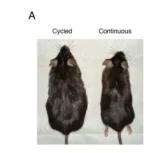
Not that I'm looking at start another thread about the pros and cons of lifetime glp-1 use, since I think we've recently beaten that horse dead. But this article is a somewhat different twist and talks about cycling glp-1s and the potential for reduced effectiveness when cycling over staying on the medication consistently. The underlying study is just a rat study at this point. For the visually inclined the results are 🤣 :

1777474141360.webp

 
I did a cycle of tirz feb 25-dec 25, and thought I would go alone. Nope, food noise and cravings came back and I gained weight back. So back on in feb this year and took until me reaching 12.5mg to feel the full effects like I did before. Ive now added cagri in which has helped alot.
I do have this irrational fear that it wont work as it did first time round but im slowly making the scale go down! I do wish Id stayed on tirz back then but its fine!
Long term I dont know how long I will stay on tirz, the health benefits other then weightloss have been great (joint pain and sciatica flare ups have pretty much gone) so im taking it abit at a time and might get a few years stock in the freezer soon for long term use.
 
Interesting study, although 2 week off/on cycles seems interesting. As does "...the intermittent group remained 20 percent heavier than the consistent group..." So of the two groups, the intermittent group, normalized weight compared to the control group, weighed 20% more? So a 1lb mouse in the control group weighed 1.2lb in the intermittent? That seems like an enormous variance, not just "...they were unable to return to their previous lowest weight." Perhaps the article wrote that percentage stat incorrectly.

My most recent thinking for me was to get down to my target, get stable there, then take 6-12 weeks off before restarting at a lower dose. Not locked in on that idea and still have 5+ months before that's a bridge to cross, but the article is interesting/thought provoking.
 
I can attest to this as its been my experience. I stopped tirz for about two months and figured id be ok. Nope. I gained 15lbs with cravings comming back strong. Furthermore, when i went back on the same tirz dose, i didnt get the same appetite suppression as before and had to increase dosage. It also took me over 3 months to get back to my pre stopping weight. I recently added survo as there is evidence that getting rid of more visceral fat can sustain results longer but im never going cold turkey on glp1s again.
 
I can attest to this as its been my experience. I stopped tirz for about two months and figured id be ok. Nope. I gained 15lbs with cravings comming back strong. Furthermore, when i went back on the same tirz dose, i didnt get the same appetite suppression as before and had to increase dosage. It also took me over 3 months to get back to my pre stopping weight. I recently added survo as there is evidence that getting rid of more visceral fat can sustain results longer but im never going cold turkey on glp1s again.

What you and @gunmetal1991 report is not uncommon, albeit gun's period of being off tirzeptide was much longer than yours. Some people like to think that taking long breaks will "reset" the glp-1 receptors, but I'm really not sure if there is any science supporting that idea. What I read more of is accounts like yours, where prior use of a glp-1 reduces the effectiveness of future use with the same or another glp-1 medication.

The good news is that you got back to your pre-stopping weight and that you're losing again. That's promising and a good data point for the rest of us.
 
Interesting study, although 2 week off/on cycles seems interesting. As does "...the intermittent group remained 20 percent heavier than the consistent group..." So of the two groups, the intermittent group, normalized weight compared to the control group, weighed 20% more? So a 1lb mouse in the control group weighed 1.2lb in the intermittent? That seems like an enormous variance, not just "...they were unable to return to their previous lowest weight." Perhaps the article wrote that percentage stat incorrectly.

My most recent thinking for me was to get down to my target, get stable there, then take 6-12 weeks off before restarting at a lower dose. Not locked in on that idea and still have 5+ months before that's a bridge to cross, but the article is interesting/thought provoking.

I only casually read the underlying article, but agree it seems interesting. I wish that they have done a cycle more like:

Rat group A: 4 months continuous
Rat group B: 2 months on, one month off, and one month on

But maybe "rat weeks" are more like human months 🤣.

I get the impression from the underlying research paper that it's early stage work and probably "published" to keep NIH funding coming in or something. But I do think that there is something to the situation that goes beyond "hunger" returning to actual physiological changes in the body that happen as a result of cycling these medications. Maybe the fat/lean mass balance changes, set point, or something with the endocrine system. If I had to guess, I would say it's the subsequent weight that is gained after discontinuation that is the issue and something to do with insulin or grehlin or something.
 
Last edited:
What you and @gunmetal1991 report is not uncommon, albeit gun's period of being off tirzeptide was much longer than yours. Some people like to think that taking long breaks will "reset" the glp-1 receptors, but I'm really not sure if there is any science supporting that idea. What I read more of is accounts like yours, where prior use of a glp-1 reduces the effectiveness of future use with the same or another glp-1 medication.

The good news is that you got back to your pre-stopping weight and that you're losing again. That's promising and a good data point for the rest of us.

Yeah I have zero belief in the resetting theory. My experience is pretty cutthroat that that isnt the case. Its also VERY discouraging to loose so much time in your weight loss efforts for a little experiment. I didnt think itd take me 3-4 months to get there and an increase in dosage. If someone out there is thinking about it I dont recommend it. Stay the course.
 
Yeah I have zero belief in the resetting theory. My experience is pretty cutthroat that that isnt the case. Its also VERY discouraging to loose so much time in your weight loss efforts for a little experiment. I didnt think itd take me 3-4 months to get there and an increase in dosage. If someone out there is thinking about it I dont recommend it. Stay the course.

I agree! I personally don't intend to cycle off. Reduce dose, yes. Extend time between doses, yes. See what happens and adjust accordingly, yes.

But definitely, stay the course. This is the way.
 
I think the problem is people are getting off the drug too early. It takes a while for body to adjust to new set weight/metabolism, that's the reason of the weight regain. Our body wants to get back to previous weight, by increasing cravings. I think at least 6 months maintenance with the lowest possible dose that keep us from maintaining healthy lifestyle is a MUST. I'd be confident to stop using tirz/reta once I know I'm metabolically healthy.
 
I know nobody wants to hear they have to be on a lifelong drug. Not just for weight loss, but for anything. But I think it is especially true for the people who’ve been told their entire lives that they should be able to control themselves when it comes to food.

I hope we get more good feedback from testing on long term effects for things like aging and cognitive decline. My grandmother had Alzheimer’s and if someone told me I could give myself a little shot once or twice a week for the rest of my life that would do nothing for me except ensure I was more likely to stay mentally sharp into old age, I wouldn’t blink twice.
 
I think the problem is people are getting off the drug too early .... I'd be confident to stop using tirz/reta once I know I'm metabolically healthy.

Unfortunately, the data dosen't support the idea that folks reach "metabolically healthy" positions, even over time. For those suffering from an underlying metabolic dsyfunction that led to their obesity, tirzepatide provides treatmeant, but not a cure.

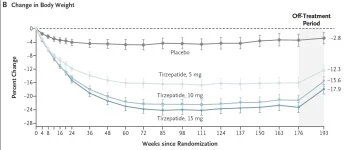
This is from SURMONT, the beautiful thing about the graph is the nearly flat line after 75 weeks of tirzepatide up to 176. So, for almost 2 years on tirzepatide, participants didn't gain any weight while on treatment. As soon as they discontinued in week 176, we can clearly see what happened. We have no reason to think that the flat line wouldn't have continued on treatment, but also no reason to think that at anytime that treatment is stopped that the increase noted isn't going to happen.

1777494349041.webp
 
Last edited:
Putting the weight loss or maintaining the weight loss aside. Why would I want to quit taking a medicine that keeps me metabolically healthy ? The weight loss / maintenance could be looked at like a positive side effect not the main goal. I am a lifer.

The study is about cycling off and back on glp-1s versus the continue/discontinue decision, which is an entirely separate issue. Cycling could happen for a variety of reasons, some intentional and some unintentional. For example, most surgeons want patients off glp-1s for a good amount of time to prevent aspiration of stomach contents during surgery. Someone with extended travel outside the country might not want to bring their peptides. I think it also happens when folks move from one glp-1 to another. That prior exposure affects the effectiveness of the new glp-1 medication, requiring much higher doses to reach effective levels of treatment.
 
For example, most surgeons want patients off glp-1s for a good amount of time to prevent aspiration of stomach contents during surgery.
This is/would be my main concern. Recent talk has been that the recommendations have been adjusted to reduce the amount of time one needs to be off the GLP-1s for medical procedures, but I know I'd still be mighty anxious about being off tirz for even just 2 weeks.
 
I agree! I personally don't intend to cycle off. Reduce dose, yes. Extend time between doses, yes. See what happens and adjust accordingly, yes.

But definitely, stay the course. This is the way.
Hence my reasoning to stay on it as long as can. It'll obviously be a reduced dose compared to where I am now. I hopefully have lots of time to figure it out. Interesting article, and good discussion.
 
I'm not someone who wants to be on medication forever unless it's medically necessary. My goal is to use the reduced cravings and quieter food noise to actually build better eating habits so I can slowly titrate down and eventually off GLPs once I hit my goal weight.

Food noise has been something I've dealt with my whole adult life and I was never great at building sustainable habits around it. I was an expert at crash dieting though. Drop to 1200 calories or less, hit my goal weight as fast as possible, and never once put any real effort into building a better relationship with food. The weight always came back.

Things got a lot better when I got serious about exercise and realized it couldn't just be a temporary thing. It had to become part of my life permanently. Four years of consistent training later and I only slipped by putting on about 20lbs over the last year. I always laughed at "you can't outrun a bad diet" but I feel like living proof of it now.

I'm still early in this whole GLP journey and I honestly don't know what the food noise is going to look like when I start pulling dosages back. What I do know is I'd like to eventually be off them entirely. Hopefully if I ever need them again this study won't end up being relevant to me.
 
I'm not someone who wants to be on medication forever unless it's medically necessary. My goal is to use the reduced cravings and quieter food noise to actually build better eating habits so I can slowly titrate down and eventually off GLPs once I hit my goal weight.

Food noise has been something I've dealt with my whole adult life and I was never great at building sustainable habits around it. I was an expert at crash dieting though. Drop to 1200 calories or less, hit my goal weight as fast as possible, and never once put any real effort into building a better relationship with food. The weight always came back.

Things got a lot better when I got serious about exercise and realized it couldn't just be a temporary thing. It had to become part of my life permanently. Four years of consistent training later and I only slipped by putting on about 20lbs over the last year. I always laughed at "you can't outrun a bad diet" but I feel like living proof of it now.

I'm still early in this whole GLP journey and I honestly don't know what the food noise is going to look like when I start pulling dosages back. What I do know is I'd like to eventually be off them entirely. Hopefully if I ever need them again this study won't end up being relevant to me.

You might be one of the lucky souls who can transition into life after glp-1s without using the medication forever. I believe a lot depends on the nature and degree of the person's original obesity. Some people are at a much more diseased state when they start these medications than others. Some people have spent a lifetime living with obesity, others not so much. There is no one-sized fits all solution to this conundrum. I do believe some people will be able to maintain without continued use, but those are probably the same people that these medications weren't originally designated to treat.
 
You might be one of the lucky souls who can transition into life after glp-1s without using the medication forever. I believe a lot depends on the nature and degree of the person's original obesity. Some people are at a much more diseased state when they start these medications than others. Some people have spent a lifetime living with obesity, others not so much. There is no one-sized fits all solution to this conundrum. I do believe some people will be able to maintain without continued use, but those are probably the same people that these medications weren't originally designated to treat.
You’re probably right and I admit I’m likely not who these were originally designed for. In the grand scheme of things my situation wasn’t as severe as a lot of people here. That said I’m glad they exist because having that food noise toned down even a little this early in has already been a bigger quality of life improvement than I expected. We’ll see how the story ends but cautiously optimistic for now.
 
You’re probably right and I admit I’m likely not who these were originally designed for. In the grand scheme of things my situation wasn’t as severe as a lot of people here. That said I’m glad they exist because having that food noise toned down even a little this early in has already been a bigger quality of life improvement than I expected. We’ll see how the story ends but cautiously optimistic for now.


What was your starting height/weight?
 
You’re probably right and I admit I’m likely not who these were originally designed for. In the grand scheme of things my situation wasn’t as severe as a lot of people here. That said I’m glad they exist because having that food noise toned down even a little this early in has already been a bigger quality of life improvement than I expected. We’ll see how the story ends but cautiously optimistic for now.

I had a feeling that this was the case, but really no judgment on my part as far as who should and shouldn't take these medication. The medications were "designated" for certain populations, but that doesn't mean that the medications are not helpful or advantageous for other populations. Glp-1s weren't originally "designated" for individuals with alcohol use disorder, but that population appears to benefit immensely from treatment. Maybe someday they will say that these medications are also a good idea for overweight individuals. More power to you for finding an intervention that can help you reach your goals. 💪

We just have to be careful on both ends of the spectrum. I can't assume that everyone must continue on glp-1s to be successful, just because that's my reality. But on the other end, some big guy like me might read your post and think that life without glp-1s is possible without knowing your medical history or status starting these medications.
 
I had a feeling that this was the case, but really no judgment on my part as far as who should and shouldn't take these medication. The medications were "designated" for certain populations, but that doesn't mean that the medications are not helpful or advantageous for other populations. Glp-1s weren't originally "designated" for individuals with alcohol use disorder, but that population appears to benefit immensely from treatment. Maybe someday they will say that these medications are also a good idea for overweight individuals. More power to you for finding an intervention that can help you reach your goals. 💪

We just have to be careful on both ends of the spectrum. I can't assume that everyone must continue on glp-1s to be successful, just because that's my reality. But on the other end, some big guy like me might read your post and think that life without glp-1s is possible without knowing your medical history or status starting these medications.
That’s a really fair point and something worth keeping in mind. Context matters a lot and what works for one person’s situation isn’t a blueprint for someone else’s. Appreciate you adding that nuance because the last thing I’d want is for someone in a completely different situation to read my post and draw the wrong conclusions from it.
 
Unfortunately, the data dosen't support the idea that folks reach "metabolically healthy" positions, even over time. For those suffering from an underlying metabolic dsyfunction that led to their obesity, tirzepatide provides treatmeant, but not a cure.

This is from SURMONT, the beautiful thing about the graph is the nearly flat line after 75 weeks of tirzepatide up to 176. So, for almost 2 years on tirzepatide, participants didn't gain any weight while on treatment. As soon as they discontinued in week 176, we can clearly see what happened. We have no reason to think that the flat line wouldn't have continued on treatment, but also no reason to think that at anytime that treatment is stopped that the increase noted isn't going to happen.

View attachment 21581

Thanks for that. I wasnt aware of that study. It completely echoes my experience. Whats frightening about it is the steepness of the curve when weight rebound occurs at 176 weeks. Pretty alarming overall and why i probably wont stop completely, probably ever.
 
The medications were "designated" for certain populations, but that doesn't mean that the medications are not helpful or advantageous for other populations. Glp-1s weren't originally "designated" for individuals with alcohol use disorder, but that population appears to benefit immensely from treatment. Maybe someday they will say that these medications are also a good idea for overweight individuals. More power to you for finding an intervention that can help you reach your goals. 💪

We just have to be careful on both ends of the spectrum. I can't assume that everyone must continue on glp-1s to be successful, just because that's my reality. But on the other end, some big guy like me might read your post and think that life without glp-1s is possible without knowing your medical history or status starting these medications.

GLP1s are becomming increasingly popular in the longevity community for their cardiovascular benefits and reduction in mortality. So many more healthy weighted individuals are microdosing them for those reasons. We’ll see how the data pans out in some 10 years from now.
 
I'm not someone who wants to be on medication forever unless it's medically necessary. My goal is to use the reduced cravings and quieter food noise to actually build better eating habits so I can slowly titrate down and eventually off GLPs once I hit my goal weight.

Food noise has been something I've dealt with my whole adult life and I was never great at building sustainable habits around it. I was an expert at crash dieting though. Drop to 1200 calories or less, hit my goal weight as fast as possible, and never once put any real effort into building a better relationship with food. The weight always came back.
I tend to feel the same way about medicstion so I understand how you feel. I started Tirz after losing about 90 pounds and building a sustainable diet (Ozempic was just becoming a thing when I started). I never expected to get down to as low a bodyfat percent as I did (I actually overshot after a bad Dexa scan). What I realized was that, although it should be harder to maintain this low, honesty it wasn't any harder than maintaining 20% or even 40% becuse it was always harder than it should be. No matter where I'm at, the food nosie is constant and I never really feel full unless I substantially over eat. Tirz has substantially improved my quality of life and from what we know at this point, it seems like there are a lot of health benefits to being on it that are not directly tied to weightloss. It also seems to have fixed my metabolism so that the calories I'm burning actually make sense based on my activity; it has always been low for how active I am. I don't see coming off it unless something in our understanding of its long term effects changes substantially.
 
Not that I'm looking at start another thread about the pros and cons of lifetime glp-1 use, since I think we've recently beaten that horse dead. But this article is a somewhat different twist and talks about cycling glp-1s and the potential for reduced effectiveness when cycling over staying on the medication consistently. The underlying study is just a rat study at this point. For the visually inclined the results are 🤣 :

View attachment 21559

Thank you for posting this. I had heard others talking about a break to reset receptors. And I was considering it to get back to better numbers at the scale. Now, I'm glad to have read this first🙂
 
GLP1s are becomming increasingly popular in the longevity community for their cardiovascular benefits and reduction in mortality. So many more healthy weighted individuals are microdosing them for those reasons. We’ll see how the data pans out in some 10 years from now.

I totally get it. I'm currently microdosing a statin because of all of the positive health benefits beyond lower LDL. There are a lot of them.

I originally had slightly elevated LDL, but that has long since resolved, so now I cut my pills in 1/2 and skip some days just to keep the dose low. The only reason I do all that is my cholesterol was so low it stopped the production of testosterone. Who knew, but you need some fat in your blood to produce T. Not enough fat and your body thinks it's in survival mode and no need to procreate 😂.
 
Thank you for posting this. I had heard others talking about a break to reset receptors. And I was considering it to get back to better numbers at the scale. Now, I'm glad to have read this first🙂

I've, too, have run across chatter online about giving your receptors a break and a chance to "reset", but I've seen nothing from the scientific community that would support the concept.

I think the chatter stems partly from people trying to explain weight loss plateaus and reduced appeptite supression. These effects are more likely adaptations of the body, and not receptor failures. The chatter is probably also based in reality since there are medications that exhibit true receptor tolerance. First thing that comes to mind are opiods. Over time, the same dose of opiods produces a smaller effect because receptors become less responsive.

But with glp-1 receptors, that hasn't been the case in the real world. If it were the case, we'd see the medication not working the way it's supposed to over time. We'd see worsening blood sugar, clearer hunger rebound, weight regain, and less/no response to higher doses.

If receptors were being "burned out" the slide I posted above from SURMONT wouldn't look like that. Those folks took 5mg, 10mg, or 15mg weekly for years. No burnout.
 

Trending Topics

Forum Statistics

Threads
17,614
Posts
182,784
Members
59,274
Newest
ThinkerKii
Back
Top Bottom