woundcarping
GLP-1 Specialist
…but if you're not injecting air into the vial (which some people apparently do)
If you don’t give it air, it’ll suck air through the stopper when you withdraw the needle.
…but if you're not injecting air into the vial (which some people apparently do)
It will get the small amount of air contained in the needle when you originally insert the syringe, but that's about it. If you doubt this, try withdrawing the needle while you have the vial upside down and tell me how much air you see enter the vial during withdrawal.If you don’t give it air, it’ll suck air through the stopper when you withdraw the needle.
There has been testing. I saw a graph posted on TG somewhere recently. Maybe do some online searching?I don't understand why insulin vials are 90 days, compounded sema and tirz are 90 days but the BAC water they (assumingly) are made with some say is 28 days. Did someone come up with 28 days because we are not using a sterile lab or is this for labs too?
I go 90 days in ziploc bag fridge with everything, sometimes a little longer if not visually bad. I filter everything to new vials and cross my fingers sometimes.
I would really like to see a group test of Hospira where they use all but 10ml and store it for 5 months (or longer) before sending for testing.
… that’s how I know it will suck air😂It will get the small amount of air contained in the needle when you originally insert the syringe, but that's about it. If you doubt this, try withdrawing the needle while you have the vial upside down and tell me how much air you see enter the vial during withdrawal.
Actually I put that to the test just now. Seems you either get no air bubbles or a couple small bubbles, depending on the speed you withdraw the needle from the BAC vial. I'd guess gauge of the needle might factor in a bit as well.… that’s how I know it will suck air😂
So will 3ml vials of reconstituted peptides, same as 10ml vials of oil.
As I remember, at some point, maybe early 1980s, I think JCAHO made the 28 day requirement… But there was info out there of MDVs that were way past 6 months and being used… Tested and no growth on the medium.Just stop at the plasma and sperm banks for donations on the way to the BAC store and that should cover the cost. 😉
I've always scratched my head on the notion of an expiration date for BAC water. Obviously if you're engaging in unsanitary practices and slowly contaminating the BAC vial over time you could run into a problem at some point, but if you're not injecting air into the vial (which some people apparently do), what exactly is the aging concern people are fretting will happen in weeks to a few months?
I'm obviously aware of what the label and documentation from the manufacturer says, but neither addresses my question.
Wait, I just want to know if you can get most of the 30 ml out of the bottle before the vacuum gets too strong to be able to reasonably pull any. Cause if you can, Ima quit pushing air in before I pull an equivalent amount of bac. I thought that was just a thing you had to do, same as if you were drawing from vials (which I admittedly haven't done in a good long while).Actually I put that to the test just now. Seems you either get no air bubbles or a couple small bubbles, depending on the speed you withdraw the needle from the BAC vial. I'd guess gauge of the needle might factor in a bit as well.
If you're using 31 gauge needles, good luck!Wait, I just want to know if you can get most of the 30 ml out of the bottle before the vacuum gets too strong to be able to reasonably pull any. Cause if you can, Ima quit pushing air in before I pull an equivalent amount of bac. I thought that was just a thing you had to do, same as if you were drawing from vials (which I admittedly haven't done in a good long while).
If you're using 31 gauge needles, good luck!
If you're using 30 gauge (or larger) needles, I haven't personally went down to the last drop of a BAC vial, but don't see why this would be a problem. If it eventually became a problem, you could add back in a small amount of air at that point.
It's not so much that a small amount of air is going to cause any significant contamination problem (this is BAC water, after all), but rather that the more oxygen you introduce to the vial, the more potential you're creating for benzoic acid to slowly oxidize. Or at least that's my thinking.
Of course, when you're dealing with peptides in a vial, the same logic applies, but to a greater extent.
Hmm?I am switching to vial spikes for Hospira since it lasts so long. I don't want to keep piercing the stopper and increase coring risk.
I don't like piercing the my daily vial until empty either.
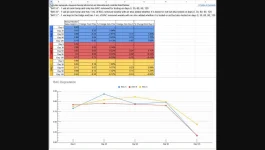
Thank you for this! This is the graph I referenced. Could not remember where I'd seen it.Testing on Bac degradation from another server.
I don't understand what I'm looking at here. Why are the room-temp no-air and the room-temp air apparently getting BETTER before they get worse? Is this where I find out that bac ages like wine to a point?Testing on Bac degradation from another server.
I'm far too lazy to conduct the analysis myself, but I suspect if that chart was redone to show 95% confidence intervals that the it would just be statistical noise. Nobody is seriously suggesting that new benzyl alcohol is forming spontaneously inside of these vials. 🙂I don't understand what I'm looking at here. Why are the room-temp no-air and the room-temp air apparently getting BETTER before they get worse? Is this where I find out that bac ages like wine to a point?
Is this where I find out that bac ages like wine to a point?
Yes, I am sure of that too - these are just basic tests with base data graphed out on very small sample sizes.I'm far too lazy to conduct the analysis myself, but I suspect if that chart was redone to show 95% confidence intervals that the it would just be statistical noise. Nobody is seriously suggesting that new benzyl alcohol is forming spontaneously inside of these vials. 🙂
The plot really is a head scratcher, though. Seems odd that "first puncture" would be such a key event in terms of setting the trajectory between 90 and 120 days and seemingly override the different storage conditions and extraction rates between the vials. Without the methodology being spelled out, it does make me wonder if something could have changed with the testing equipment between day 90 and day 120. Perhaps (if analysis equipment was used) its annual calibration was performed between those dates or a different tech was working in the lab that day?Yes, I am sure of that too - these are just basic tests with base data graphed out on very small sample sizes.
Answering OP’s original question about price - with a decent organized mass purchasing initiative, you can get legit Hospira 30 ml for $8 including shipping. That’s 80 cents per 3 ml vial, negligible compared to those precious few mg of Chinese mystery powder nestled in the bottom of the vessel.I just found out once opened Bac water vials have 28 days for use. Apparently it cant be frozen to last longer either.
I looked into 3ml bottles but apparently these are not safe for personal use.
How do you guys mitigate the prices?
whoa is that the word for injecting the same volume of air as the liquid you’reremoving? neat!lateralise
The trick is to store the BAC water inside of an old Pop Tarts box before putting it away, which will nullify the evil powers of your fridge/freezer.So if bac is to be kept in a dark cabinet and fridge or freezer can deteriorate it, when some people freeze reconstituted tirz, why won't the reconstituted vial not deteriorate?
Every time I draw from my Hospira BAC Water, I watch tiny air bubbles go in from one of the previous holes stabbed in from a prior draw. Can't avoid it. That said, I don't think air entering the vial has an effect on the contents in any case.the 28-day rule comes from manufacturer studies done under specific conditions, they tested it, it passed, that's all they can legally claim. Doesn't mean it degrades on day 29.
BAC water contains 0.9% benzyl alcohol precisely to inhibit bacterial growth. As long as you're using a clean needle every time, not injecting air back into the vial, and storing away from heat and light, 90 days is a very reasonable window. That's what I do.
This is why storing Hospira in the fridge is fine. People can't think logically. There's nothing wrong with it, and it undoubtedly helps it to last longer. The package insert says to store at room temp. Because that's what they tested it at. Too many of us store it in the fridge for it to be a serious problem.So if bac is to be kept in a dark cabinet and fridge or freezer can deteriorate it, when some people freeze reconstituted tirz, why won't the reconstituted vial not deteriorate?